Showing posts with label Bankart. Show all posts

Monday, May 25, 2015

Will I be able to return to hang gliding after my bilateral open repairs for shoulder dislocation?

While repairs for shoulder instability are no longer a major part of our practice, we still receive follow-ups from folks from years back. One interesting cases is that of a physician in his late 40's who had bilateral shoulder dislocations that were a problem - especially when he landed his hang glider. He had bilateral open Bankart repairs. It is great to see him catch a thermal at the end of this video clip.


This is what you'd like to avoid if you are a hang glider - an inflight dislocation!


----
Use the "Search" box to the right to find other topics of interest to you.

You may be interested in some of our most visited web pages including:shoulder arthritis, total shoulder, ream and run, reverse total shoulder, CTA arthroplasty, and rotator cuff surgery as well as the 'ream and run essentials'


Tuesday, June 18, 2013

Bankart surgical repair for dislocating shoulders

While many surgeons prefer arthroscopic repair for shoulders with recurrent dislocations, increasingly patients are coming to our office requesting open Bankart repair because of the lower redislocation rate.
See also this post.

Here is some information regarding our approach to recurrent traumatic anterior shoulder (glenohumeral) instability and its management by anatomic open surgical repair without suture anchors.


Starting with the basics, the shoulder is normally stabilized by concavity compression - the rotator cuff pressing the humeral head into the glenoid concavity.
This labrum provides a 'suction cup' effect, adding to stability of the joint as shown in this video.

With a traumatic dislocation, the labrum is torn from the glenoid socket.

 In patients who have experienced a traumatic anterior dislocation and who have recurrent dislocations of their shoulder, it is important to assess the integrity of the bony glenoid socket. This can be accomplished with plain x-rays (no CT scan is needed). The necessary views include an AP in the plain of the scapula and an axillary view.
We also obtain an apical oblique which enables us to see the anteroinferior glenoid rim as well as the posterior-lateral aspect of the humeral head (where a Hill Sachs lesion occurs).

 The apical oblique view below shows the Hill-Sachs defect flattening the upper left aspect of the humeral head and a moderate sized bony glenoid defect of the anterior-inferior glenoid (bottom right).
In the absence of a significant bony glenoid defect, stability can be restored by placing sutures through the lip of the glenoid and using these sutures to repair the soft tissues torn away from the lip.


If however, there is a substantial bony glenoid lip defect

 It may be necessary to add back bone using a bone graft secured with screws.


Fortunately, the great majority of individuals do not require a bony procedure. Our technique for the anatomic Bankart is shown here. First the skin incision, concealed in the normal skin crease.
 Here is a diagram of the repair of the capsule and labrum as well as that of the subscapularis
Here is a close up view of the repaired capsule and labrum, restoring the "O" ring and its contribution to stability.

===
To see the topics covered in this Blog, click here

Use the "Search" box to the right to find other topics of interest to you.

You may be interested in some of our most visited web pages including:shoulder arthritis, total shoulder, ream and run, reverse total shoulder, CTA arthroplasty, and rotator cuff surgery as well as the 'ream and run essentials'


See from which cities our patients come.


See the countries from which our readers come on this post.


Wednesday, August 22, 2012

Open Bankart repair for traumatic anterior shoulder dislocations and instability

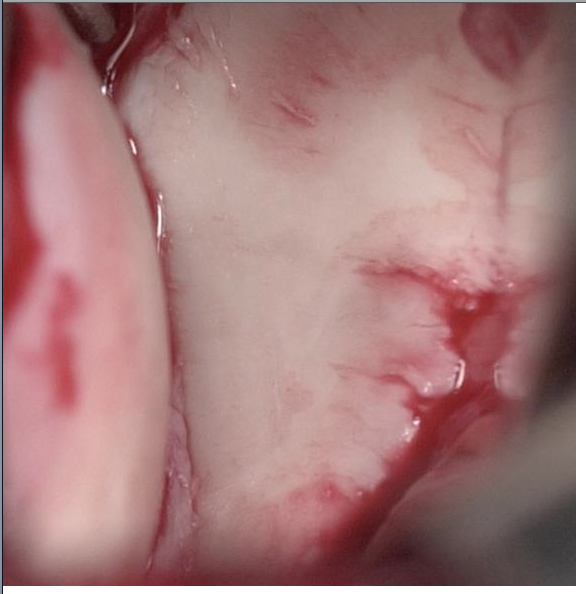
Many orthopaedic surgeons these days are unfamiliar with the open technique for Bankart repair for traumatic instability. In these cases the glenoid labrum is separated from the bony glenoid socket as shown here.

This procedure is designed to restore the suction cup effect and the concavity compression mechanism of shoulder stability.

We've summarized the technique here and provided some highlights below.

roughening the glenoid to enhance healing
drilling holes in the glenoid lip
passing sutures through the glenoid lip
suturing the labrum
subscapularis repair

See also the videos on the mechanics of shoulder stability.
--

Use the "Search the Blog" box to the right to find other topics of interest to you.

You may be interested in some of our most visited web pages including:shoulder arthritis, total shoulder, ream and run, reverse total shoulder, CTA arthroplasty,  and rotator cuff surgery.