Showing posts with label septic arthritis. Show all posts

Friday, February 17, 2023

Why do patients under the age of 50 do less well after anatomic total shoulder arthroplasty?

The reported outcomes of shoulder arthroplasty in patients under the age of fifty years are worse than those in patients over fifty. While a number of factors, such as differences in activity level, patient longevity, and differences in expectations, have been proposed as the reason for this difference, the authors of Comparison of Patients Undergoing Primary Shoulder Arthroplasty Before and After the Age of Fifty explored the possibility that patients under fifty years of age had differences in their pre-arthroplasty self-assessed comfort and function, sex distribution, and specific type of arthritis in comparison to their more senior counterparts. Patients under the age of fifty years were not more likely than those over fifty to be female or to have a lower prearthroplasty self-assessed comfort and function score. However, they did have more complex pathological conditions, such as capsulorrhaphy arthropathy (arthritis after surgery for instability), rheumatoid arthritis, and posttraumatic arthritis. Only 21% of the younger patients had primary degenerative joint disease, whereas 66% of the older patients had that diagnosis.


They suggested that the pathoanatomy in these younger patients can complicate the surgery, the rehabilitation and the outcome of the shoulder arthroplasty. The preoperative diagnosis may have at least as much influence on the outcome of the procedure as does the age of the patient.

Recently, the authors of A History of Shoulder Instability is More Common in Young Patients Undergoing Total Shoulder Arthroplasty sought to evaluate whether a history of shoulder instability was more common in patients under 50 years old undergoing TSA. They identified 489 patients undergoing primary TSA within the Military Health System. 

Patients under 50 years old were matched 1:2 with patients 50 years and older based on sex, race, and military status; the final study population comprised 240 patients. 

The groups differed significantly in type of shoulder arthritis, with the older group having significantly more primary osteoarthritis (78% vs. 51%), while the younger group had significantly more patients with a history of shoulder instability (48% vs. 12%), prior ipsilateral shoulder surgery of any type (74% vs. 34%), and prior ipsilateral shoulder stabilization (31% vs. 5%). In the resultant logistic regression model, a history of shoulder instability (OR 5.0) and a history of any prior ipsilateral shoulder surgery (OR 3.5) were associated with TSA prior to the age of 50 years old.

Comment: From the foregoing, it is evident that the shoulder pathoanatomy of young patients having shoulder arthroplasty is different from that of older patients - a fact that may contribute to inferior results in these individuals after shoulder joint replacement.

Shoulder instability and its treatment can predispose the shoulder to arthritis observed in young patients. Below are some of the many reasons why this can happen.

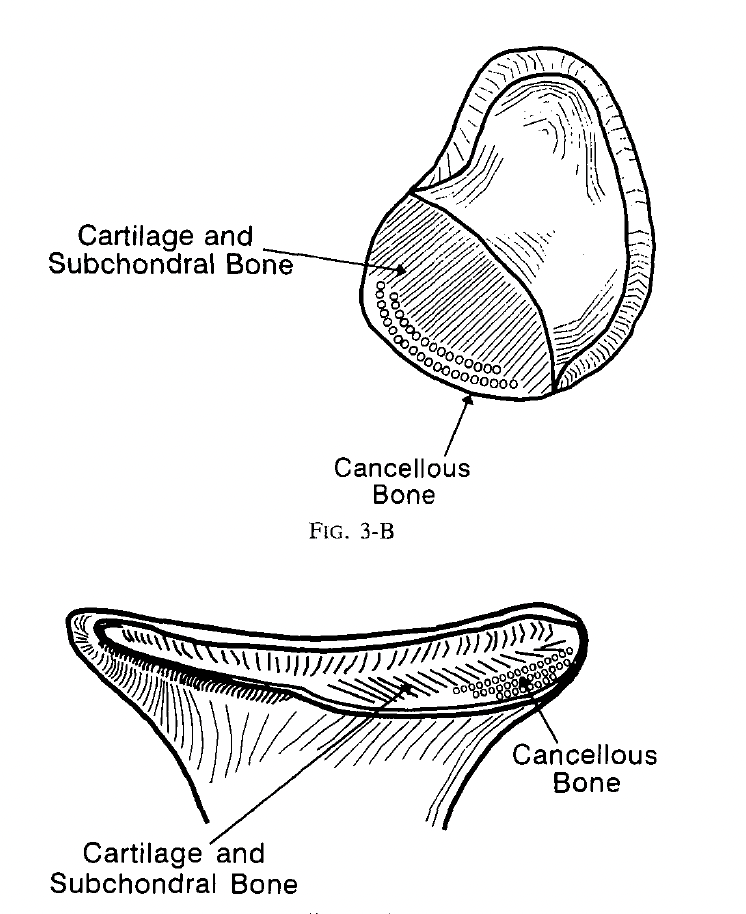
Recurrent instability can contribute to the development of glenohumeral arthritis from the forced translation of the humeral head over the lip of the glenoid can wear the articular cartilage

exposing the bone beneath

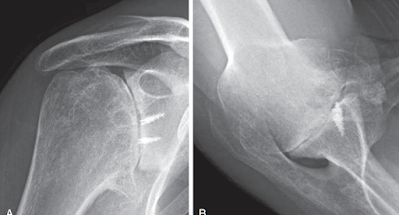
Surgery performed to manage instability can risk secondary arthritis from overtightening, leading to pathological translation and eccentric wear of cartilage (capsulorrhaphy arthropathy).


The use of pain pumps for the intra-articular infusion of local anesthetics after instability surgery can lead to chondrolysis (see Published evidence demonstrating the causation of glenohumeral chondrolysis by postoperative infusion of local anesthetic via a pain pump).


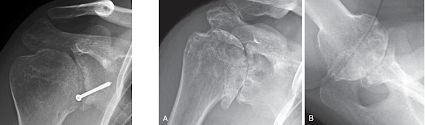
Prominent suture anchors used in instability surgery can lead to anchor arthropathy


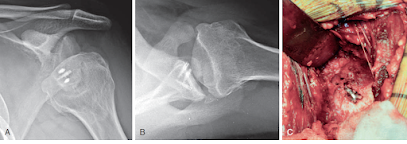
Cutibacterium infection after instability surgery can lead to septic arthritis


In contrast to the situation with straightforward osteoarthritis, these conditions can complicate arthroplasty surgery and lead to suboptimal outcomes because of pathological alterations in bone and soft tissue quality and heightened risk of complications, such as periprosthetic infection. 

Recognizing factors such as these can help patients and surgeons understand some of the differences in shoulder arthritis in younger patients and their effect on the success of joint replacement.

You can support cutting edge shoulder research that is leading to better care for patients with shoulder problems, click on this link.

Follow on twitter: https://twitter.com/shoulderarth
Follow on facebook: click on this link
Follow on facebook: https://www.facebook.com/frederick.matsen
Follow on LinkedIn: https://www.linkedin.com/in/rick-matsen-88b1a8133/

Here are some videos that are of shoulder interest
Shoulder arthritis - what you need to know (see this link).
How to x-ray the shoulder (see this link).
The ream and run procedure (see this link).
The total shoulder arthroplasty (see this link).
The cuff tear arthropathy arthroplasty (see this link).
The reverse total shoulder arthroplasty (see this link).
The smooth and move procedure for irreparable rotator cuff tears (see this link).
Shoulder rehabilitation exercises (see this link).


Saturday, April 12, 2014

Shoulder arthroplasty after septic arthritis

Shoulder arthroplasty for the treatment of postinfectious glenohumeral arthritis.

These authors reviewed 23 shoulders undergoing shoulder arthroplasty between 1977 and 2009 for postinfectious glenohumeral arthritis and followed for a minimum of 2 years (mean, 8.3 years) or until reoperation.

12 shoulders with a severe deficiency of the rotator cuff or insufficient glenoid bone stock were treated with contouring and bone grafting of the glenoid as needed, but a glenoid component was not placed. Eleven shoulders underwent glenoid replacement.

Subjectively, the result in 16 of the 23 (70%)  shoulders was rated as much better or better. Five shoulders (22%) required reoperation at a mean of 5 years. Two of these had positive cultures for at the time of revision. Three additional patients were treated for component loosening; however, intraoperative cultures remained negative without evidence of recurrent infection. 
Radiographic follow-up showed 3 glenoids and 3 humeral components were at risk for loosening. Twelve shoulders demonstrated subluxation. One shoulder developed severe anterior-superior subluxation, and 5 had moderate superior subluxation.

The authors point out that the higher-than-expected rate of clinical or radiographic loosening remains concerning for culture negative infection.

Comment: It is of note even though modern culturing methods for this organism were apparently not used,  intraoperative cultures from 2 shoulders grew Propionibacterium. One might wonder if the shoulders at risk for loosening might also have indolent infections with Propionibacterium.

It is of interest that radiographically identifiable glenoid luciences developed in 8 of the 11 TSAs (72.7%), and 3 underwent reoperation for a loose glenoid (27.2%). However, only 2 of 3 revised glenoids showed radiographic signs of loosening preoperatively so that the rate of loosening may have been greater than what was noted radiographically. Similarly, of the 23 humeral components placed, 3 (13%) underwent revision operations for loose components. However, only 2 of the 3 components had radiographic evidence of preoperative loosening. 

This article points out that arthroplasty after prior joint sepsis has a guarded prognosis due in part to the risk of persistent infection and in part to the damage done to the articular and periarticular tissues.

===
Consultation for those who live a distance away from Seattle.

Check out the new Shoulder Arthritis Book - click here.

Click here to see the new Rotator Cuff Book

To see the topics covered in this Blog, click here

Use the "Search" box to the right to find other topics of interest to you.

You may be interested in some of our most visited web pages including:shoulder arthritis, total shoulder, ream and run, reverse total shoulder, CTA arthroplasty, and rotator cuff surgery as well as the 'ream and run essentials'

See from which cities our patients come.

See the countries from which our readers come on this post.

To see other similar posts, click on the label of interest below.


Sunday, November 20, 2011

Septic, infectious arthritis of the shoulder - clear and present danger

A healthy man who fell from his roof a year ago. His midshaft  humeral fracture was fixed with a locking nail and the fracture healed uneventfully.
However his shoulder became stiff and did not respond to a manipulation. He was referred to us with a stiff painful shoulder, but no evidence of redness, fevers, chills or swelling. His CBC was normal. Here is an AP view of his shoulder.
At surgery there was a moderate chronic inflammation with bloody joint fluid. There were > 5 white cells per high power field on two frozen sections. Cultures are pending.

Lesson: This is not the expected course after a well-done fracture fixation. The complete destruction of the joint surface with cyst formation on the humeral head and glenoid and no osteophytes strongly suggests inflammatory arthritis.

Question: What did we do? What were the results of the cultures?

Stay tuned!


--

Use the "Search the Blog" box to the right to find other topics of interest to you.

You may be interested in some of our most visited web pages including: shoulder arthritis, total shoulder, ream and run, reverse total shoulder, CTA arthroplasty, and rotator cuff surgery.