Showing posts with label total shoulder arthroplasty complications. Show all posts

Thursday, January 19, 2023

Age, smoking and failure of total shoulder arthroplasty


Smoking has been portrayed as being glamorous or macho, leading young people to take it up. Its habit-forming tendency prompts older individuals to continue.


There are many adverse physiological changes that can result from smoking, changes that can contribute to complications after joint replacement.


The authors of The impact of tobacco use on clinical outcomes and long-term survivorship after anatomic total shoulder arthroplasty explored the effect of smoking status on the outcomes of anatomic shoulder arthroplasty. 

Patients were stratified into three cohorts based on their smoking status on the date of their operation: 1) non-smokers (n=78) 2) former smokers (n=49) 3) current smokers (n=16). Nonsmokers were defined as individuals who had never smoked tobacco. Former smokers were defined as individuals who quit smoking tobacco at least one year prior to their index procedure; these individuals had previously smoked at least 0.25 packs per day. Current smokers were defined as individuals who started smoking at least one year prior to surgery and continued to smoke within one year of their surgery (consumption of at least 0.25 packs per day for one year).

Interestingly and importantly at the time of surgery, smokers were younger (51.5 years) than both non-smokers (64.9 years) and former smokers (65.1 years; . 

Visual Analog Scale, American Shoulder and Elbow, and Simple Shoulder Test scores were lower for smokers comparatively; these differences did not reach significance with the numbers of patients in this study.


Revision rates were lower in the non-smoking cohort (7.7%) compared to both former (20.4%) and current smokers (37.5%). 

Survival curves showed that non-smoker implants lasted longer than those of current smokers.


Comment: While this study focuses on the relationship between smoking and surgical outcomes, it is also recognized that smoking increases the risk of medical problems, such as urinary tract infections, pulmonary complications, myocardial infarctions, and readmission. According to the World Health Organization, Smoking greatly increases risk of complications after surgery: Tobacco smokers are at significantly higher risk than non-smokers for post-surgical complications including impaired heart and lung functions, infections and delayed or impaired wound healing. Nicotine and carbon monoxide, both present in cigarettes, can decrease oxygen levels and greatly increase risk of heart-related complications after surgery. Smoking tobacco also damages the lungs making it difficult for the proper amount of air to flow through, increasing the risk of post-surgical complications to the lungs. Smoking distorts a patient’s immune system and can delay healing, increasing the risk of infection at the wound site. Smoking just one cigarette decreases the body’s ability to deliver necessary nutrients for healing after surgery. However, new evidence reveals that smokers who quit approximately 4 weeks or more before surgery have a lower risk of complication and better results 6 months afterwards. Patients who quit smoking tobacco are less likely to experience complications with anesthesia when compared to regular smokers. Every tobacco-free week after 4 weeks improves health outcomes by 19%, due to improved blood flow throughout the body to essential organs. This report provides evidence that there are advantages to postponing minor or non-emergency surgery to give patients the opportunity to quit smoking, resulting in a better health outcome.

Some important questions present themselves:
(1) In that current smokers were over a decade younger than former or non-smokers, to what degree is the poorer survivorship for smokers due to patient age or to smoking status (recalling that patients <60 years of age do less well after shoulder arthroplasty)?
(2) To what degree does smoking contribute to the earlier development of arthritis?
(3) Aside from its adverse effect on health, does smoking reveal a tendency to take risks that may jeopardize the longevity of the arthroplasty? See Smokers’ Decision Making: More than Mere Risk Taking: "The fact that smoking is bad for people’s health has become common knowledge, yet a substantial amount of people still smoke. Previous studies that sought to better understand this phenomenon have found that smoking is associated with the tendency to take risk in other areas of life as well. The current paper explores factors that may underlie this tendency. An experimental analysis shows that smokers are more easily tempted by immediate high rewards compared to nonsmokers. Thus the salience of risky alternatives that produce large rewards most of the time can direct smokers to make bad choices even in an abstract situation such as the Iowa Gambling Task (see this link). These findings suggest that the risk taking behavior associated with smoking is not related to the mere pursuit of rewards but rather reflects a tendency to yield to immediate temptation."
(4) To what degree does smoking cessation reduce the risk? See Smoking Cessation Initiatives in Total Joint Arthroplasty, An Evidence-Based Review. Points from this article follow:

Hospital costs for total joint arthroplasty (TJA) are about $5,000 higher for smokers compared with nonsmokers. Currently, smoking cessation programs are the only intervention demonstrated to reproducibly improve outcomes for smokers undergoing TJA. Several randomized controlled trials have shown that perioperative smoking cessation programs confer short-term quit rates between 40% and 89%.

Initiating a smoking cessation program 4 weeks preoperatively is likely adequate to provide clinically meaningful reductions in postoperative complications for smokers following TJA. The evidence is that 2 to 6 weeks of abstinence would be necessary to reduce the incidence of infection, 3 to 4 weeks to reduce wound-related complications, and 6 to 8 weeks to reduce pulmonary complications. Longer periods of smoking cessation decreased the rate of postoperative complications further, with each week of cessation increasing the magnitude of the effect.

How can a surgeon know if the patient has ceased smoking? Smoking status is typically measured by patient self-reporting, Cotinine testing, or CO breath testing. One study found that self-reporting was accurate 97% of the time while others found that 20% falsely reported abstinence. Cotinine is the major metabolite of nicotine and may be measured in the urine or saliva using immunoassay-based test strips. It has a half-life of 7 to 14 hours. CO breath tests measure the concentration of CO in expired air. Breath CO is a good indicator of recent smoking, but it has a half-life of only 2 to 3 hours and usually becomes undetectable around 24 hours after smoking cessation.

What are the other benefits of smoking cessation? Smoking adds approximately $100 billion in annual direct health-care costs annually. Thus smoking cessation programs can provide even further potential value if abstinence from smoking is maintained. Additionally, it has been observed that smoking cessation programs encourage other positive lifestyle changes such as improved exercise, eating, and drinking habits, which can further contribute to improved patient health and decreased costs.

A recent systematic review, Smoking cessation prior to total shoulder arthroplasty: A systematic review of outcomes and complications found 24 studies on this topic. The authors concluded that patients who quit smoking at least 1 month preoperatively had improved outcomes compared to current smokers. Current smokers had statistically significant higher pain scores or opioid use. Five studies found increased rates of revision surgery in smokers. Smokers were significantly more likely to have increased rates of surgical, wound, superficial, and deep surgical site complications.  The authors recommend a period of four weeks or more of preoperative smoking cessation.

You can support cutting edge shoulder research that is leading to better care for patients with shoulder problems, click on this link.

Follow on twitter: https://twitter.com/shoulderarth

Follow on facebook: click on this link

Follow on facebook: https://www.facebook.com/frederick.matsen

Follow on LinkedIn: https://www.linkedin.com/in/rick-matsen-88b1a8133/

Here are some videos that are of shoulder interest
Shoulder arthritis - what you need to know (see this link).
How to x-ray the shoulder (see this link).
The ream and run procedure (see this link).
The total shoulder arthroplasty (see this link).
The cuff tear arthropathy arthroplasty (see this link).
The reverse total shoulder arthroplasty (see this link).
The smooth and move procedure for irreparable rotator cuff tears (see this link).
Shoulder rehabilitation exercises (see this link).


Thursday, October 21, 2021

Subscapularis and shoulder arthroplasty: repair, failure and reconstruction

Failure of the subscapularis after shoulder arthroplasty is a clinically important complication that can substantially compromise the comfort and function of the shoulder. 

Take down and repair

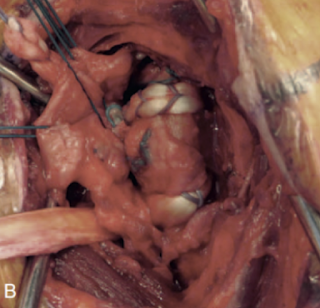
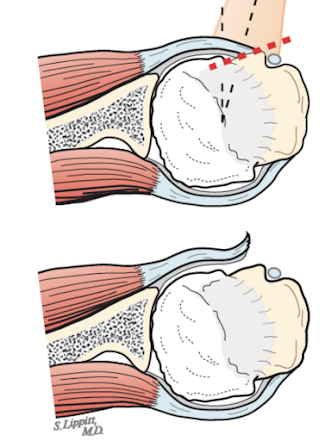
Like most complications, subscapularis failure is better prevented than treated. Our approach includes takedown using a careful subscapularis peel, keeping the subjacent capsule intact to the tendon.

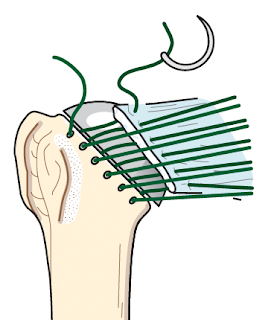
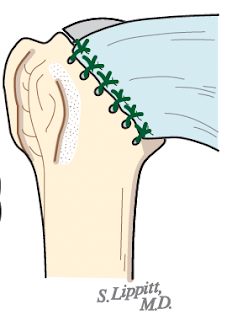
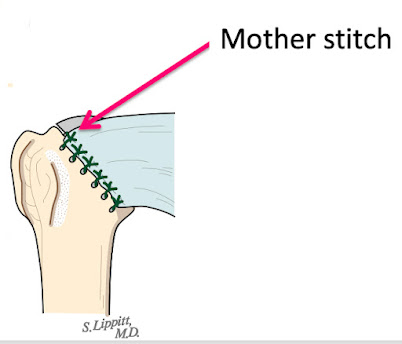
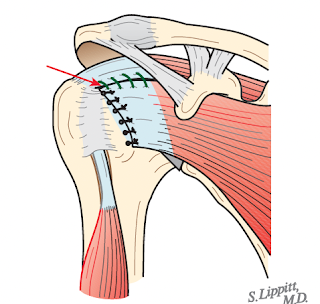
After the arthroplasty, the subscapularis tendon and subjacent capsule are repaired to the humerus using at least 6 sutures passed through secure drill holes at the margin of the humeral head cut.


The superior band of the subscapularis, also known as the upper rolled border, is the major strength of the subscapularis. The suture laced through it at the time of repair carries a disproportionately high percent of the total tendon load when the arm is externally rotated (see this link). We refer to this most important suture as the Mother Stitch.


This repair can be reinforced with a rotator interval plication.


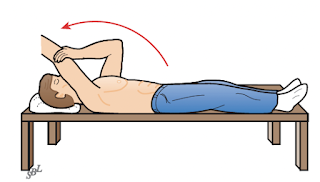
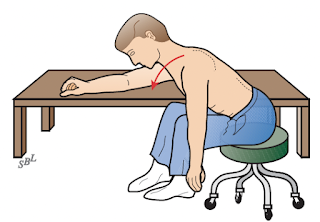
During the first two months after shoulder arthroplasty, we are careful to have the patient stretch in flexion


but NOT in external rotation to avoid stressing the repair.


Diagnosing failure

Because post operative MRIs and sonograms after shoulder arthroplasty can be difficult to interpret, the diagnosis of subscapularis failure is often best made from 

(1) history - force on the repaired tendon within the first two months after surgery resulting from

    a fall on the arm, 

    a sudden or unexpected stretch in external rotation beyond the handshake position 

    a forceful internal rotation (e.g. while restraining a dog chasing a squirrel)

(2) physical exam

    increased external rotation from what was recorded in the operating room at the close of the case


    weakness of belly press with the arm out to the side


(3) radiographs
    
    anterior subluxation of the humeral head on the glenoid seen on the axillary "truth" view of the left shoulder


Reconstruction

    When diagnosed early after injury, the subscapularis can often be reconstructed with a hamstring allograft passed through drill holes in the lesser tuberosity laterally.


and through the residual tendon medially


Securing the graft back to the tuberosity reinforces the subscapularis attachment to the humerus


and restores stability to the joint.

Here's a variation of the method used in a case last week, this time on the right shoulder.  The graft was first passed through the lower hole in the tuberosity, then up through the subscapularis tendon, then back down through the subscapularis tendon and then out the upper hole in the lesser tuberosity. In this case the graft was used to back up a standard repair of the subscapularis tendon to the humeral neck cut.


The two limbs of the graft passed through the lesser tuberosity were then tied to each other and secured with locking sutures.

An alternative to attempting reconstruction of a torn subscapularis is to consider a reverse total shoulder.
This option is discussed in this link.


An article on subscapularis failure was recently published:

Failure rates and outcomes after anatomic total shoulder arthroplasty are equivalent irrespective of subscapularis repair technique

They conducted a retrospective study of patients who underwent primary anatomic TSA with subscapularis tenotomy using either transosseous repair (TOR #=192) or direct primary tendon repair (PTR #=114) of a subscapularis tenotomy. 


The "primary outcome studied was clinical subscapularis failure, defined as anterior subluxation of the glenohumeral joint as seen on axillary lateral radiographs with accompanying clinical decompensation, including pain and loss of active forward elevation and internal rotation.""Patients were not routinely screened by ultrasound or MRI to evaluate subscapularis integrity. Additionally, internal rotation strength testing was based on manual muscle testing. Clinical assessment of internal rotation strength is fairly subjective and limited because nearly all of the patients had 4/5 or 5/5 internal rotation strength." Substantial emphasis was placed on the patient's response to a question from the ASES score which asks about the ability to perform functional internal rotation activities such as putting on a bra or washing the back. Of note only 41.4% of the TOR group and 33.3% of the PTR group responded with “not difficult.”


Subscapularis failure was recognized in 13 patients (4.2% among the TOR group and 4.4% among the PTR group). Reoperation was performed in 18 patients. Subscapularis failures, complications not requiring surgery, and reoperations were not significantly different between the two groups. 


Comment: In this retrospective study of an institutional database it appears that the patients in this series may not have been routinely and systematically examined for subscapularis failure, but rather the diagnosis was inferred from radiographs and from ASES scores. It is therefore possible that the rate of subscapularis failure was underestimated.


Follow on twitter: https://twitter.com/shoulderarth

Follow on facebook: https://www.facebook.com/frederick.matsen

Follow on LinkedIn: https://www.linkedin.com/in/rick-matsen-88b1a8133/


How you can support research in shoulder surgery Click on this link.

Here are some videos that are of shoulder interest
Shoulder arthritis - what you need to know (see this link)
Shoulder arthritis - x-ray appearance (see this link)
The smooth and move for irreparable cuff tears (see this link)
The total shoulder arthroplasty (see this link).
The ream and run technique is shown in this link.
The cuff tear arthropathy arthroplasty (see this link).
The reverse total shoulder arthroplasty (see this link).

Shoulder rehabilitation exercises (see this link).

This is a non-commercial site, the purpose of which is education, consistent with "Fair Use" as defined in Title 17 of the U.S. Code.          
Note that author has no financial relationships with any orthopaedic companies.


Sunday, July 11, 2021

Total shoulder arthroplasty on the second side - don't rush it!

 The relationship of bilateral shoulder arthroplasty timing and postoperative complications

These authors investigated the effect of time between bilateral shoulder arthroplasties on the complication rate using two insurance databases.

 From 2005-2016, a total of 1764 patients (6.3%) underwent bilateral shoulder arthroplasty out of 27,962 shoulder arthroplasties


Of the bilateral patients, 49.1% waited more than 1 year before their second shoulder arthroplasty.

Patients waiting less than 3 months between surgeries comprised 4.9% of the total number of staged bilateral surgeries. 


Overall, implant complications were higher in patients with surgeries less than 3 months apart compared to controls, including revision arthroplasty, loosening/lysis, and periprosthetic fracture. There were no significant increases in any implant-related complications when surgeries were staged by 3 months or more compared to controls. 


Venous thromboembolism and blood transfusion occurred at a significantly higher rate in patients with less than 3 months between surgeries compared with controls. There were no differences in any medical complications when surgeries were staged by 3 months or more compared with controls.


Comment: Shoulder arthritis is often a bilateral condition. For a variety of reasons, patients and physicians may wish to have the second side arthroplasty done soon after the first. One of these reasons is to have the surgeries in the same calendar year so that a second deductible payment is not needed.  


This study indicates that if the second arthroplasty is performed within 3 months, the complication rate essentially doubles: 

revision arthroplasty -11.6% vs. 5.4%, 

loosening/lysis - 8.1% vs. 3.5%

periprosthetic fracture -  4.7% vs. 1.2%

venous thromboembolism - 8.1% vs. 2.2%

blood transfusion - 9.3% vs. 1.7%


Here are some videos that are of shoulder interest
Shoulder arthritis - what you need to know (see this link).
How to x-ray the shoulder (see this link).
The total shoulder arthroplasty (see this link).
The ream and run technique is shown in this link.
The cuff tear arthropathy arthroplasty (see this link).
The reverse total shoulder arthroplasty (see this link).
Shoulder rehabilitation exercises (see this link).

Follow on twitter: Frederick Matsen (@shoulderarth)

Monday, May 17, 2021

Complications of anatomic total shoulder - a reprise

Complications After Anatomic Shoulder Arthroplasty Revisiting Leading Causes of Failure


These authors point out that data from high volume centers may not reflect the complications seen by community surgeons who perform the majority of shoulder arthroplasties. This article attempts to capture data from resources that present the complications across the general population.


Here are a few takeaways.

(1) While radiographic evidence of loosening of the glenoid component continues to be a common finding, many of these shoulders are minimally symptomatic and revision for symptomatic glenoid component loosening seems to constitute a smaller percent of indications for revision.

(2) Managing posterior glenoid bone loss by eccentric reaming can remove the needed support for the glenoid component and contribute to glenoid component failure. There is some evidence that aggressively "correcting" glenoid retroversion may not be as necessary as once thought. The security and durability of augmented glenoid components is currently being evaluated. The indications for a reverse total shoulder in the retroverted glenoid in a shoulder with an intact rotator cuff are also being studied.

(3) Metal backed glenoid components have higher reported rates of revision than all polyethylene components.

(4) Soft tissue (subscapularis and rotator cuff) failure after anatomic total shoulder are increasingly reported as reasons for failure. Anterior and superior translation of the humeral head on the glenoid and superior tilt of the glenoid compent are associated with these soft tissue problems. It is suggested that protection of the cuff insertion, careful subscapularis repair, avoiding overstuffing, avoiding a superior position of the humeral component, and protection of the soft tissues during rehabilitation are important preventative measures.

(5) Some arthroplasties are painful without an identifiable cause. Preoperative use of narcotics and nicotine appear to be associated with this problem.


Here are some videos that are of shoulder interest
Shoulder arthritis - what you need to know (see this link).
How to x-ray the shoulder (see this link).
The ream and run procedure (see this link).
The total shoulder arthroplasty (see this link).
The cuff tear arthropathy arthroplasty (see this link).
The reverse total shoulder arthroplasty (see this link).
The smooth and move procedure for irreparable rotator cuff tears (see this link).
Shoulder rehabilitation exercises (see this link).

Complications of shoulder arthroplasty

 Risk Factors for Complications and Revision Surgery after Anatomic and Reverse Total Shoulder Arthroplasty

These authors evaluated patient-specific, implant-specific and technique-specific risk factors for intra operative complications, postoperative complications, and the occurrence of revisions after 2964 anatomic ( aTSA) and 5616 reverse (rTSA) total shoulder arthroplasties.


aTSA patients had an intraoperative complication rate of 0.6% while rTSA patients had an intraoperative complication rate of 0.8%. Female gender and previous shoulder surgery were identified as significant risk factors


aTSA patients had a per year adverse even rate of 2.8% per year while rTSA patients had a per year adverse event rate of 3.6%. Younger age, rheumatoid arthritis, and previous shoulder surgery were noted to be risks factors. The most common aTSA complications were rotator cuff tear and/or subscapularis failure and aseptic glenoid loosening. Subscapularis failure was the most common complication in women, while aseptic glenoid loosening was the most common complication in men. The most common rTSA complications were acromial and scapular spine fractures and pain/pain after a fall. Acromial and scapular spine fractures were the most common complication in women, while instability was the most common complication in men.


aTSA patients had a per year revision rate of 1.8% per year while rTSA patients had a per year revision rate of 1.2%  Younger age, more glenoid retroversion, larger humeral stem size, larger humeral liner thickness/offset, larger glenosphere diameter, and more intra operative blood loss were noted to be risk factors.


Comment: This is a large study of adverse events for anatomic and reverse shoulder arthroplasties. It emphasizes the importance of surgical technique (care in subscapularis and rotator cuff management as well as glenoid fixation for aTSA and prosthesis selection and positioning for rTSA) in minimizing adverse outcomes. 


These results can be compared to those of another recent article:

Analysis of 4063 complications of shoulder arthroplasty reported to the US Food and Drug Administration from 2012 to 2016

These authors point out that most of the literature on shoulder arthroplasty failure comes from high-volume centers and that these reports tend to exclude the experience of community orthopedic surgeons, who perform most of the shoulder joint replacements.

They analyzed the failure reports mandated by the US Food and Drug Administration for all hospitals. Each reported event from 2012 to 2016 was characterized by implant, failure mode, and year of surgery.

Although the percentage distribution among the different failure modes was relatively consistent over the years of this study, the percentage distribution of these failure modes differed substantially among different implant manufacturers.

For the 1673 anatomic arthroplasties, the most common failure modes were glenoid component failure (20.4%), rotator cuff/subscapularis tear (15.4%), pain/stiffness (12.9%), dislocation/instability (11.8%), infection (9%), and humeral component loosening (5.1%). The distribution of these complications remained consistent over the years of the study.


For the 2390 reverse arthroplasties, the most common failure modes were dislocation/instability (32%), infection (13.8%), glenosphere-baseplate dissociation (12.2%), failed/loosened baseplate (10.4%), humeral component dissociation/tray fracture (5.5%), difficulty inserting the baseplate (4.8%), and difficulty inserting the glenosphere (4.2%). The distribution of these complications remained consistent over the years of the study.


The percentage distribution of the failure modes also differed substantially from those published in a recent review of the literature.


They concluded that the publicly available Food and Drug Administration database reveals modes of shoulder arthroplasty failure that are not emphasized in the published literature, such as rotator cuff tear, infection, and postoperative pain/stiffness for anatomic total shoulder arthroplasty and implant dissociation and baseplate failure for reverse shoulder arthroplasty.


Further clinical research is need to determine which surgical approaches are most successful for young patients, those with rheumatoid arthritis, prior shoulder surgery, and those with glenoid retroversion. 


Here are some videos that are of shoulder interest
Shoulder arthritis - what you need to know (see this link).
How to x-ray the shoulder (see this link).
The total shoulder arthroplasty (see this link).
The ream and run technique is shown in this link.
The cuff tear arthropathy arthroplasty (see this link).
The reverse total shoulder arthroplasty (see this link).
The smooth and move procedure for irreparable rotator cuff tears (see this link).
Shoulder rehabilitation exercises (see this link).


Sunday, March 28, 2021

Shoulder arthroplasty and postoperative neuropathy

Is Distal Peripheral Neuropathy More Common After ShoulderArthroplasty?


These authors report on the incidence of distal peripheral neuropathy requiring surgical intervention following shoulder arthroplasty. Distal peripheral neuropathy was defined as symptoms or diagnostic testing consistent with cubital tunnel or carpal tunnel syndrome. 


1,387 total shoulder arthroplasties were included in this study. 16 patients (1.2%) underwent surgery for ipsilateral peripheral neuropathy while 6 patients (0.4%) underwent surgery for contralateral peripheral neuropathy.


Comment: This study may have underestimated the incidence of post operative neuropathy for several reasons: (1) Patients were included in the series only if they had primary surgical intervention for ipsilateral or contralateral peripheral neuropathy following primary anatomic or reverse total shoulder arthroplasty. (2)  Patients were not systematically examined for evidence of neurological abnormalities. (3) Patients with symptoms of peripheral neuropathy, but who did not undergo surgery for the neuropathy were not considered. (4) Not all peripheral neuropathies present as symptoms of cubital or carpal tunnel syndromes.


The brachial plexus is at risk during shoulder arthroplasty because of (1) nerve laceration, (2) nerve compression from retractors, (3) nerve traction, (4) arm lengthening, and (5) neck positioning during the surgery.


In this series, it appears that brachial plexus block anesthesia was used. This intervention carries an additional risk of peripheral nerve injury as revealed in this study, The types and severity of complications associated with interscalene brachial plexus block anesthesia: local and national evidence. Here is the abstract from that article: 


"Interscalene brachial plexus block is a commonly used anesthetic. However, substantial complications can be associated with its use. Our study included 15 years of data from a local medical center and 3 decades of records from the national American Society of Anesthesiology Closed Claims Project. The hospital had 27 peripheral neurologic injuries, 3 central nervous system complications, 6 respiratory complications, and 5 cardiovascular complications. Of these complications, 14 were still present at the most recent follow-up, some causing major compromise of the patient's comfort and function. All central blocks, local toxicities, and respiratory complications resolved. In the hospital series, more experienced anesthesiologists tended to have lower complication rates. The American Society of Anesthesiology Closed Claims database had 20 peripheral neurologic injuries, 10 respiratory complications, 5 central nervous system complications, 4 deaths, 2 emotional disturbances, and 1 other unknown event. Of the complications, 19 were described as permanent. Interscalene brachial plexus block can be accompanied by substantial and disabling complications, especially when administered by less experienced anesthesiologists."


See also these articles: link 1 and link 2


Here are some videos that are of shoulder interest
Shoulder arthritis - what you need to know (see this link).
How to x-ray the shoulder (see this link).
The ream and run procedure (see this link).
The total shoulder arthroplasty (see this link).
The cuff tear arthropathy arthroplasty (see this link).
The reverse total shoulder arthroplasty (see this link).
The smooth and move procedure for irreparable rotator cuff tears (see this link).
Shoulder rehabilitation exercises (see this link).

Monday, February 22, 2021

Total shoulder arthroplasty: more severe anemia => more complications

Increased Severity of Anemia is Associated with Postoperative Complications following Primary Total Shoulder Arthroplasty


These authors sought to determine the influence of preoperative anemia severity on 30-day postoperative complications following primary TSA using the National Surgical Quality Improvement Program (NSQIP) database from 2012 to 2018. 

Patients undergoing TSA stratified into 3 cohorts: non-anemia (hematocrit >36% for women, > 39% for men), mild anemia (hematocrit 33% to 36% for women, 33% to 39% for men), and moderate to severe anemia (hematocrit < 33% for both women and men). 


Of 13,921 total patients undergoing TSA, 11,330 patients (81.4%) did not have anemia, 1,934 (13.9%) had mild anemia, and 657 (4.7%) had moderate to severe anemia. 


Patients with mild anemia were more likely to have a postoperative blood transfusion (OR 4.7; p < 0.001), extended length of stay (OR 1.7; p = 0.002), and reoperation (OR 1.5; p =0.028). 


Patients with moderate to severe anemia were at increased risk of cardiac complications (OR 3.0; p = 0.012), pulmonary complications (OR 2.2; p = 0.015), postoperative blood transfusion (OR 23.8; p < 0.001), extended length of stay (OR 6.6; p < 0.001), reoperation (OR 2.2; p = 0.003), and death (OR 3.8; p = 0.034).


These findings are similar to those from another recent study.

 The Impact of Preoperative Anemia on Complications After Total Shoulder Arthroplasty


These authors investigated the relationship between varying levels of preoperative anemia and postoperative complications within 30 days of total shoulder arthroplasty (TSA) in 10,547 patients. 


The degree of anemia was categorized based on preoperative hematocrit levels: normal (>39% for men and >36% for women), mild anemia (29% to 39% for men and 29% to 36% for women), and severe anemia (<29% for both men and women).


1,923 patients were (18.2%) in the mild anemia cohort and 146 (1.4%) were in the severe anemia cohort. 


Mild anemia was a significant predictor of any complication (odds ratio [OR] 2.74, P < 0.001), stroke/cerebrovascular accident (OR 6.79, P = 0.007), postoperative anemia requiring transfusion (OR 6.58, P < 0.001), nonhome discharge (OR 1.79, P < 0.001), readmission (OR 1.63, P < 0.001), and return to the surgical room (OR 1.60, P = 0.017). 


Severe anemia was identified as a significant predictor of any complication (OR 4.31, P < 0.001), renal complication (OR 13.78, P < 0.001), postoperative anemia requiring transfusion (OR 5.62, P < 0.001), and nonhome discharge (OR 2.34, P < 0.001).


Comment: These authors found that 20% of patients having TSA were anemic! Preoperative anemia status was a notable risk factor for postoperative complications within 30 days of TSA. Even mildly decreased preoperative hematocrit levels (between 29% and 36% for women and between 29% and 39% for men) notably increased the risk of stroke/CVA, postoperative anemia requiring transfusion, nonhome discharge, hospital readmission, and return to the surgical room. In addition, severe anemia (hematocrit <29% in both men and women) was identified as a predictor of postoperative anemia requiring transfusion, nonhome discharge, and renal complications after TSA.


A greater proportion of patients with mild anemia were functionally dependent, used steroids, had an ASA ≥3, and had a BMI <25. 


Anemia may result from nutrient deficiency, chronic proinflammatory states, chronic kidney disease, and bone marrow dysfunction. Deficiencies of vitamin B12, iron, and folate may account for one third of the etiologies of anemia. 


These studies did not evaluate the effectiveness of correcting patients' hematocrit preoperatively on postoperative complications after TSA. 


Here are some videos that are of shoulder interest
Shoulder arthritis - what you need to know (see this link).
How to x-ray the shoulder (see this link).
The ream and run procedure (see this link).
The total shoulder arthroplasty (see this link).
The cuff tear arthropathy arthroplasty (see this link).
The reverse total shoulder arthroplasty (see this link).
The smooth and move procedure for irreparable rotator cuff tears (see this link).
Shoulder rehabilitation exercises (see this link).