Showing posts with label patient specific instrumentation. Show all posts

Saturday, July 15, 2023

Glenoid version: acceptors and correctors


At a recent Cantina luncheon, conversation among five shoulder surgeons concluded that shoulder surgeons are becoming divided with respect to their approaches to arthritic shoulders with glenoid retroversion: there are the "acceptors" and 
 the "correctors".

The acceptors ream the glenoid only enough to create a smooth concavity that corresponds to the backside of the glenoid component. The correctors strive to reduce glenoid retroversion to 15 degrees or less, using posteriorly augmented glenoid components, anterior "high side" reaming, or posterior bone graft. 

The acceptor approach requires only standardized plain radiographs and the occasional use of anteriorly eccentric humeral head components and rotator interval plication if excessive posterior decentering is noted at surgery. 

By contrast, the corrector approach usually requires a preoperative CT scan, three dimensional planning, and some means of carrying out the plan in the operating room, such as patient specific instrumentation or computer guidance.

The literature available to date does not demonstrate a superiority of either approach in terms of clinical outcomes in the management of arthritic shoulders with a retroverted glenoid.

It is of interest to see how the corrector and acceptor approaches are used in a membership-based, dues prepaid, direct health care system, where optimization of both outcome as well as total outpatient and inpatient costs are priorities. The authors of Use of Preoperative CT Scans and Patient-Specific Instrumentation May Not Improve Short-Term Adverse Events After Shoulder Arthroplasty showed how the corrector-oriented technologies - preoperative computed tomography (CT) scans and patient-specific instrumentation (PSI) - are used in their integrated health-care system.

They identified 8,117 primary elective anatomic or reverse total shoulder arthroplasties (7,372 patients) performed by 130 surgeons between 2015 to 2020 with an average follow-up of 2.9 years (maximum, 6 years).  

During the period of this observational study, the 130 surgeons in this healthcare system chose to use preoperative CT scans in less than half of the primary shoulder arthroplasties and to use PSI in one out of nine cases. 

CT Scans

The use of preoperative CT scans is probably associated with the surgeons' desire to correct preoperative glenoid version.

Over the period of this study it appears that the surgeons became more selective in their use of preoperative CT scans:

(1) less than half of all shoulder arthroplasty patients had preoperative CT scans; this percentage trended downward with time


(2) patients with glenoid types B1 and B2 were slightly more likely to get preoperative CT scans, whereas patients with A1 glenoids were slightly less likely to have CT scans; yet for each glenoid type, less than one third of patients had preoperative CT scans


The arthroplasty surgery of patients having CT scans took 12% longer and had somewhat higher cumulative revision rates


and had a higher likelihood of venous thromboembolism (OR = 1.79; 95% CI = 1.18 to 2.74) compared with those without CT scans.

Patient Specific Instrumentation

The use of PSI is probably associated with the surgeons' desire to correct preoperative glenoid version.

3553 (44%) of the patients received a Tornier implant; of these 400 (11.3%) had their implants inserted using patient specific instrumentation. Shoulders with PSI were more likely to be male and to have a Walch type B or C preoperative glenoid pathoanatomy. Surgical procedures using PSI also had a longer mean operative time. 


The patients receiving arthroplasty with PSI had slightly increased rates of early revision.


Patients with PSI use had a higher likelihood of 90-day deep infection (OR = 7.74; 95% CI = 1.11 to 53.94), which may be related to the increased OR time.
 

Comment: At this point i
t is not clear how much "correction" of version is necessary to obtain a great outcome for the patient.

In Does Postoperative Glenoid Retroversion Affect the 2-Year Clinical and Radiographic Outcomes for Total Shoulder Arthroplasty? the authors presented a series of anatomic total shoulders in which neither 3D imaging or PSI was used; postoperative glenoid retroversion was not associated with inferior clinical results at 2 years after surgery.

Glenoid retroversion does not impact clinical outcomes or implant survivorship after total shoulder arthroplasty with minimal, noncorrective reaming found reliable increases in patient satisfaction and clinical outcomes in patients with up to 40 degrees of retroversion.


Baseplate retroversion does not affect postoperative outcomes after reverse shoulder arthroplasty. found no significant difference in postoperative functional outcomes, range of motion, or complications between patients who had baseplate retroversion ≤15° vs. those who had retroversion >15°.


Many of the published articles discussing CT planning, PSI and computer guidance focus on the accuracy and precision achieved with the techniques rather than clinical outcomes; see 


Strategies to assist in the correction of glenoid pathoanatomy have not been associated with clinically significantly improved patient outcomes.

For example, the authors of The influence of computed tomography preoperative planning on clinical outcomes after anatomic total shoulder arthroplasty: a matched cohort analysis. did not find a clinically significant difference between the outcomes of total shoulders performed without and with 3D CT planning. 

In Patient-specific Instrumentation Versus Standard Surgical Instruments in Primary Reverse Total Shoulder Arthroplasty: A Retrospective Comparative Clinical Study, patient having RTSA with PSI did not achieve significantly different clinical outcomes than those without PSI. 

The authors of Early clinical outcomes following navigation-assisted baseplate fixation in reverse total shoulder arthroplasty: a matched cohort study found that navigated and non-navigated RSAs yielded similar rates of improvement in range of motion and functional outcome scores.

Assessing the Value to the Patient of New Technologies in Anatomic Total Shoulder Arthroplasty. found that since the advent of preoperative computed tomography (CT) scans, 3-dimensional preoperative planning, and patient-specific instrumentation there is a lack published evidence that the results of TSA have been statistically or clinically improved.

In conclusion, more research is needed to determine the clinical outcomes for the corrector and acceptor approaches to shoulders with different degrees of glenoid retroversion.

You can support cutting edge shoulder research that is leading to better care for patients with shoulder problems, click on this link.

Follow on twitter: https://twitter.com/shoulderarth
Follow on facebook: click on this link
Follow on facebook: https://www.facebook.com/frederick.matsen
Follow on LinkedIn: https://www.linkedin.com/in/rick-matsen-88b1a8133/

Here are some videos that are of shoulder interest
Shoulder arthritis - what you need to know (see this link).
How to x-ray the shoulder (see this link).
The ream and run procedure (see this link).
The total shoulder arthroplasty (see this link).
The cuff tear arthropathy arthroplasty (see this link).
The reverse total shoulder arthroplasty (see this link).
The smooth and move procedure for irreparable rotator cuff tears (see this link).
Shoulder rehabilitation exercises (see this link).


Saturday, March 18, 2023

Shoulder Arthroplasty Planning Technologies

Innovations in shoulder arthroplasty seek to improve clinical outcomes for patients, Three-dimensional computer tomographic (CT) scans provide a more detailed depiction of glenoid pathoanatomy than traditional two-dimensional CT scans or plain films. Preoperative planning software enables the surgeon to visualize different reconstruction strategies. Patient specific instrumentation and computer assisted navigation strive to optimize implant positioning.  These technologies can add time and cost to the conduct of shoulder arthroplasty (data on average selling price (ASP) below from Orthopaedic Network News 2023). 


Certain questions about these technologies need to be answered by clinical research:

(1) Do these technologies improve the outcomes for patients in terms of improvement in comfort and function along with a reduction in complications and revisions?
(2) If these technologies are of value, in which cases should they be used - what are the "appropriate use criteria" for them?
(3) Are there potential adverse effects associated with the use of the technologies, such as increased rates of infection from prolonged operative time?
(4) Do these planning systems lead to the use of more complex implants (e.g. augmented baseplates for reverses and augmented poly for anatomic glenoid components) that may not be necessary.
(5) Do the different planning technologies results in similar measures, for example of glenoid inclination and version?
(6) How do the results reported by authors with financial conflicts of interest compare to those reported by authors without such conflicts?

Some recent articles bear on these questions:

In 3D preoperative planning for shoulder arthroplasty: an evaluation of different planning software systems it was found that the wide variety of methods used by different companies and institutions results in significantly differing glenoid inclination and version measurements.

In Does commercially available shoulder arthroplasty preoperative planning software agree with surgeon measurements of version, inclination, and subluxation? Preoperative planning software for shoulder arthroplasty had limited agreement in measures of version, inclination, and subluxation measurements.

In The Impact of Preoperative Three- Dimensional Planning and Intraoperative Navigation of Shoulder Arthroplasty on Implant Selection and Operative Time. Using 3D planning increased the likelihood that the surgeon selected an augmented glenoid component compared with 2D planning. Because 3D planning and intraoperative navigation is more costly than 2D planning, and augmented glenoid components are more costly than standard glenoid components, the cost-benefit of these changes with respect to mid- and long-term clinical outcomes and implant survival has not been ascertained.

In Patient-specific Instrumentation Versus Standard Surgical Instruments in Primary Reverse Total Shoulder Arthroplasty: A Retrospective Comparative Clinical Study patients having reverse total shoulder arthroplasty using patient specific instrumentation did not achieve significantly better clinical or radiographic outcomes than those performed without PSI.

As would be expected, authors advocating these technologies are often involved with their development and have financial ties to the companies providing them.Financial support is necessary for the research, development, application, and advocacy of new technologies. In Novel Shoulder Arthroplasty Planning Technologies and Potential Conflicts of Interest most publications on these innovations were found to be authored by those with financial conflicts of interest. Such conflicts can be associated with the results of the studies (Conflict of interest in orthopaedic research. An association between findings and funding in scientific presentations)(Conflict of interest in orthopaedic research)(Demographics of disclosure of conflicts of interest at the 2011 annual meeting of the American Academy of Orthopaedic Surgeons)(Scope and impact of financial conflicts of interest in biomedical research: a systematic review).

Clinical research, including carefully controlled clinical trials, are needed to establish the value of these technologies to the patient having arthroplasty for glenohumeral arthritis.

You can support cutting edge shoulder research that is leading to better care for patients with shoulder problems, click on this link.

Follow on twitter: https://twitter.com/shoulderarth
Follow on facebook: click on this link
Follow on facebook: https://www.facebook.com/frederick.matsen
Follow on LinkedIn: https://www.linkedin.com/in/rick-matsen-88b1a8133/

Here are some videos that are of shoulder interest
Shoulder arthritis - what you need to know (see this link).
How to x-ray the shoulder (see this link).
The ream and run procedure (see this link).
The total shoulder arthroplasty (see this link).
The cuff tear arthropathy arthroplasty (see this link).
The reverse total shoulder arthroplasty (see this link).
The smooth and move procedure for irreparable rotator cuff tears (see this link).
Shoulder rehabilitation exercises (see this link).


Friday, September 10, 2021

Preoperative computer planning and patient-specific instrumentation: "The long-term clinical benefit is unknown and requires further examination prior to the widespread acceptance of these technologies"

Computer-Assisted Preoperative Planning and Patient-Specific Instrumentation for Glenoid Implants in Shoulder Arthroplasty

These authors reviewed the literature on computer-assisted preoperative planning and patient specific instrumentation for glenoid implants in shoulder arthroplasty.


Their bullet points were:

» Glenoid component positioning affects implant survival after total shoulder arthroplasty, and accurate glenoid-component positioning is an important technical aspect.

» The use of virtual planning and patient-specific instrumentation has been shown to produce reliable implant placement in the laboratory and in some clinical studies.

» Currently available preoperative planning software programs employ different techniques to generate 3-dimensional models and produce anatomic measurements potentially affecting clinical decisions.

» There are no published data, to our knowledge, on the effect of preoperative computer planning and patient-specific instrumentation on long-term clinical outcomes.


The last of the above statements is most critical in that the value of these innovations is determined by the   benefit to the patient divided by the cost. See New technologies in anatomic total shoulder: what is their value to the patient? In terms of the value of these innovations, the authors state "high-level clinical outcomes studies are needed to justify the additional time and cost related to the universal use of CT scans, preoperative planning, and the production of PSI guides".


These authors point out that, "planning software is used in other areas of joint arthroplasty, most commonly for total knee arthroplasty. However, published reports have not reached consensus regarding the utility, accuracy, and reproducibility. Various studies have reported more accurate implant positioning with software assisted planning in total knee arthroplasty, but without impacting patient reported outcomes."


Comment: "Precision" and "accuracy" are terms often used in describing the benefits of computer assistance. Precision means the ability to reproduce the same result each time, while accuracy refers to the ability to hit a predefined target. These characteristics are of critical importance in the assembly of microchips or automobiles where the targets are clearly specified and the configuration of the structure entering the assembly line is always identical. In dealing with an arthritic shoulder, neither of these is true: (1) No two arthritic shoulders are the same and (2) while average ± standard deviation values for glenoid version and joint line position in normal shoulders can be defined, evidence is lacking that "reproducing normal anatomy" leads to better outcomes for the patient.


Consider an example from the review where three-dimensional planning was used.


Note that pre-operatively, the arthritic humeral head was centered in the glenoid fossa in both the superior-inferior direction and in the anteroposterior direction.


While the patient-assessed clinical outcome of this case was not presented, the postoperative x-rays show what appears to be superior decentering of the prosthetic humeral head on the glenoid in the AP view and anterior decentering of the humeral head on the glenoid on the axillary view.


Since the value of an innovation is determined by the health outcome that matters to the patient divided by the cost of delivering that outcome, each innovation needs to be put to the test by tracking patient reported measures of comfort and function combined with tracking of the cost of care from the initial encounter through a period of followup that is long enough to capture most adverse outcomes (n.b. this is likely to be 7-10 years for total shoulder arthroplasty). 

The potential divergence between the goal of the surgeon to restore "normal anatomy" and the patient's desire for durable comfort and function is reminiscent of the work of the late Wilton Bunch, who demonstrated that the goal of many scoliosis surgeons was to achieve a straight spine, while the goal of most scoliosis patients was to have a durably comfortable and functional back.

Follow on twitter: https://twitter.com/shoulderarth

Follow on facebook: https://www.facebook.com/frederick.matsen

Follow on LinkedIn: https://www.linkedin.com/in/rick-matsen-88b1a8133/


How you can support research in shoulder surgery Click on this link.

Here are some videos that are of shoulder interest
Shoulder arthritis - what you need to know (see this link)
The smooth and move for irreparable cuff tears (see this link)
The total shoulder arthroplasty (see this link).
The ream and run technique is shown in this link.
The cuff tear arthropathy arthroplasty (see this link).
The reverse total shoulder arthroplasty (see this link).

Shoulder rehabilitation exercises (see this link).


Sunday, July 18, 2021

The importance of the humeral osteotomy in shoulder joint replacement for arthritis

A comparison of patient-specific instrumentation to navigation for conducting humeral head osteotomies during shoulder arthroplasty

These authors point out that the humeral head osteotomy during shoulder arthroplasty influences humeral component height, version and possibly neck-shaft angle. They sought to evaluate the use of patient-specific guides and surgical navigation for executing a planned humeral head osteotomy in paired 3D  polylactic models created from DICOM images of 10 shoulders (5 normal and 5 osteoarthritic).


In one of each pair a humeral osteotomy was created using a patient-specific guide; in the second a real time navigated osteotomy was performed with an optically tracked sagittal saw. 


They found no statistically significant differences between patient-specific guides and navigation for osteotomy cut height or humeral version. Navigation,  however, resulted in significantly less neck shaft angle error than the patient specific guides.


Comment: Correct positioning of the humeral component is an essential component of a successful shoulder arthroplasty. 


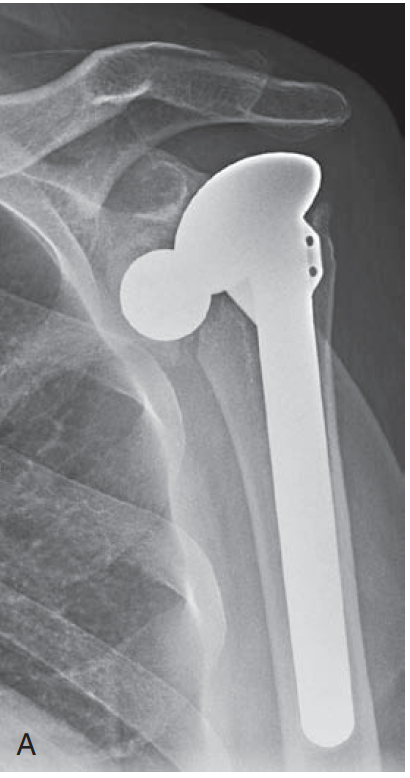
One of the most common errors is a "too-high" position, as shown below.


As shown in the examples above, too high positioning can contribute to glenoid component failure and can also result in a stiff shoulder as shown below.


as well as placing excessive tension on the rotator cuff
                                             
Too high positioning of the humeral head can result from a too high neck cut 


or from failure to properly seat the component


We like to be sure that the margin of the humeral prosthesis is just below the "berm" as shown below.


We routinely make the humeral neck cut at a 45 degree angle with the long axis of the medullary canal.

This is the case if the apparent anatomic neck is in varus
or valgus


The head cut is made in 35 degrees of retroversion using the forearm of the flexed elbow as a reference. Care is taken to avoid damage to the cuff insertion from an excessively retroverted cut.


So, as can be seen from the above, the humeral neck cut is important. It can be correctly made without special jigs, 3D planning or patient specific guides by using direct observations make at the time of surgery.


Here are some videos that are of shoulder interest
Shoulder arthritis - what you need to know (see this link).
How to x-ray the shoulder (see this link).
The total shoulder arthroplasty (see this link).
The ream and run technique is shown in this link.
The cuff tear arthropathy arthroplasty (see this link).
The reverse total shoulder arthroplasty (see this link).
Shoulder rehabilitation exercises (see this link).

Follow on twitter: Frederick Matsen (@shoulderarth)


Saturday, October 19, 2019

Patient specific instrumentation - is it of value?

Accuracy of patient-specific instrumentation in shoulder arthroplasty: a systematic review and meta-analysis

These authors observe that while there has been a significant recent emphasis on the use of patient-specific instrumentation (PSI) in shoulder arthroplasty, clinical data are lacking to support the increased time and expense associated with these technologies that are increasingly being developed and promoted 


They conducted a systematic review in an attempt to determine whether there was published evidence that PSI significantly improved implantation accuracy or clinical outcomes for  total shoulder arthroplasty (TSA).

Their analysis included articles reporting use of any preoperative or intraoperative PSI techniques, models, or guides to assist with TSA prosthesis implantation,  including 352 anatomic TSAs and 166 reverses. 

Meta-analysis revealed no significant differences in accuracy between PSI and standard instrumentation. 

The articles reviewed did not demonstrate enhanced clinical outcomes or glenoid component longevity with PSI for TSA. The impact of PSI technology on cost or intraoperative time was not evaluated in any of the articles included in this review.

Comment: As the authors point out, CT based planning systems and PSI are being marketed for TSA in the absence of data on their impact on clinical outcomes, survivorship costs, operative time, production time, and complications (e.g. infection, glenoid fracture).

Fundamentally, we do not know how sensitive clinical outcomes are to glenoid component placement or whether "correction" of glenoid version or inclination makes the arthroplasty more effective or durable. 

Beyond these important but unanswered questions, other significant ones also remain unaddressed: if they are shown to be effective, what is the appropriate use of these technologies (which surgeons, which patients, and which diagnoses)?

It would seem that the burden of answering these questions should fall on those promoting and marketing them.

On the topic of computer assistance, here's a recent article from our knee arthroplasty colleagues: A Comparison of Long-Term Outcomes of Computer-Navigated and Conventional Total Knee Arthroplasty A Meta-Analysis of Randomized Controlled Trials

In their meta-analysis of randomized controlled trials with mean follow-up durations of >8 years, they found that while some alignment variables were improved in the computer-navigated total knee arthroplasty group when compared with conventional total knee arthroplasty group, the functional outcomes did not differ significantly between the 2 techniques. There were no differences in the revision rate and the incidence of aseptic loosening.

=====
To see our new series of youtube videos on important shoulder surgeries and how they are done, click here.

Use the "Search" box to the right to find other topics of interest to you.


You may be interested in some of our most visited web pages  arthritis, total shoulder, ream and run, reverse total shoulder, CTA arthroplasty, and rotator cuff surgery as well as the 'ream and run essentials'

Saturday, March 9, 2019

Value and Accuracy of 3-Dimensional Planning, Implant Templating, and Patient-Specific Instrumentation in Anatomic Total Shoulder Arthroplasty

Accuracy of 3-Dimensional Planning, Implant Templating, and Patient-Specific Instrumentation in Anatomic Total Shoulder Arthroplasty

These authors sought to compare the orientation and location of glenoid placement achieved at surgery with different types of instrumentation in comparison to a preoperative plan based on 3D CT scans in primary total shoulder shoulder arthroplasty.

173 patients with end-stage glenohumeral arthritis were enrolled in 3 prospective studies evaluating patient-specific instrumentation and 3D preoperative planning. All patients underwent preoperative 3D CT planning to determine optimal glenoid component and guide pin position based on surgeon preference. 


Patients were placed into 1 of 5 instrument groups used for intraoperative guide pin placement: 
(1) standard instrumentation,


(2) standard instrumentation combined with use of a 3D glenoid bone model containing the guide pin,


(3) use of the 3D glenoid bone model combined with single-use patient-specific instrumentation,

(4) use of the 3D glenoid bone model combined with reusable patient-specific instrumentation,

and (5) use of reusable patient-specific instrumentation with an adjustable, reusable base. 


Postoperatively, all patients underwent 3D CT to compare actual versus planned glenoid component position. Deviation from the plan was compared across groups on the basis of absolute differences and outlier analysis. 

In nearly all comparisons, there were no significant differences in the deviation from the plan for glenoid implant orientation or location across the 3 major treatment groups.
This study did not demonstrate that any type of patient-specific instrumentation resulted in consistent differences in accuracy of glenoid implant placement in primary TSA with 3D CT preoperative planning. 

Comment:  This article does not give the cost or time necessary for 3D CT preoperative planning or for the different types of patient-specific instrumentation. They do state that "the value of these technologies can also be compared on the basis of their current cost and time to delivery. The 3D CT preoperative software and templating were used in all groups in the study and this is therefore not a differentiating factor.  Reusable instruments that do not add substantial cost to the provider were used in Groups 1, 2, 4, and 5. The additional cost and time to deliver the bone model are negative factors for Groups 2, 3, and 4. Use of a reusable base with reusable patient specific instrumentation (Group 5) may provide the lowest cost and shortest time to delivery,"  however the actual costs are not provided.

Questions remain regarding the use/value of preoperative 3D CT planning and patient specific instrumentation. (1) Are these technologies being recommended for all surgeons and hospitals performing shoulder arthroplasty? (2) Are these technologies being recommended for all shoulder arthroplasties or just for managing complex pathologies?  It is noted that 76 of the cases in this series had the relatively straightforward type A glenoid pathoanatomy, for example. (3) In that these approaches appear to  involve extra time, radiation exposure and cost, has it be determined for which cases these technologies lead to better patient-reported outcomes than those conventionally obtained for total shoulders performed without preoperative CT planning? In other words, for which cases is there evidence of clinical significance resulting from improvement in the accuracy of the match between the preoperative plan and the postoperative result?


===

We have a new set of shoulder youtubes about the shoulder, check them out at this link.

Be sure to visit "Ream and Run - the state of the art" regarding this radically conservative approach to shoulder arthritis at this link and this link

Use the "Search" box to the right to find other topics of interest to you.