Showing posts with label propionibacterium. Show all posts

Saturday, August 10, 2024

Cutibacterium - why is it so difficult to get them out of bones and joints?


Cutibacterium (propionibacterium) was long dismissed as just a normal inhabitant of the skin, a cause of acne, a slow‐growing facultative anaerobe, a non-virulent organism, and a contaminant when found in intraoperative cultures.

Now, however, clinical scientists point out that Cutibacterium is the organism most commonly associated with periprosthetic infections of the shoulder. And, furthermore, Cutibacterium has the ability to persist in prosthetic wounds, in spite of prophylaxis, surgical treatment and antibiotic management.

This persistence is likely to multifactorial, related in part to the large amounts of this organism on the skin, the host's inability to recognize Cutibacterium as "a foreign invader", and the ability of this organism to form biofilms that protect it from antibiotics and immune response.

Recently, the authors of Cutibacterium acnes invades submicron osteocyte lacuno‐canalicular networks following implant‐associated osteomyelitis uncovered more information bearing on the challenge of eliminating this organism from arthroplasty wounds. They developed an implant-associated osteomyelitis model in which mice were subjected to transtibial implantation of titanium or stainless-steel pins contaminated with Cutibacterium. Using in vitro scanning electron microscopy (EM) they confirmed that Cutibacterium can form biofilms on stainless-steel and titanium implants - two of the common metals used in prosthetic implants. In their model, Cutibacterium persisted for 28 days not only in the tibia but that it also disseminated to internal organs. 

Transmission EM revealed the presence of Cutibacterium within bone canaliculi. These data revealed that the osteocyte lacuno-canalicular networks can serve as a sheltered reservoir in which Cutibacterium can persist long after inoculation. 

This adds yet another possible mechanism explaining why Cutibacterium chronic implant-associated bone infections can be delayed in their presentation and difficult to treat.

One of the striking features of this work is that it demonstrates biofilm formation with bacterial adherence to the pin surface as early as 3 hours after implantation. Progressive biofilm formation was seen with increasing pin incubation time as shown below


The recovery of Cutibacterium from bone, soft tissue, liver, kidneys, heart and spleen at 28 days after implantation demonstrates the systemic spread of the organism and inability of the host to resolve the infection. 

Comment: Cutibacterium can now be recognized as a virulent bacteria because of its high ability to cause disease - in part because it evades the host' immune system and in part because of its defense mechanisms, including biofilm formation and, as suggested in this article reporting on results from a murine model, its ability to colonize bone canaliculi.

The dermal pilosebaceous units of the skin overlying the shoulder - especially those in young men - are loaded with Cutibacterium. Investigations have shown that skin preparations are not effective in eliminating Cutibacterium from the dermis. Thus the incisions used for shoulder arthroplasty routinely allow Cutibacterium to enter the wound and potentially participate in the formation of a biofilm on the surface of the implant. 

Further research is needed to define ways to reduce the bacterial load that is introduced at the time of arthroplasty as well as the risk of subsequent biofilm formation.

Comments welcome at shoulderarthritis@uw.edu

You can support cutting edge shoulder research that is leading to better care for patients with shoulder problems, click on this link

Follow on twitter/X: https://x.com/RickMatsen
Follow on facebook: https://www.facebook.com/shoulder.arthritis
Follow on LinkedIn: https://www.linkedin.com/in/rick-matsen-88b1a8133/

Here are some videos that are of shoulder interest
Shoulder arthritis - what you need to know (see this link).
How to x-ray the shoulder (see this link).
The ream and run procedure (see this link).
The total shoulder arthroplasty (see this link).
The cuff tear arthropathy arthroplasty (see this link).
The reverse total shoulder arthroplasty (see this link).
The smooth and move procedure for irreparable rotator cuff tears (see this link).
Shoulder rehabilitation exercises (see this link). 


Saturday, August 20, 2022

Diagnosing the presence of Cutibacterium in shoulder arthroplasty: how many cultures need to be taken at revision shoulder arthroplasty?

Cutibacterium (formerly known as Propionibacterium) is the commonest organism causing shoulder periprosthetic infections (PJI). Evaluating failed arthroplasties for PJI is essential for guiding treatment. Diagnosing Cutibacterium PJI requires multiple deep tissue and explant samples, special culturing protocols and prolonged periods of observation. 

The topic of detecting Cutibacterium at revision arthroplasty was addressed by the authors of Origin of propionibacterium in surgical wounds and evidence-based approach for culturing propionibacterium from surgical sites who studied the presence of this organism on the skin and in the surgical wounds of patients who underwent revision arthroplasty for reasons other than clinically obvious infection. Specimens were cultured in broth and on aerobic and anaerobic media.

Propionibacterium grew in twenty-three of thirty cultures of specimens obtained preoperatively from the unprepared epidermis over the area where a skin incision was going to be made for a shoulder arthroplasty; males had a greater average degree of positivity than females. 

Twelve of twenty-one male subjects and zero of twenty female subjects who had cultures of dermal specimens obtained during revision shoulder arthroplasty had positive findings for Propionibacterium. 

Twelve of twenty male subjects and only one of twenty female subjects had positive deep cultures.. 

The positivity of dermal cultures for Propionibacterium was significantly associated with the positivity of deep cultures for this organism.

If Propionibacterium was present in deep tissues, it was likely that it would be recovered by culture if four different deep specimens were obtained and cultured for a minimum of seventeen days on three different media: aerobic, anaerobic, and broth.

Evaluating the presence of Cutibacterium in primary shoulder arthroplasty was explored by the authors of Minimal number of cultures needed to detect Cutibacterium Acnes in primary reverse shoulder arthroplasty. A prospective study

They studied 160 primary RSAs (128 females and 32 males, mean age 74 years), excluding patients with obvious infection or an invasive shoulder procedure in the prior 6 months. 

In 90 cases, 11 cultures were obtained.  10 cultures were obtained in the other 70 cases (culture #10 was a sterile sponge to detect false positives). To determine the minimum number of cultures needed to detect Cutibacterium

Two out of the 70 sterile sponges cultured turned out to be positive for Cutibacterium, giving a false positive rate of 2.8%.


There were 42 patients with positive cultures: 20/32 of the males (69%) and 22/128 of the females (17%).

When considering the the 23% of patients with positive deep tissue cultures, the sensitivity to detect Cutibacterium in relation to the number of specimens is shown in the chart below


Comment: The second study above demonstrates that Cutibacterium can be recovered from a subtantial percentage of patients having primary reverse total shoulder arthroplasty. This study of older predominantly female patients needs to be considered in light of the fact that younger male patients are substantially more likely to have positive deep cultures. 

It is not clear why cultures were obtained in these primary arthroplasties - was there a suspicion of infection?. It is not clear at what point in the procedure the specimens were obtained - the beginning, middle or end. And it not clear whether these patients had ipsilateral shoulder surgery prior to their reverse total shoulder. The post from earlier today (see this link) is of interest in that regard. 

While the number of positive cultures is of relevance, recent evidence indicates that the degree of positivity is of greater importance in interpreting the results of deep cultures for Cutibacterium. The authors of Characterizing the Propionibacterium Load in Revision Shoulder Arthroplasty A Study of 137 Culture-Positive Cases  reported on 137 revision shoulder arthroplasties from which a minimum of 4 specimens had been submitted for culture and at least 1 was positive for Propionibacterium. Standard microbiology procedures were used to assign a semiquantitative value (0.1, 1, 2, 3, or 4), called the Specimen Propi Value, to the amount of growth in each specimen. The sum of the Specimen Propi Values for each shoulder was defined as the Shoulder Propi Score, which was then divided by the total number of specimens to calculate the Average Shoulder Propi Score.

The number and percentage of positive specimen specific cultures of material obtained from the stem explant, head explant, glenoid explant, humeral membrane, collar membrane, other soft tissue, fluid per shoulder ranged from 1 to 6 and 14% to 100%. 

A high percentage of specimens (mean, 43%; median, 50%) from the culture-positive shoulders showed no growth. 

Only 32.6% of the fluid cultures were positive in comparison with 66.5% of the soft-tissue cultures and 55.6% of the cultures of explant specimens. 

The average Specimen Propi Value (and standard deviation) for fluid specimens (0.35 ± 0.89) was significantly lower than those for the soft-tissue (0.92 ± 1.50) and explant (0.66 ± 0.90) specimens (p < 0.001). 

The Shoulder Propi Score was significantly higher in men (3.56 ± 3.74) than in women (1.22 ± 3.11) (p < 0.001). Similarly, men had a significantly higher Average Shoulder Propi Score (0.53 ± 0.51) than women (0.19 ± 0.43) (p < 0.001).

This investigation suggests that Propionibacterium is unevenly distributed within culture-positive revised shoulders. As a result, the number of specimens and their source (explant, soft tissue, or fluid) have major influences on the culture results for a revised shoulder arthroplasty.

We have subsequently learned to identify patients at high risk for positive deep cultures at revision for failed arthroplasty: young male patients with highly positive preoperative cultures of the skin overlying the intended skin incision and having high serum levels of testosterone who develop shoulder pain and stiffness after an initial "honeymoon" period of good comfort and function. In  these patients multiple deep tissue and explant specimens are sent for culture while wound prophylaxis (Betadine lavage, topic antibiotics), prosthesis exchange, and antibiotic treatment are considered for managing a likely infection pending the results of the cultures.

When seeking Cutibcaterium at revision arthroplasty, out current practice is to take 5 deep tissue or explant specimens and culture them on aerobic, anaerobic and broth media for at least 14 days.

You can support cutting edge shoulder research that is leading to better care for patients with shoulder problems, click on this link.


Follow on twitter: https://twitter.com/shoulderarth

Follow on facebook: click on this link

Follow on facebook: https://www.facebook.com/frederick.matsen

Follow on LinkedIn: https://www.linkedin.com/in/rick-matsen-88b1a8133/

Here are some videos that are of shoulder interest
Shoulder arthritis - what you need to know (see this link).
How to x-ray the shoulder (see this link).
The ream and run procedure (see this link).
The total shoulder arthroplasty (see this link).
The cuff tear arthropathy arthroplasty (see this link).
The reverse total shoulder arthroplasty (see this link).
The smooth and move procedure for irreparable rotator cuff tears (see this link).
Shoulder rehabilitation exercises (see this link).


Wednesday, April 20, 2022

Single stage revision of infected reverse total shoulder - 14 year followup.

 A 45 year old right handed active man had a Simple Shoulder Test score of 4/12. His x-rays revealed severe capsulorrhaphy arthropathy with posterior dislocation of right shoulder after a Putti Platt procedure for shoulder instability performed many years earlier.


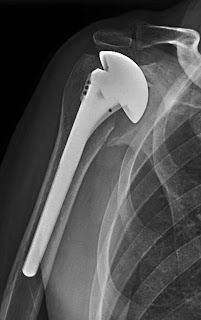
At surgery he was found to have massive humeral and glenoid deformity with severe posterior glenoid erosion and malformation of the humeral head with posterior capsular laxity and anterior capsular contracture. His surgery was a humeral hemiarthroplasty with subscapularis lengthening. His post operative film is shown here.


However, the humeral head again became posteriorly unstable. A year later he had an open reduction of the posteriorly dislocated shoulder with anterior release, prosthetic head removal, posterior cortical iliac autograft of the glenoid with screw fixation, posterior soft tissue reconstruction, and reinsertion of hemiarthroplasty head. However, on testing the range of motion of the shoulder at surgery, the securely fixed bone graft fragmented requiring removal of the graft and screws and insertion of a reverse total shoulder. His postoperative film is shown here.


Three years later he represented with pain in his shoulder that started with golfing. He had no clinical evidence of infection. His x-rays showed humeral osteolysis and subsidence


He then had a single exchange revision of reverse total shoulder arthroplasty to a long stemmed humeral component and a new glenoid component at which time six cultures were obtained before antibiotics were administered. At this procedure there was a substantial amount of membrane and granulomatous tissue from the glenoid and from the humeral medullary canal. There was no cloudy fluid and no purulence.

His histology showed gram-positive rods and up to 40 white blood cells per high power field on frozen section. The patient’s final pathology eventually returned “synovial tissue with multiple foci of dense neutrophilic infiltrates (greater than five neutrophils per high power microscopic field using a 40 X objective in at least five separate microscopic fields) in a background of prominent plasmacytic inflammation and hemosiderin-laden macrophages.” He was placed on a six-week course of IV vancomycin and rifampin, which was changed to ceftriaxone to better cover Propionibacterium after the culture results were final at 3 weeks.

His culture results were as follows:
Glenoid Membrane No. 1: 2+ Propionibacterium
Glenoid Membrane No. 2: 1+ Propionibacterium 
Fluid Right Glenoid: 1+ Propionibacterium
Humeral Membrane No.1: 1 colony Propionibacterium
Humeral Membrane No. 2: 1+ Propionibacterium
Humeral Membrane  No. 3 One colony Propionibacterium

He remained on oral Augmentin for a year.

Six years after his most recent revision he was playing tennis (tossing the ball with his right hand serving with his left), skiing gentle slopes, and running for fitness. His x-rays at 6 years showed stable component fixation.


At 14 years after his revision, he returned for followup, reporting a comfortable shoulder that allowed him to play tennis and golf. His films at 14 years are shown below.


Comment: This case reveals the challenges of severe capsulorrhaphy arthropathy with posterior instability as well as the substantially delayed insidious presentation of osteolysis associated with Propionibacterium (Cutibacterium).

You can support cutting edge shoulder research that is leading to better care for patients with shoulder problems, click on this link.


Follow on twitter: https://twitter.com/shoulderarth

Follow on facebook: click on this link

Follow on facebook: https://www.facebook.com/frederick.matsen

Follow on LinkedIn: https://www.linkedin.com/in/rick-matsen-88b1a8133/

Here are some videos that are of shoulder interest
Shoulder arthritis - what you need to know (see this link).
How to x-ray the shoulder (see this link).
The ream and run procedure (see this link).
The total shoulder arthroplasty (see this link).
The cuff tear arthropathy arthroplasty (see this link).
The reverse total shoulder arthroplasty (see this link).
The smooth and move procedure for irreparable rotator cuff tears (see this link).
Shoulder rehabilitation exercises (see this link).

Tuesday, May 21, 2019

Failed shoulder joint replacement - what is the role of arthroscopy?

Arthroscopy of the symptomatic shoulder arthroplasty

These authors retrospectively reviewed the records of 14 patients who underwent diagnostic
shoulder arthroscopy to evaluate symptoms of shoulder pain or stiffness after a shoulder arthroplasty without an obvious cause. Patients were excluded if they had any traditional symptoms of infection or had a raised serum white cell count or C-reactive protein level prior to diagnostic arthroscopy. Patients were also excluded if available preoperative imaging showed evidence of loosening, periprosthetic fracture, or superior or anterior migration of the humerus or showed any other finding suggestive of the cause of pain.

The mean interval between the joint replacement and arthroscopic evaluation was over five years.

Prophylactic antibiotics were administered at anesthetic induction to diminish the risk of iatrogenic infection. At arthroscopy five synovial tissue samples were taken from different positions within the joint. Each tissue biopsy specimen was taken with a separate, clean arthroscopic punch and was cultured on Columbia Agar with ‘‘Chocolated’’ Horse Blood (incubated in carbon dioxide) and Fastidious Anaerobic Agar with Horse Blood (incubated anaerobically). Extended cultures were interpreted at 15 days. Biopsy findings were considered positive if the same organism was cultured on 3 or more of the 5 samples.
Rotator cuff tears were noted in 8 patients (57%). Capsular contraction requiring release was noted in 2 patients (10%).

Arthroscopic biopsy specimens returned positive culture results in 3 patients (21%).


Of the patients who went on to definitive revision surgery, none had an unexpected positive microbiological result (defined as 3 positive samples from a further 5 samples) from samples taken at the time of revision surgery.

Of the 5 patients who underwent perioperative joint aspiration, only 2 had aspiration results that correlated with the biopsy results.

Other findings are summarized below


Comment: This study demonstrates the value of pre-revision shoulder arthroscopy in patients with failed arthroplasty for which a diagnosis cannot be made by clinical evaluation.

In contrast to some prior studies, these authors' technique includes harvesting five samples that were submitted for a culturing protocol specific for detecting Cutibacterium (Propionibacterium). It is of interest that the three cases with positive cultures, at least three of the specimens were culture positive. None of the cases had only one or two positive cultures.

These authors found that the findings at arthroscopy were helpful in guiding subsequent treatment of these patients.

=====
We have a new set of shoulder youtubes about the shoulder, check them out at this link.

Be sure to visit "Ream and Run - the state of the art" regarding this radically conservative approach to shoulder arthritis at this link and this link

Use the "Search" box to the right to find other topics of interest to you.

Sunday, April 21, 2019

Cutibacterium found in primary reverse total shoulders


Cutibacterium acnes in primary reverse shoulder arthroplasty: from skin to deep layers

These authors sought to determine the presence of Cutibacterium acnes on the skin and in deep tissue in 90 patients having primary reverse shoulder arthroplasty with using antibiotic prophylaxis and standard preoperative skin preparation with chlorhexidine. The 90 patients (74 women, 16 men) finally included were a mean age of 75 years. The indications for RSA were cuff-tear arthropathy in 58 patients, an acute fracture in 20, and fracture sequelae in 12.

12 cultures were obtained from each patient. Once the skin was prepared and before the skin incision was performed, 2 punch biopsies were taken from the skin at the edge of the incision  Immediately after the skin incision was done, another subcutaneous tissue biopsy was obtained. Two samples were taken from the bursa over the greater tuberosity. Two samples were taken around the long head of the biceps insertion. After the components of the arthroplasty were in place, 2 samples were obtained from the glenoid, 2 from the humeral side, and 1 from the subcutaneous tissue.

Cultures were incubated for 7 days at 37°C aerobically (with 5% CO2) and anaerobically for 14 days. A culture was considered positive for C acnes when 2 or more colonies were observed.

Total DNAfrom C acnes isolates was extracted using the InstaGene Matrix method. The phylotype was determined, and single-locus sequence typing was done on all isolates.

Of the 1080 tissue cultures from the 90 patients, 62 of those tissue cultures (5.7%) were positive for C acnes. There were 22 C acnes–positive tissue cultures before prosthesis implantation and 40 after implantation. C acnes was isolated in 17 patients (18.8%).
Most of the cases with strongly positive deep cultures had positive skin cultures.


Many of the clusters isolated belonged to phylotype IB and clonal complex (CC) 36 or phylotype II and CC53. The C acnes K1 and K2 subtypes were usually isolated.

One patient was diagnosed as having an infection 6 months after the surgery, the C acnes isolated in both the primary surgery and during the revision surgery belonged to the same K1 cluster (phylotype II, CC53).
Comment: This article demonstrates the presence of Cutibacterium in primary reverse arthroplasty performed on patients who are older than those usually considered at risk (young, active males).

The followup after surgery was a minimum of one year. The one infection noted in this series was diagnosed six months after surgery and that the bug cultured at the time of revision was apparently the same one isolated at the index surgery. We have noted that periprosthetic infections with Cutibaterium may present up to a decade after surgery, so longer term followup of the culture positive shoulders will be of interest.


=====
We have a new set of shoulder youtubes about the shoulder, check them out at this link.

Be sure to visit "Ream and Run - the state of the art" regarding this radically conservative approach to shoulder arthritis at this link and this link

Use the "Search" box to the right to find other topics of interest to you.

Monday, March 18, 2019

Bacteria and shoulder joint replacement

It is now well recognized that Cutibacterium (Propionibacterium) are the most common organisms cultured from deep tissue and explant specimens harvested at the surgical revision of a failed arthroplasty, especially in those cases revised for pain and stiffness without clinical evidence of inflammation.
It is also well recognized that the most likely source of these organisms is the sebaceous glands and hair follicles of the skin that is incised when a shoulder replacement is performed, particularly in young, healthy male patients. 
Finally, it is generally accepted that the usual surgical skin preparation and preoperative antibiotics are ineffective in lowering the amount of these organisms in the skin and in reducing the risk of Cutibacterium entering the wound at surgery.

Several questions remain unanswered.
(1) Why do Cutibacterium cause problems in some shoulders but not in others?
(2) Why does it often take months or years before the symptoms related to the Cutibacterium become evident?
(3) What can be done to prevent clinical problems associated with the presence of Cutibacterium in shoulder arthroplasty?
(4) How can the presence of Cutibacterium in a failed arthroplasty be diagnosed while the patient is still in operating room (i.e. in time to adjust the surgical plan accordingly)?
(5) What is the best medical and surgical treatment for a failed shoulder arthroplasty?

We've asked orthopaedist/artist Steve Lippitt to help us shed some light on some of these unknowns.

Most shoulder implants have bodies made of titanium, a metal that can provide a foundation for a biofilm (a film on the metal that includes bacteria, proteins, and carbohydrates). 
Cutibacterium prefer an "low oxygen" or anaerobic environment, such as that found on the inside of the humerus.


Cutibacterium can enter the wound at the time of the surgical skin incision 


Those bacteria that enter the joint are free floating or "planktonic". Because the joint has a rich blood supply, these are usually cleaned up by the body's defense system in the oxygen-rich environment.
Despite all precautions, some Cutibacterium may find their way into the humeral canal where they find an attractive environment in which to form a biofilm: the anaerobic inside of the humerus plus a titanium implant body.


Here the Cutibacterium in the biofilm (green area below) enter a semi-dormant  state of slow growth and great resistance to antibiotic therapy,


 reminding one of Sleeping Beauty or Rip Van Winkle


During this "honeymoon" period, the Cutibacteria in the biofilm can slowly multiply, but, because they do not have contact with the joint, symptoms of pain and stiffness are not apparent.

After a period of months, years or even decades, some bone resorption can occur, releasing Cutibacterium into the joint where they can give rise to pain and stiffness without the usual characteristics of inflammation. Because the number of bacteria in the joint are small, the chance of recovering them with a joint aspiration is low. Instead, identifying these bacteria requires culturing deep tissue specimens and the implants removed at revision surgery.
In some cases, bone resorption takes place to the extent that the humeral component can become loose.

The story above may seem like a "fairy tale" and is not yet robustly supported by sound research. However, this model suggests possible answers to some of our questions:

(1) Why do Cutibacterium cause problems in some shoulders but not in others?
*Some patients (female patients and older males) may have low levels of Cutibacterium in their sebaceous glands. Some patients may be better than others in terms of "cleaning up" bacteria introduced at surgery.

(2) Why does it often take months or years before the symptoms related to the Cutibacterium become evident?
*Bacteria in biofilms grow very slowly, taking a long interval between the time of the index surgery and the time that the patient presents to the surgeon with a painful stiff joint.

(3) What can be done to prevent clinical problems associated with the presence of Cutibacterium in shoulder arthroplasty?
*Our best guess at this point is copious irrigation of the wound, use of new gloves when handling the implant, placing antibiotics in the humeral canal prior to the placement of the prosthesis, and avoiding contact of the prosthesis with the skin edge.


(4) How can the presence of Cutibacterium in a failed arthroplasty be diagnosed while the patient is still in operating room (i.e. in time to adjust the surgical plan accordingly)?
*The best we have so far is to seek preoperative and intraoperative clues: young, lean, male patients, exogenous testosterone, a "honeymoon" period with the onset of symptoms without other explanation, and the intraoperative finding of synovitis. Tests of blood or joint fluid can be helpful when inflammation is present, but are less useful in the usual "stealth" presentation of Cutibacterium. 

(5) What is the best medical and surgical treatment for a failed shoulder arthroplasty?
*Our preference is to manage suspicious cases with a primary prosthesis exchange and immediate intravenous antibiotics that are continued until multiple tissue and explant cultures have been observed for three weeks.

The story above needs to be tested by many observations of many cases by many observers. It should be considered a "rough draft" ripe for editing and revision based on good clinical research.


===
We have a new set of shoulder youtubes about the shoulder, check them out at this link.

Be sure to visit "Ream and Run - the state of the art" regarding this radically conservative approach to shoulder arthritis at this link and this link

Use the "Search" box to the right to find other topics of interest to you.

How you can support progress in shoulder surgery

You may be interested in some of our most visited web pages arthritis, total shoulder, ream and run, reverse total shoulder, CTA arthroplasty, and rotator cuff surgery as well as the 'ream and run essentials'


Tuesday, March 5, 2019

Shoulder arthroplasty infection with Propionibacterium: presentation, treatment and outcome.

A 49 year old athletic man presented with osteoarthritis of the right shoulder, a Simple Shoulder Test score of 6 out of 12, and a type B2 glenoid with biconcavity, retroversion and posterior decentering.


Because of his active lifestyle he elected a ream and run arthroplasty. His six week postoperative films show centering of the humeral prosthesis in a concave glenoid.


Following this procedure, the patient was able to return to regular competitive swimming at the master’s level.


Five years after his index arthroplasty, he returned to the office with complaints of the insidious onset of pain and stiffness without an identified explanation (what we refer to is the "Honeymoon" phenomenon). His Simple Shoulder Test score was 3 out of 12. His CBC, sedimentation rate and C-reactive protein were all within normal limits. His radiographs showed glenoid erosion.


Six years after his index arthroplasty he had a single stage revision. At the time of his revision he was 55 years of age, ASA 2, BMI 24. The preoperative Propionibacterium cultures of his unprepared skin over the area of the  prior incision were strongly positive with a EpidermalSpPV of 2. His intraoperative findings included synovitis. His revision was followed by six weeks of intravenous antibiotic treatment (Ceftriaxone) and 6 months of Augmentin. At 3 weeks after surgery his eight deep intraoperative cultures were strongly positive with a total Propionibacterium score (ShPS) of 7.4.

One year after his revision arthroplasty his Simple Shoulder Test score was 11 out of 12. His radiographs showed showed a centered humeral head with radiographic joint space between the humeral head and the glenoid.


He has returned to his regular swimming program

Comment: This article demonstrates the common presentation of Propionibacterium infection of shoulder arthroplasty. The patient is typically a young, healthy, lean, athletic male. After a post-arthroplasty "honeymoon" period of excellent function lasting months or years, the patient experienced the insidious onset of pain and stiffness without evidence of systemic inflammation. Preoperative cultures of the unprepared skin surface were strongly positive for Propionibacterium. At the time of surgical revision, deep tissue and explant cultures were strongly positive for Propionibacterium. The revision was a single stage prosthesis exchange followed by immediate intravenous antibiotics, avoiding the complexities of a two stage revision.
Because Propionibacterium can manifest themselves years after surgery, we can never be 100% confident that the infection has been "cured".

===

We have a new set of shoulder youtubes about the shoulder, check them out at this link.

Be sure to visit "Ream and Run - the state of the art" regarding this radically conservative approach to shoulder arthritis at this link and this link

Use the "Search" box to the right to find other topics of interest to you.

Saturday, March 2, 2019

All Propionibacteria are not the same - some are hemolytic and some are drug resistant


Hemolysis Is a Diagnostic Adjuvant for Propionibacterium acnes Orthopaedic Shoulder Infections

These authors explored the pathogenicity of hemolytic and nonhemolytic phenotypes of Propionibacterium acnes (P acnes) isolates from shoulder joint aspiration fluid and/or intraoperative tissues.

Hemolysis demonstrated 100% specificity with a positive predictive value of 100% and 80% sensitivity with a negative predictive value of 73% for determining definite and probable infections. 

100% of the patients in the hemolytic group and only 27% of patients in the nonhemolytic group were classified as infected.

Inflammatory markers were markedly higher in the hemolytic group.

Clindamycin resistance was found in 31% of the hemolytic strains, whereas no antibiotic resistance was observed in the nonhemolytic group. 


Time from index surgery to the initial treatment or revision procedure was almost twice as long in the nonhemolytic group. A substantial percentage of patients in the hemolytic group (44%) compared with the nonhemolytic group (0%) failed initial treatment requiring a revision procedure for persistent infection.

These authors concluded that hemolytic strains of P acnes exhibit enhanced pathogenicity to their host by eliciting a more prominent systemic inflammatory response, increased antibiotic resistance, and a more challenging clinical course. 

Comment: This article needs to be considered along with another recent publication:

Hemolytic strains of Propionibacterium acnes do not demonstrate greater pathogenicity in periprosthetic shoulder infections

Certain strains of Propionibacterium result in hemolysis when streaked on a blood agar plate as shown in "A" below in contrast to "B" which does not show hemolysis.


These authors studied 39 patients with at least 1 positive culture for P acnes at the time of revision shoulder arthroplasty who also had testing of the Propionibacterium for hemolysis. 20 of the isolated strains showed hemolytic activity and 19 did not. 

In this study the presence of hemolysis was not significantly associated with greater clinical evidence of infection. The hemolytic and nonhemolytic groups showed no difference regarding preoperative serum erythrocyte sedimentation rate and/or C-reactive protein level (P = .70), number of positive cultures (P = .395), time to positive culture (P = .302), and presence of positive frozen section findings (P = .501). Postoperatively, clindamycin resistance, shoulder function, and the rate of reoperation were not significantly different between the hemolytic and nonhemolytic groups.

These authors point out that a prior study by Nodzo et al in 2014 demonstrated significantly elevated
CRP levels in hemolysis-positive patients.  More recently, this group expanded their analysis with 31 patients evaluated for hemolysis. In that study by Boyle et al 2016 showed significantly elevated ESR and CRP levels, as well as a significantly greater percentage (31% vs 0%) of antibiotic resistance, in cases with hemolysis-positive Propionibacterium cultures.

Comment: At this point it is difficult to be sure whether or not hemolytic strains are more virulent than non-hemolytic strains of Propionibacterium.  It is clear, however, that all strains of Propionibacterium are not the same as revealed by the hemolytic phenotype as well as the Clindamycin-resistant phenotype. How these differences affect the diagnosis, clinical course and management of Propionibacterium in revision arthroplasty remains to be seen.

Interested readers may be interested in these two articles:

Genetic profiles of Propionibacterium acnes and identification of a unique transposon with novel insertion sequences in sarcoid and non-sarcoid isolates  which identified two hemolytic-associated genes (camp 5 and tly) and

===


We have a new set of shoulder youtubes about the shoulder, check them out at this link.

Be sure to visit "Ream and Run - the state of the art" regarding this radically conservative approach to shoulder arthritis at this link and this link

Use the "Search" box to the right to find other topics of interest to you.

Tuesday, February 5, 2019

Can injection infect the shoulder with Propionibacterium?

The colonisation of the glenohumeral joint by Propionibacterium acnes is not associated with frozen shoulder but is more likely to occur after an injection into the joint

These authors investigated the prevalence of Propionibacterium (P.) acnes in the subcutaneous fat and capsule of 46 patients undergoing shoulder surgery for frozen shoulder or instability. Patients were asked if they have ever had an injection into the shoulder to be operated on, including an injection of contrast for MR arthrogram.

25 patients (53%) had P. acnes in one or more tissue samples and 35 (74%) had other bacterial species. The same microbe was found in the subcutaneous fat and the capsule in 13 patients (28%). 

Male gender was significantly associated with an increased capsular colonisation of P. acnes (odds ratio (OR) 12.38, 95% confidence interval (CI) 1.43 to 106.77, p = 0.02). 

A pre-operative glenohumeral intra-articular injection - either as treatment for a frozen shoulder or for the injection of contrast in patients with instability - was significantly associated with capsular P. acnes colonisation (OR 5.63, 95% CI 1.07 to 29.61, p = 0.04. 

Positive fat colonisation with P. acnes was significantly associated with capsular P. acnes (OR 363, 95% CI 20.90 to 6304.19, p < 0.01). 

Patients who had a pre-operative glenohumeral injection who were found intra-operatively to have fat colonisation with P. acnes had a statistically significant association with colonisation of their capsule with P. acnes (OR 165, 95% CI 13.51 to 2015.24, p < 0.01).

These authors concluded that there was a statistically significant association between subcutaneous skin P. acnes culture and P. acnes capsular culture, especially when the patient has undergone a previous injection. 

Comment: This paper provides additional evidence that any invasion of the joint, even an injection, may introduce Propionibacterium into the shoulder. This paper does not provide data on how long prior to the surgery the injections were performed. There is a common believe that shoulder arthroplasty shoulder not be performed within three months of an injection. However, there is no evidence that Propionibacterium introduced by an infection would have been eliminated by host defenses in that period of time. Thus we must ask, does the risk of shoulder colonization after injection decrease with time after injection, or is it long standing?

===
We have a new set of shoulder youtubes about the shoulder, check them out at this link.

Be sure to visit "Ream and Run - the state of the art" regarding this radically conservative approach to shoulder arthritis at this link and this link

Use the "Search" box to the right to find other topics of interest to you.