Showing posts with label risk factors. Show all posts

Tuesday, November 12, 2024

Periprosthetic infections of the shoulder - Part 1

Introduction 
We humans each contain trillions of microorganisms, outnumbering human cells by 10 to 1. A person weighing around 154 pounds carries about 4 pounds of bacteria. The point being that the presence of bacteria does not indicate an infection. While Cutibacterium is the most common cause of periprosthetic infections of the shoulder, it is first and foremost a normal resident of the pilosebaceous glands of the normal dermis from which it maintains normal skin health.   

Our skin incision transects a large number of the abundant pilosebaceous glands on the chest allowing the bacteria they contain to continuously enter the surgical field during the conduct of the arthroplasty. Cutibacterium are commonly recovered from shoulders having routine shoulder arthroplasty for arthritis (see link, link, link, link), yet very few of these contaminated joint replacements become infected.  

NB:It may come down to the interaction between the organism and the human.  A certain species or strain of bacteria may be "virulent" for one host and inconsequential for another.


There is lack of consensus on "what is an infection?"; from the above we recognize that the mere presence of bacteria does not equate to an infection.

A practical definition is "bacteria doing harm".  Whether or not bacteria in a shoulder are causing harm depends on the virulence of the bacteria, the number of active bacteria, and the adequacy of host response. In the usual arthroplasty, the surgeon irrigates the surgical field, reducing the bacterial load, and the host defenses contain the remaining organisms so that harm is not done.

When shoulder periprosthetic infections occur they are costly, resulting in almost $500,000,000 per year and causing a high rate of morbidity and mortality. 

Risk Factors For Periprosthetic Infections
There are many factors that are associated in increased risk of periprosthetic shoulder infections.  These patients may merit consideration of increased prophylaxis and close observation after arthroplasty:

Male sex (link, link, link, link, link)
Higher testosterone levels (link, link)
Recent cortisone infection (link, link, link, link, link)
Recent arthroscopy (link, link, link), cuff repair, or other types of surgery (link, link)
    Hgb<12 g/dL
Low abumin
    <3.5g/dL
Low lymphocytes
    <1500 per microliter
BMI <18 or >40 (link, link, link)
Albumin <3.5 mg/dL


Perioperative dexamethasone and GLP-Agonists have not been found to increase the risk of periprosthetic shoulder infections.

What Interventions May Reduce The Risk Of Periprosthetic Infections

Most of the commonly used measures have not been proven to be clinically significantly effective in reducing the rate of periprosthetic infections. These inlcude:

Home washes

Preoperative doxycycline

Skin preps (link, link, link, (link).

Space suits

Laminar flow

Electrocautery for the skin incision 


The two interventions with the strongest evidence of effectiveness in reducing the risk of  periprosthetic infections are:


Preoperative intravenous cephalosporins (link, link).

In wound Vancomycin


Diagnosis         


Preoperative evaluation


In considering the diagnosis of periprosthetic infections of the shoulder, it is important to consider separately the two presentations of this condition: the obvious presentation and the stealth presentation.


The obvious presentation is typically characterized by the acute onset of shoulder pain, swelling, tenderness and erythema. Blood tests for inflammation (white blood cell count, percent neutrophils, erythrocyte sedimentation rate, and C-reactive protein) are commonly elevated. Aspiration of the joint commonly reveals cloudy fluid with elevated inflammatory markers and cultures that turn positive within a few days for organisms such as Cutibacterium, methicillin sensitive Staphylococcus aureus (MSSA), and methicillin resistant Staphylococcus aureus (MRSA). In sum, diagnosis of an obvious infection is rarely a challenge.


The challenge lies in the diagnosis of a stealth infection. Typically, stealth infections present as otherwise unexplained onset of stiffness and pain after an initially satisfactory recovery (we call this the "honeymoon period") lasting months or years. The physical examination may show only stiffness of the glenohumeral joint.
Plain x-rays may reveal loosening of a previously well-fixed humeral component.

A number of preoperative tests have been found to have low sensitivity and specificity for stealth infections including


PET cans

Serum D-Dimer (link, link)

C-reactive protein (link, link, link)

Erythrocyte sedimentation rate and white blood cell count.


In contrast to the situation with obvious infections, attempting a joint fluid aspiration in a case of suspected stealth infection often yields no fluid. When fluid is aspirated the results have low predictive value/reliability (link, link, link, link), and poor concordance with intraoperative cultures (link, link).


Synovial fluid WBC>2800/mm^3 appears to have good sensitivity and specificity, however, synovial fluid Il-6, leukocyte esterase, and alpha-defensin are of uncertain benefit in diagnosing periprosthetic infection (link, link, link, link, link). 


Organisms can be recovered using preoperative tissue biopsy by a needle or by using an arthroscope (link, link, link, link, link, link).


The assessment of the value of preoperative tests has been confounded by the fact that studies frequently co-mingle obvious and stealth infections, potentially inflating the apparent value of these tests in diagnosing stealth infections. 


 Intraoperative evaluation        


Obvious infections frequently show cloudy or purulent joint fluid and inflammatory synovitis with a frozen section with more than five white blood cells on multiple high power fields. 


However  in stealth infections, the diagnosis rests on the results of cultures that are not available at the time of revision surgery. Thus, the surgeon must determine the appropriate surgical and medical treatment without knowing whether the shoulder is infected or not.


The recommended approach to obtaining specimens for culture at revision surgery is that five deep tissue and explant specimens be sent for aerobic and anaerobic cultures that are observed for at least two weeks (link, link, link).


Cultures with shorter time to positivity (link, link, link) and higher strength of positivity indicate greater bacterial load.


We'll consider treatment of shoulder periprosthetic infections in Part 2


Please join us for the AAOS Infection course!!!


Follow on twitter/X: https://x.com/RickMatsen
Follow on facebook: https://www.facebook.com/shoulder.arthritis
Follow on LinkedIn: https://www.linkedin.com/in/rick-matsen-88b1a8133/

Here are some videos that are of shoulder interest
Shoulder arthritis - what you need to know (see this link).
How to x-ray the shoulder (see this link).
The ream and run procedure (see this link).
The total shoulder arthroplasty (see this link).
The cuff tear arthropathy arthroplasty (see this link).
The reverse total shoulder arthroplasty (see this link).
The smooth and move procedure for irreparable rotator cuff tears (see this link).
Shoulder rehabilitation exercises (see this link). 


Tuesday, September 21, 2021

Increasing the value of shoulder arthroplasty by reducing cost - are "modifiable" risk factors modifiable?

 Modifiable Risk Factors Increase Length of Stay and 90-Day Cost of Care After Shoulder Arthroplasty

These authors sought to determine the impact of pre-defined modifiable risk factors (MRF) on total encounter charges, hospital length of stay (LOS), related emergency department (ED) visits and charges, and related hospital readmissions within 90 days after shoulder arthroplasty.


They queried the electronic medical record (EPIC) for 1317 shoulder arthroplasty cases under DRG 483 within a regional seven-hospital system between October 2015 and December 2019. Data for patients who had one or more modifiable risk factors, defined as anemia (Hg<10g/dL), malnutrition (albumin<3.4g/dL), obesity (BMI body mass index>40kg/m2), uncontrolled diabetes (random glucose >180mg/dL or HgA1C>8.0%), tobacco use (ICD 10 code indicating patient is a smoker) and opioid use (opioid prescription within 90 days of surgery), were evaluated as potential covariates to assess the relationship between MRF and total encounter charges, LOS, ED visits, ED charges, and hospital readmissions.


Multivariable analysis demonstrated that anemia (+$19,847), malnutrition (+$5,850), and obesity (+$2,762) independently contributed to higher charges after shoulder arthroplasty. Mean LOS was higher in patients with anemia (5.0 days vs. 2.2 days, malnutrition (3.7 days vs. 2.2 days) and uncontrolled diabetes (2.8 vs. 2.3).


Univariate risk factors associated with a significant increase in total 90-day encounter charges included anemia (+$19,345), malnutrition (+$6,971), obesity (+$2,615), and uncontrolled diabetes (+$4,377). Univariate risk for readmission within 90 days was higher in patients with malnutrition.


Comment: This is a valuable study in that it highlights the effect of certain risk factors on the cost of arthroplasty, which, of course, is a critical element in determining the value of the procedure: the benefit to the patient divided by the cost of the arthroplasty, including complications (see this link). Since new technical innovations have yet to be shown to substantially increase the benefit of arthroplasty (see this link), the greatest opportunity for improving the value of the procedure may lie in reducing its cost.


Certain risk factors for expensive adverse outcomes, such as age, sex, severity of the pathology and untreatable medical co-morbidities are not modifiable.The question then becomes, "which risk factors are modifiable?". 


Of the risk factors identified in this study, some are apparently modifiable as indicated in the references below.


Anesthesia preoperative clinic referral for elevated HbA1C reduces complication rate in diabetic patients undergoing total joint arthroplasty.


The impact of glycemic control and diabetes mellitus on perioperative outcomes after total joint arthroplasty.


Elective joint arthroplasty outcomes improve in malnourished patients with nutritional intervention: a prospective population analysis demonstrates a modifiable risk factor.


The use of tobacco is a modifiable risk factor for poor outcomes and readmissions after shoulder arthroplasty.


A promising area for future clinical research is the study of the effectiveness of risk factor modification on the cost and outcomes of shoulder arthroplasty. This combined with minimizing the costs of imaging, implants, medications and therapy may go a long way toward improving the value of shoulder arthroplasty.


Follow on twitter: https://twitter.com/shoulderarth

Follow on facebook: https://www.facebook.com/frederick.matsen

Follow on LinkedIn: https://www.linkedin.com/in/rick-matsen-88b1a8133/


How you can support research in shoulder surgery Click on this link.

Here are some videos that are of shoulder interest
Shoulder arthritis - what you need to know (see this link)
The smooth and move for irreparable cuff tears (see this link)
The total shoulder arthroplasty (see this link).
The ream and run technique is shown in this link.
The cuff tear arthropathy arthroplasty (see this link).
The reverse total shoulder arthroplasty (see this link).

Shoulder rehabilitation exercises (see this link).


Friday, February 21, 2020

More than one in ten patients fall after shoulder arthroplasty

High prevalence of outpatient falls following elective shoulder arthroplasty

These authors carried out a retrospective chart review of 198 of their patients undergoing anatomic or reverse total shoulder arthroplasty or hemiarthroplasties to determine the prevalence of inpatient and outpatient falls up to 90 days after discharge.

There were 23 falls in 22 patients within a 90-day postoperative period. The inpatient fall rate was 1.0% (2 of 198). The outpatient fall rate was 10.6% (21 of 198). Outpatient falls resulted in emergency department evaluation in 23.8% of cases (5 of 21), readmission in 19.0% (4 of 21), injury to an anatomic site other than the shoulder in 19.0% (4 of 21), and injury at the surgical site (eg, periprosthetic humeral fracture) in 4.8% (1 of 21). 

No significant risk factors were identified for inpatient falls. 

Independent risk factors for an outpatient fall were female sex, increased length of hospital stay, and history of a movement disorder (Parkinson's, stroke, paraplegia).


Almost a quarter (23.8%) of outpatient falls resulted in a new, serious injury.


Nearly half of outpatient falls occurred within 30 days of discharge, while 38% occurred in the last third of the 90-day postoperative period. More than half of outpatient falls occurred in the 6-week period in which patients are instructed to wear shoulder slings to allow the subscapularis tendon to heal. 

Comment: A fall can destroy the prospects of a good outcome following shoulder arthroplasty. We make it a practice to discuss and address fall risk prior to surgery, stressing the importance of proper eye-wear, avoiding loose carpets, stairways without railing or adequate lighting, icy surfaces and rushing around. If movement disorders, cardiac conditions, stroke, epilepsy or similar conditions are present, we insist that these be optimized prior to surgery. We minimize the use of narcotics and other medications that increase fall risk. In the office we observe the patient's ability to rise from a chair and walk as well as the need for canes, crutches, or walkers. 

Finally, we incorporate our fall risk assessment in our selection of the type of surgery, for example using a CTA arthroplasty rather than a reverse for patients with cuff tear arthropathy and a high risk of falls.

Many of our patients with classical cuff tear arthropathy want to lead active lives. They wish to avoid a reverse total shoulder because of concerns about activity limitations, dislocation, screw breakage or humeral shaft fracture should they fall. If these individuals have active elevation > 90 degrees and have no evidence of anterior superior instability, we discuss the option of a CTA prosthesis.


Here's the example of a lady in her mid sixties with a failed cuff repair. Two years after that surgery she presented to us with a weak and painful shoulder. She was taking prednisone, methotrexate and Humira for her rheumatoid arthritis. She had active elevation to 110 and passive elevation to 160 degrees. Her x-rays at this time are shown below.


She elected a CTA arthroplasty. At surgery she had an irreparable cuff defect involving her supraspinatus and infraspinatus.

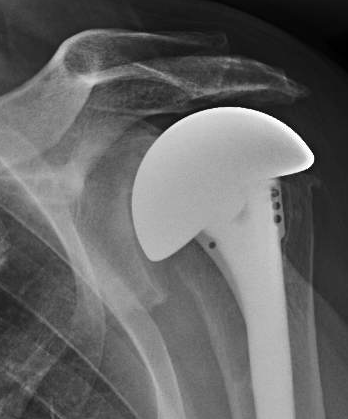
She dropped by to see us nine years after surgery. Her films at that time are shown below.

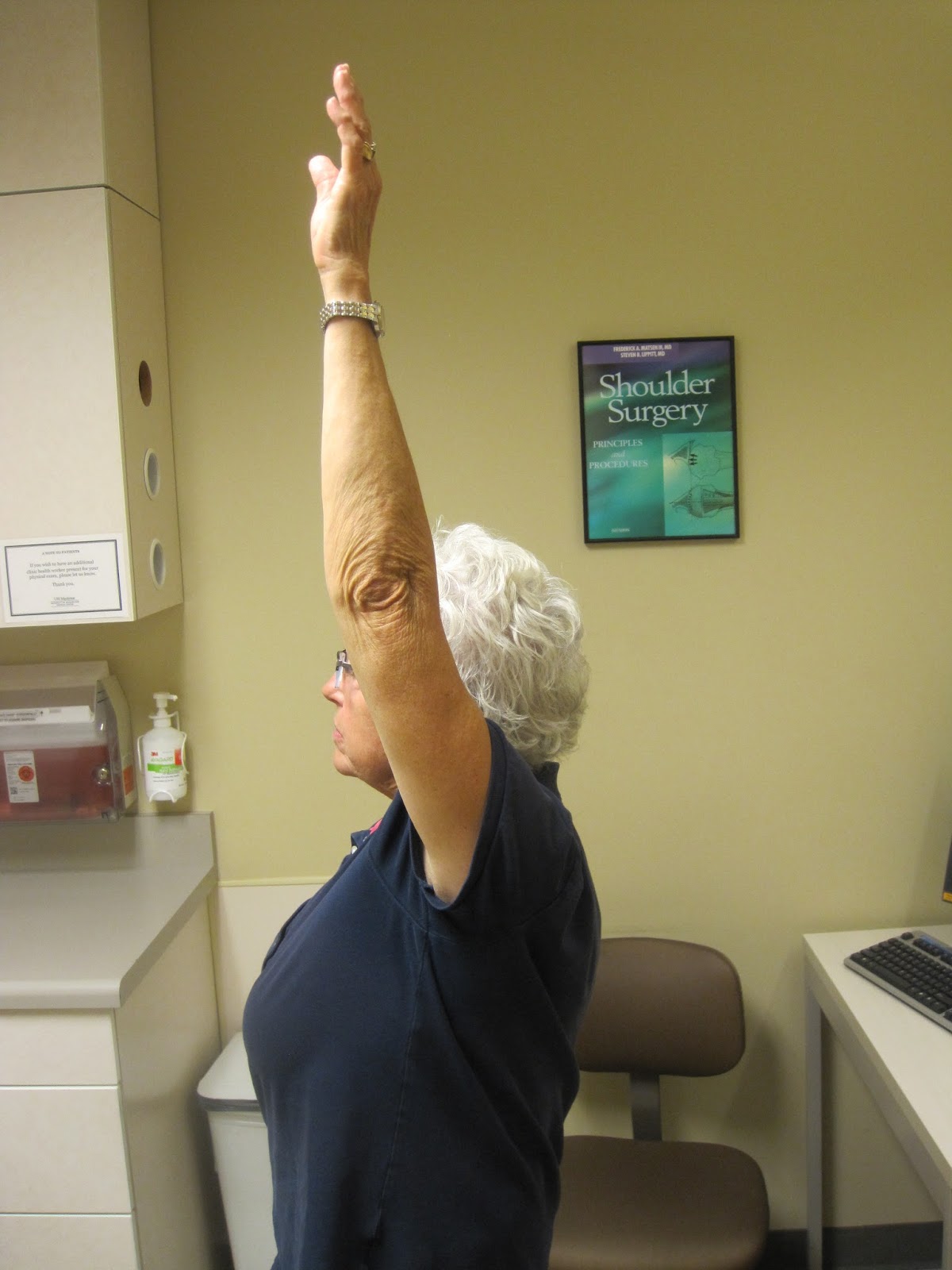
Her shoulder was painless. Her active elevation is shown below.


As another example we recently we saw an active physician-rancher who had had bilateral CTA prostheses performed after failed cuff repairs. Because he recognized that his ranching was demanding on his shoulders and carried the risk of falls, he preferred the CTA over the reverse total shoulder.

Before his left shoulder surgery his films were as shown below and he reported the ability to perform only 5 of the 12 Simple Shoulder Test functions. He was able to elevate his arm to over 90 degrees and had no anterosuperior instability.


At the time of surgery he had no supraspinatus, no infraspinatus and a detached subscapularis.
We were able to reattach his subscapularis.

At four years after surgery, he could perform 8 of the 12 SST functions and had the radiographs shown below. Note the impaction grafted humeral stem and the articulation of the prosthesis with the undersurface of the coracoacromial arch.


Two years ago he presented with a similar situation in his right shoulder. His SST score was 3/12. He had active elevation of 100 degrees without anterosuperior escape. His preoperative x-rays shown below.

Two years after his right shoulder arthroplasty he could perform 8/12 SST functions and was back at work on his ranch. His 2 year films are shown below.


Here's a video of his function at his last clinic visit.


To see our technique for the CTA arthroplasty, click on this link.


=====
We have a new set of shoulder youtubes about the shoulder, check them out at this link.

Be sure to visit "Ream and Run - the state of the art" regarding this radically conservative approach to shoulder arthritis at this link and this link

Use the "Search" box to the right to find other topics of interest to you.

Wednesday, October 30, 2019

Periprosthetic shoulder infections - who is at greatest risk?

Factors predictive of Cutibacterium periprosthetic shoulder infections: a retrospective study of 342 prosthetic revisions

Cutibacterium are the most common cause of periprosthetic shoulder infections, as defined by 2 deep cultures. Established Cutibacterium periprosthetic infections cannot be resolved without prosthesis removal. However, the decision for implant removal must be made from an assessment of infection risk before the results of intraoperative cultures are finalized. These authors hypothesized that the risk for a Cutibacterium infection is associated with characteristics that are available at the time of revision arthroplasty.

In a retrospective review of 342 patients having prosthetic revisions between 2006 and 2018 for whom definitive deep culture results were available, they used univariate and multivariate analyses to compare the preoperative and intraoperative characteristics of 101 revisions with Cutibacterium periprosthetic infections to the characteristics of 241 concurrent revisions not meeting the definition of infection.

Patients with definite Cutibacterium periprosthetic infections were younger (59  ± 10 vs. 64 ± 12, P <.001), were more likely to be male (91% vs. 44%, P <.001), were more likely to have had their index procedure performed for primary osteoarthritis (54% vs. 39%, P . .007), were more likely to be taking testosterone supplements (8% vs. 2%, P ..02), had lower American Society of Anesthesiologists scores (1.9 ± 0.7 vs. 2.3 ± 0.7, P < .001), and had lower body mass indices (29 ± 5 vs. 31 ± 7, P ..005). Patients with definite Cutibacterium periprosthetic infections also had significantly higher preoperative loads of Cutibacterium on their unprepared skin surface (1.7 0.9 vs. 0.4 0.8, P < .001) and were more likely to have the surgical finding of synovitis (41% vs. 16%, P < .001).


This study indicates that the risk of a revised shoulder arthroplasty having a definite Cutibacterium periprosthetic infection was associated with certain readily available preoperative and intraoperative observations, such as patient age and sex, ASA, BMI, the use of testosterone supplements, the results of preoperative skin surface cultures, and the intraoperative finding of synovitis. Because these observations are available to the surgeon at the time of revision arthroplasty, they may be considered in the intraoperative decisions regarding the advisability of prosthesis exchange.

Comment:  This study suggests that, contrary to the experience with hip and knee periprosthetic infections, patients with shoulder periprosthetic infections are more likely to be young, healthy males. There is evidence to suggest that the levels of the male sex hormone, testosterone, may increase the production of sebum in the sebaceous glands of the dermis overlying the shoulder as well as the number of cutbaterium in these glands. Thus young male, healthy patients having shoulder arthroplasty appear more likely to have Cutibacterium introduced into their wounds at the time of shoulder arthroplasty.

=====
To see our new series of youtube videos on important shoulder surgeries and how they are done, click here.

Use the "Search" box to the right to find other topics of interest to you.


You may be interested in some of our most visited web pages  arthritis, total shoulder, ream and run, reverse total shoulder, CTA arthroplasty, and rotator cuff surgery as well as the 'ream and run essentials'

Wednesday, June 20, 2018

Revision arthroplasty: risky business

Risk factors for and timing of adverse events after revision total shoulder arthroplasty 

These authors sought to identify risk factors for unplanned readmission and perioperative complications following revision total shoulder arthroplasty, risk-stratify patients based on these risk factors, and assess timing of complications in patients from the ACS-NSQIP database from 2011 to 2015.

Of 809 revision patients, 61 suffered a perioperative complication or readmission within 30 days of discharge. Multivariate analysis identified operative time, BMI>40, infection etiology, high white blood cell count, and low hematocrit as significant independent risk factors for 30-day complications or readmission after revision surgery. 

Having at least one significant risk factor was associated with 2.71 times risk of complication or readmission within 15 days compared to having no risk factors. The majority of unplanned readmission, return to the operating room, open/deep wound infection, and sepsis/septic shock occurred within two weeks of revision surgery. 

Comment: We are often tempted to "fix" a failed shoulder arthroplasty. This article reminds us that there are major risks of revision, especially in patients with the factors identified. The less healthy the patient, the greater the risk of complications and readmissions.

=====
Use the "Search" box to the right to find other topics of interest to you. 


You may be interested in some of our most visited web pages including:shoulder arthritis, total shoulder, ream and run, reverse total shoulder, CTA arthroplasty, and rotator cuff surgery as well as the 'ream and run essentials'

Thursday, July 27, 2017

Health care debate: turmoil, the 'skinny bill', health insurance as a risk factor

Insurance status affects postoperative morbidity and complication rate after shoulder arthroplasty

This is not a political post, although its topic has profound political and economic implications. The authors take a very small slice of the health care pie to illustrate the relation between the health care coverage that a patient can afford and the surgical risk for that patient undergoing a shoulder arthroplasty.

These authors evaluated the effect of patient insurance status on perioperative outcomes after shoulder replacement surgery using data on 103,290 having surgery between 2004 and 2011 identified in the Nationwide Inpatient Sample. The distribution of insurance coverage was 68,578 Medicare, 27,159 private insurance, 3544 Medicaid/uninsured, 4009 other. The overall complication rate was 17.2% (n = 17,810)and the mortality rate was 0.20% (n = 208). Medicare and Medicaid/uninsured patients had a significantly higher rate of medical, surgical, and overall complications compared with private insurance using the controlled match data.
Multivariate regression analysis found that having private  insurance payer status is associated with a lower risk of perioperative medical and surgical complications compared with an age- and sex-matched Medicare and Medicaid/uninsured payer status.


Comment: Insurance status can be a marker for factors affecting surgical risk, such as nutrition status, health maintenance, social support, exercise status, bone quality, compliance, mental health, and traveling distance to a quality medical facility. Insurance status can also affect risk by influencing the accessibility to pre-surgical medical care, experienced surgeons and the availability of postoperative physical therapy and other forms of support. 

This important paragraph is included in the authors' discussion: "The data also showed that the comorbidity index and age are independent risk factors for medical complications after shoulder arthroplasty, with a higher preoperative comorbidity index seen in the government-sponsored insurance groups. In addition, the increased rate of complications seen in the government-sponsored insurance groups (Medicaid and Medicare) resulted in higher hospital charges after shoulder replacement compared with the private insurance group. Furthermore, privately insured patients were more likely to go to a higher-volume hospital for their elective shoulder replacements than patients with government-sponsored insurance. This finding may reflect that ability of patients with private insurance to select their own physicians. In contrast, Medicaid patients may have difficulty finding orthopaedic surgeons that will accept their insurance type and uninsured patients may have an inability to see an orthopaedic surgeon altogether due to lack of insurance coverage and consequently, exorbitant out of pocket cost."

Ironically, increased expenditures are necessary to manage the greater risks associated with patients with less remunerative health care coverage. It seems unlikely that the interaction between surgical risk and insurance coverage identified in this study will be eliminated or even reduced by any of the health care plans under discussion.

Here is a study with a similar conclusion:

Medicaid payer status is linked to increased rates of complications after treatment of proximal humerus fractures

These authors note that low socioeconomic status and Medicaid insurance as a primary payer have been associated with major disparities in resource utilization and risk-adjusted outcomes for patients undergoing totaljoint arthroplasty.

Using the Healthcare Cost and Utilization Project Nationwide Inpatient Sample database they identified patients who were treated for proximal humeral fractures (PHFs) from 2002 to 2012.

In an effort to minimize confounding variables, each Medicaid patient was matched to a privately insured patient on the basis of gender, race, year of procedure, and age (but notably not to fracture type or type of treatment):


Of the 678,831 patients treated with PHF, 4.9% (33,263) had Medicaid as the primary payer during the 10-year period. Medicaid patients were found to have a significantly higher risk (P < .05) of postoperative in-hospital complications, including postoperative infection (odds ratio [OR], 2.00 [1.37-2.93]), wound complications (OR, 1.69 [1.04-2.75]), and acute respiratory distress syndrome (OR, 1.34 [1.15-1.59]).

They concluded that Medicaid patients have a significantly higher risk for certain postoperative hospital complications and consume more resources after treatment for PHFs.

It is apparent that our health care system is on the cusp of change with the new administration. Under most any system, however, the observation that Medicaid insurance (which provides relatively low reimbursement) can be a risk factor for an increased rate of complications and for increased per-case expense will continue to create an ethical, social and economic challenge for the providers. This is especially the case if there are penalties for the increased readmission rates that are likely to be necessary to manage the increased rate of complications. Our hope is that broad-based discussion will lead to a well-informed approach so that our patients can get the care they need.


=====
The reader may also be interested in these posts:


Information about shoulder exercises can be found at this link.

Use the "Search" box to the right to find other topics of interest to you.

You may be interested in some of our most visited web pages including:shoulder arthritis, total shoulder, ream and run, reverse total shoulder, CTA arthroplasty, and rotator cuff surgery as well as the 'ream and run essentials'


Saturday, November 29, 2014

Reverse total shoulder complications, including infection.


Risk factors for periprosthetic infection after reverse shoulder arthroplasty.

These authors reviewed 301 primary reverse total shoulders with a minimum of 1-year follow-up. There were 15 periprosthetic infections (5.0%).  One developed an acute infection (< 3 months after surgery), 5 patients developed a subacute infection (between 3 and 12 months after surgery), and 9 patients developed a late or chronic infection (> 12 months after surgery). The organisms recovered included methicillin-sensitive Staphylococcus aureus (3 patients), methicillin-resistant S. aureus (2 patients), P. acnes (2 patients),  S. epidermidis (1 patient), coagulase-negative Staphylococcus (1 patient), and Enterobacter cloacae (1 patient) were cultured. Interestingly, five patients had no culture growth despite gross purulence noted at the time of surgery.

9 (15%) of the 61 patients having a reverse total shoulder for failed prior arthroplasty developed an infection.

Of equal interest are the 74 complications in 59 patients without evidence of infection.  Forty-four intraoperative complications occurred: 18 tuberosity or humeral shaft fractures that required cerclage cabling, 12 tuberosity fractures that required no cerclage cabling, 9 glenoid fractures, 4 nerve traction injuries, and 1 vascular injury. Thirty postoperative complications occurred: 25 anterior dislocations, 3 acromial stress fractures, 1 hematoma, and 1 humeral aseptic loosening.

Comment: This series again shows a high (25%) rate of complications after reverse total shoulder arthroplasty in the hands of expert surgeons.
In that infection after arthroplasty make take years to become clinically evident (as shown in this post), it is likely that the infection rate in these patients may be greater with longer than the one year minimal followup.

====


To see the topics covered in this Blog, click here

Use the "Search" box to the right to find other topics of interest to you.

You may be interested in some of our most visited web pages including:shoulder arthritis, total shoulder, ream and run, reverse total shoulder, CTA arthroplasty, and rotator cuff surgery as well as the 'ream and run essentials'

Friday, November 28, 2014

Total shoulder complications: risk factors

Thirty-day morbidity and mortality after elective total shoulder arthroplasty: patient-based and surgical risk factors.

These authors queried the National Surgical Quality Improvement Program database identifying 2004 patients having primary total shoulder arthroplasty between 2006 and 2011. The average age was 69 years, and 57% were women. The 30-day mortality and total complication rates were 0.25% and 3.64%, respectively. Severe complications included postoperative sepsis, thromboembolism, cerebrovascular event, and cardiac arrest.

Cardiac disease (congestive heart failure or history of myocardial infarction), increasing age, and peripheral vascular disease were associated with increased risk of complications. Cardiac disease had an odds ratio of 85 for complications. The odds of death increased 2-fold for each decade in increased age. Peripheral vascular disease was associated with a more than 6-fold greater risk of any postoperative complication. Operative times over174 minutes were also associated with a 4-fold increased incidence of major local complications.

Comment: This study is helpful in indicating the patients what require special preoperative counseling, medical consultation, and close surveillance in order to make total shoulder arthroplasty as safe as possible.

====


To see the topics covered in this Blog, click here

Use the "Search" box to the right to find other topics of interest to you.

You may be interested in some of our most visited web pages including:shoulder arthritis, total shoulder, ream and run, reverse total shoulder, CTA arthroplasty, and rotator cuff surgery as well as the 'ream and run essentials'