Showing posts with label strength. Show all posts

Friday, June 16, 2023

How long does it take to recover after shoulder joint replacement?

"How long will it take my shoulder to recover after joint replacement?" This important topic has been explored by the authors of Speed of recovery after shoulder arthroplasty: a comparison of reverse and anatomic total shoulder arthroplasty. They found that anatomic total shoulder (TSA) patients reached a consistent plateau for pain and function by 6 months and for shoulder elevation by 1 year. Reverse total shoulder (RSA) patients demonstrated variability with multiple false plateau points. By 6 months, TSA patients had achieved 90% to 100% of functional improvement, whereas RSA patients reached 72% to 91%. The effectiveness of TSA was greater than that of RSA for all measures with the exception of elevation and abduction.


A recent post considered the questions patients most frequently asked about shoulder arthroplasty:  Information that patients want to know about shoulder joint replacement arthroplasty for arthritis. One of the commonly asked questions was about recovery: How long does it take to recover from a shoulder joint replacement? When this question was posed to ChatGPT, the response was "Full recovery (6-12 months): While the majority of recovery is typically achieved within the first six months, it can take up to a year or longer to fully regain strength, range of motion, and function."

The authors of recent article sought to answer this question in their practice: Rate of improvement in shoulder strength after anatomic and reverse total shoulder arthroplasty, a study of 374 shoulders having primary anatomic TSA (aTSA) and 601 shoulders having primary reverse TSA (rTSA).

A handheld dynamometer was used to assess 
(1) external rotator (ER) strength  with the involved shoulder in 0  degrees of external rotation, 0 degrees of abduction, and the elbow in 90 degrees offlexion and
(2) forward elevation (FE) strength with the involved shoulder in the scapular plane at 30 degrees of flexion and 30 degrees of abduction.

 aTSA patients had the greatest gains in strength in the first year postoperatively. Strength increased the most between 3 and 6 months. At two year followup patients having aTSA had a 32% improvement in ER and 38% improvement in FE. 


rTSA patients also had the greatest gains in strength in the first year postoperatively. ER strength improved the most between 6 months and 1 year; FE strength increased the most between baseline and 3 months. At two year followup patients  patients having rTSA had a 51% improvement in ER and 90% improvement in FE.  


These data on the recovery of strength are consistent with the recovery in measures of comfort and function as reported by the authors of Rate of Improvement in Clinical Outcomes with Anatomic and Reverse Total Shoulder Arthroplasty who studied 505 anatomic total shoulders and 678 reverse total shoulder arthroplasty.

Full improvement was typically achieved by 24 months, although the majority of improvement was achieved in the first 6 months.


Comment: These two studies help answer patients' questions about the typical recovery of strength, comfort and function after shoulder arthroplasty, It is worth emphasizing that 
(1) shoulder arthroplasty (aTSA or rTSA) is most commonly performed on shoulders that have been disabled for years during which time the joint typically becomes weak and stiff - limitations that can only be overcome by a gentle, persistent postoperative rehabilitation program extending for months after surgery
(2) post-arthroplasty recovery is variable among patients because of differences in diagnoses, procedures, co-morbidities, resilience and effort, so "average" recovery may not pertain to each individual patient.
(3) it is useful for surgeons to monitor recovery for the first year after surgery using a convenient patient reported outcome measure to be sure that the patient is on track and, if not, to investigate the possible reasons why not.
(4) early identification of patients who are "off track" may indicate the need for interventions to optimize the opportunity for a good longer term outcome as emphasized in Which patients have poorer early results from total shoulder arthroplasty and how do these patients fare at two years after surgery?

You can support cutting edge shoulder research that is leading to better care for patients with shoulder problems, click on this link.

Follow on twitter: https://twitter.com/shoulderarth
Follow on facebook: click on this link
Follow on facebook: https://www.facebook.com/frederick.matsen
Follow on LinkedIn: https://www.linkedin.com/in/rick-matsen-88b1a8133/

Here are some videos that are of shoulder interest
Shoulder arthritis - what you need to know (see this link).
How to x-ray the shoulder (see this link).
The ream and run procedure (see this link).
The total shoulder arthroplasty (see this link).
The cuff tear arthropathy arthroplasty (see this link).
The reverse total shoulder arthroplasty (see this link).
The smooth and move procedure for irreparable rotator cuff tears (see this link).
Shoulder rehabilitation exercises (see this link).

Saturday, August 14, 2021

How does preoperative shoulder strength affect the outcome of total shoulder arthroplasty?

Preoperative Shoulder Strength Is Associated with Postoperative Primary Anatomic Total Shoulder Arthroplasty Outcomes and Improvement


These authors sought to determine whether preoperative shoulder strength is predictive of postoperative outcomes and improvement after primary anatomic total shoulder arthroplasty (aTSA) in 160 shoulders with minimum 2-year follow-up.


External rotation (ER) and supraspinatus strength were assessed using a hand-held dynamometer. ER strength was measured with the involved shoulder in 0° external rotation, 0° abduction, and the elbow in 90° flexion. Supraspinatus strength was assessed with the  involved shoulder in 30 degrees of flexion and 30 degrees of abduction. 


Abduction strength was assessed as the maximum amount of weight that a patient could elevate vertically with the involved shoulder in 90° abduction and the arm in pronation in 5 pound intervals. Abduction strength was scored as follows: not capable of 90° abduction, 0; 0 lbs., 1; 5 lbs., 2; 10 lbs., 3; 15 lbs., 4; 20 lbs., 5. 


The authors found that preoperative ER strength, supraspinatus strength, and abduction strength were each correlated positively with their respective postoperative values and negatively with  improvement.


On multivariate analysis, baseline abduction strength was a significant positive predictor of postoperative values and a negative predictor of 

improvement.


Comment: Once again we see that shoulders that are more functional prior to TSA are likely to be more functional after surgery, but are less likely to show improvement. Conversely, shoulders that are less functional before surgery are more likely to show improvement but tend to have lower postoperative scores.


The measurement of abduction strength as described (

 the maximum amount of weight that a patient could elevate vertically with the involved shoulder in 90° abduction) actually reflects several aspects of the shoulder: strength, passive range of motion, and pain. A shoulder that can actively abduct 20 pounds to 90° must not only be strong, but also flexible and relatively painless. 


The observation that the Constant score has the greatest correlation with strength is understandable because the Constant score allocates up to 25 percent of its points for abduction strength measured by a provider at 90° lateral abduction. Notably the Simple Shoulder Test was the only one of the completely patient-reported outcome measures to significantly correlate with the three strength measurements.

A question not answered by this study is whether preoperative efforts to strengthen the shoulder might improve the recovery of shoulder strength after arthroplasty.

How you can support research in shoulder surgery Click on this link.

Here are some videos that are of shoulder interest
Shoulder arthritis - what you need to know (see this link).
How to x-ray the shoulder (see this link).
The total shoulder arthroplasty (see this link).
The ream and run technique is shown in this link.
The cuff tear arthropathy arthroplasty (see this link).
The reverse total shoulder arthroplasty (see this link).
Shoulder rehabilitation exercises (see this link).
Follow on twitter: Frederick Matsen (@shoulderarth)


Monday, April 11, 2016

Reverse total shoulder - strength and activity - correlation, determination and variation

Isokinetic shoulder strength correlates with level of sports participation and functional activity after reverse total shoulder arthroplasty

These authors surveyed 51 patients (mean age 74 yrs) at a mean of 29.5 months (range, 12-60 months) after reverse total shoulder arthroplasty (RTSA) investigating the relationship between isokinetic shoulder strength and activity level.

High demand activities involved repetitive stress, loads > 20 pounds, and regular overhead movements. Moderate-demand activities involved occasional repetitive stress, lifting loads up to 20 pounds, and occasional overhead activities. Low-demand activities are defined as not imposing repetitive stress on the shoulder, not involving heavy lifting, and most shoulder movements being below shoulder height.

Reported activity was high demand in 35% and moderate demand in 43%. There was a large variation in shoulder isokinetic strength parameters especially for internal and external rotation.


Comment: While it is intuitive that shoulders that do more are stronger, the interesting message here is the variability in the relationship.

Recall that the Pearson product-moment correlation coefficient, also known as r, R, or Pearson's r, is a measure of the strength and direction of the linear relationship between the two variables (e.g. strength and activity) calculated as the covariance of the variables divided by the product of their standard deviations.

Squaring "R" gives us the coefficient of determination, the percentage variation in one variable (activity) that is explained by all the other variable (strength). As can be seen in the numbers in the tables above, the coefficients of determination (square of the "R" values) are low for these associations, meaning that variables other than strength are likely to be more influential in determining activity levels.

As an old professor once said, "the mean is meaningless, the meaning is in the variation"

===


Check out the new Shoulder Arthritis Book - click here.


Use the "Search" box to the right to find other topics of interest to you.

You may be interested in some of our most visited web pages including:shoulder arthritis, total shoulder, ream and run, reverse total shoulder, CTA arthroplasty, and rotator cuff surgery as well as the 'ream and run essentials'


Sunday, November 30, 2014

The subscapularis - does it ever recover after shoulder arthropllasty - peel vs LTO?

The return of subscapularis strength after shoulder arthroplasty.

These authors compared the strength of the subscapularis at baseline (preoperatively) and at follow-up after unilateral shoulder arthroplasty to that of the contralateral normal side in sixty-four patients.

Two different means of managing the subscapularis were used, subscapularis peel (34 patients; 53%) and osteotomy of the lesser tuberosity (30 patients; 47%). After arthroplasty and subscapularis repair, a shoulder sling was worn for the first 6 weeks. On the first postoperative day, patients were instructed to initiate self-assisted, passive forward elevation to 90 in the supine position and to limit external rotation to neutral for 6 weeks. Active elevation was allowed at 6 weeks, and gentle strengthening was begun 12 weeks postoperatively.

The primary outcome measure was subscapularis strength in both the operative and contralateral (normal) arms as measured by a hand-held dynamometer in the belly-press position preoperatively
and at 3, 6, 12, and 24 months after surgery. The dynamometer was strapped to the patient’s hand; the hand was placed on the lower sternum with the elbow in line with but not posterior to the hand. The patient was asked to press the dynamometer into his or her sternum with a maximum force for a 5-second duration. The mean strength was calculated on the basis of 2 separate trials.

At 24 months the mean subscapularis strength on the operative side was 19% greater than preoperatively. On average, the operative side improved from 54% of the normal side at before surgery to 70% of the normal side at two years. 

Subscapularis strength recovery was significantly less than supraspinatus recovery, suggesting that the surgical release and repair of the subscapularis may account in part for the poorer recovery.

Multivariable regression analysis did not demonstrate any correlation between the independent variables studied and final subscapularis strength - including whether a lesser tuberosity osteotomy or  subscapularis peel was performed.  Specifically, no associations were identified among factors including sex, age, surgery on the dominant arm, baseline strength, baseline external rotation, subscapularis management technique, and fatty infiltration.

Comment: This is a well done and interesting study in that it indicates that the subscapularis function is compromised before surgery and never fully recovers.

Readers may wish to review a prior article on this topic by these authors. Our preferred method for caring for the subscapularis in shoulder arthroplasty is shown here.

===


To see the topics covered in this Blog, click here

Use the "Search" box to the right to find other topics of interest to you.

You may be interested in some of our most visited web pages including:shoulder arthritis, total shoulder, ream and run, reverse total shoulder, CTA arthroplasty, and rotator cuff surgery as well as the 'ream and run essentials'

Friday, November 23, 2012

Are Shoulders with A Reverse Shoulder Prosthesis Strong Enough? A Pilot Study CORR

Are Shoulders with A Reverse Shoulder Prosthesis Strong Enough? A Pilot Study CORR

This is an important study that attempts to correlate function with strength after a Reverse total shoulder arthroplasty. The study population was 37 shoulders in 33 patients having 21 primary and 16 revision Tornier reverse total shoulders. The shoulders were evaluated a 4 - 63 months after surgery. The postoperative SST for primary reverse total shoulders was 8 ± 4 in contrast to 4 ± 3. 

While the average shoulder could generate 15 Nm of abduction/adduction torque, only 14 shoulders could be tested for internal and external rotation torque; for those the average external rotation torque was 9.3 Nm. Interestingly the authors correlated measured maximum torque at 60 degrees/second with the Dutch version of the Simple Shoulder Test. Their results are shown below, showing that the strongest correlation of the SST was with external rotation torque:


By design, the reverse total shoulder displaces the center of rotation medially and distally to optimize the deltoid moment arm for elevation. However, this medial displacement puts the anterior and posterior deltoid and any residual rotator cuff at a mechanical disadvantage for rotation.

In reverse total shoulder arthroplasty, design does matter. As we pointed out in a recent post and here,  different component designs have different effects on the position of the center of rotation - both superiorinferiorly (which affects deltoid tension) and mediolaterally (which affects stability, the proximity of the medial aspect of the humeral component to the glenoid, and the moment arms for rotation).

This study suggest that strategies be developed for optimizing the abduction and rotator strength of shoulders with reverse total shoulders. Such strategies may include prosthesis design and placement, muscle transfers and special rehabilitation protocols.


----

If you have suggestions for topics you'd like us to address in this blog, please send an email to
shoulderarthritis@uw.edu

Use the "Topics" box to the right to find other topics of interest to you.

You may be interested in some of our most visited web pages including:shoulder arthritis, total shoulder, ream and run, reverse total shoulder, CTA arthroplasty, and rotator cuff surgery.


Sunday, November 18, 2012

Increasing the Elution of Vancomycin from High-Dose Antibiotic-Loaded Bone Cement: A Novel Preparation Technique. JBJS

Increasing the Elution of Vancomycin from High-Dose Antibiotic-Loaded Bone Cement: A Novel Preparation Technique. JBJS

Vancomycin is commonly used in the cement used to fix total joint replacement arthroplasty components and in cement 'spacers' used to manage periprosthetic infections.

This in vitro study has some important findings: (1) the majority of the antibiotic elution was in the first 7 days (so the notion that prolonged topical treatment is achieved may be incorrect), (2) delaying the addition of Vancomycin until after 30 seconds of cement mixing resulted in greater antibiotic elution, (3) only 3 to 5% of the total added Vancomycin was eluted over 6 weeks, and (4)  irrespective of the time of addition, preparations of 5 gm of Vancomycin with 40 g of cement powder showed dramatic reduction of compressive strength of the cement at 6 weeks after elution. Here are the results for three different methods of mixing Vancomycin with cement:

The reasons for this loss of compressive strength are unclear. It would have been of great interest if the authors had included an antibiotic-free control to see if it also showed diminished strength with the same post-mixing protocol.

So, on one hand we have reports that Antibiotic-loaded bone cement reduces deep infection rates for primary reverse total shoulder arthroplasty: a retrospective, cohort study of 501 shoulders. While on the other hand we have this report on the limited duration of antibiotic elution combined with concerns about the effect of antibiotics on cement strength. We also recognize that while the authors of the recent JBJS paper tested compressive strength of cement cylinders, the failure mode of cement may be quite different -  including fatigue, distraction, sheer, and bending with crack propagation - and may be even more sensitive to changes in material and structural properties.

For these reasons, we continue to be attracted to cementless approaches to shoulder arthroplasty component fixation combined with careful surgical technique, strong antibiotic prophylaxis, and copious irrigation with antibiotic saline.

----
If you have suggestions for topics you'd like us to address in this blog, please send an email to shoulderarthritis@uw.edu.


Use the "Search the Blog" box to the right to find other topics of interest to you. 


You may be interested in some of our most visited web pages including:shoulder arthritis, total shoulder, ream and run, reverse total shoulder, CTA arthroplasty, and rotator cuff surgery.

Sunday, October 30, 2011

Strengthening the shoulder a bit at the time, focus on safety.

Most shoulder problems include an element of shoulder stiffness. Often this stiffness can be resolved with some simple, safe shoulder mobility exercises, and when it is resolved many of the symptoms disappear.

In addition, after shoulder injury or surgery, shoulder strengthening exercises may be helpful, but these should only be started after surgery with the specific instructions of the surgeon, respecting the special considerations of each shoulder in each individual patient. In strengthening the shoulder, we emphasize that the exercises should not cause discomfort and that they should be easy enough that twenty repetitions can be comfortably performed. The goal is to make the integrated movements of the shoulder stronger without causing injury.

We usually start with the 'supine press' series.


Here we start with two hands together holding a washcloth (A). The cloth is pressed slowly up to the ceiling by both hands. When this gets easier, the hands are held further apart during the press up (B). As the strength improves, a small (1 lb) weight is pressed up with one hand alone (C). Then the angle of inclination is increased by sitting up on a pillow or wedge while the small weight is pressed upwards (D). By sitting up at progressively higher angles, the arm becomes able to elevate while sitting upright or standing (E).

Shoulder shrugs can be helpful in regaining the strength of the shoulder blade muscles.


The shoulder press up also builds shoulder blade muscles.


In special circumstances, it may be indicated to work on internal and external strengthening exercises using isometrics, rubber tubing, or weights.

Internal rotation:


External rotation:


--

Use the "Search the Blog" box to the right to find other topics of interest to you.

You may be interested in some of our most visited web pages including: shoulder arthritis, total shoulder, ream and run, reverse total shoulder, CTA arthroplasty, and rotator cuff surgery.


Thursday, August 25, 2011

Rotator Cuff 1 - Overview

The rotator cuff has two main functions in the shoulder: (1) it stabilizes the humeral head in the glenoid socket and (2) it works with the deltoid and other shoulder muscles to help provide the strength necessary for the shoulder to do its work.


In this video, one can see how the supraspinatus tendon, the most commonly injured tendon of the rotator cuff, normally passes smoothly below the coracoacromial arch as the arm is lifted from the side in this cadaver demonstration.


For a short cut to an overview of the cuff and the spectrum of rotator cuff disease, see
this page and the gallery on its right.

You may also like to see our recent
review of rotator cuff failure from the New England Journal of Medicine.

---


We'll take a step back and consider some of the principles of shoulder strength in depth.


When a muscle contracts, it approximates its effective origin and insertion with a force limited by its physiological cross sectional area. Muscles that have large cross sections, like the deltoid, can provide a larger maximal force than a muscle with a small cross section like the subclavius. The contractile elements within a muscle are connected to tendon fibers that connect to the bony origin and insertion. The tendon insertion is structured so that there is a smooth mechanical transition from flexible tendon to stiff bone.


This smooth transition enables the insertion to manage the repeated bending loads to which it is subject.


When the tissues providing this smooth transition degenerate they become stiff and weak so that the tendon insertion becomes increasingly vulnerable to failure.


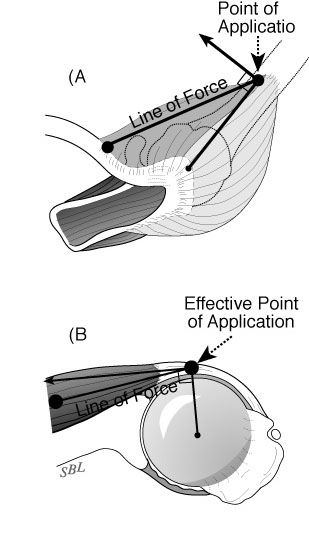
The strength of a muscle is noted in terms of the torque it can generate. We recall that torque results when a force is exerted at a distance from a fixed center of rotation. The magnitude of the torque is the product of the length of the line connecting the center of rotation to the effective attachment of the muscle (the lever arm) and the magnitude of the force perpendicular to this line.


The effective points of attachment depend on the position of the arm and are not necessarily the anatomic insertions .


The weight of a dumbbell that can be held with the arm out to the side is determined by the sum of the products of the forces and their respective lever arms divided by the lever arm of the weight to be lifted.


Throughout this discussion, the lever arms have been described as the distance between the point of action of the muscle force and the center of rotation. In order for torques to be realized, the humerus must rotate around a stable center. This is why we have placed such emphasis on the mechanisms for centering of the head in the section on Stability. Without this precise centering, the effectiveness of the muscle contractions would be lost.


Muscles are also characterized by their excursion – the change in length over which they can provide force. In order to be effective throughout a range of motion, the centimeters of excursion of a muscle must match the product of the muscle’s lever arm in centimeters and the range of motion in degrees divided by the number of degrees in a radian.


So, while longer lever arms result in more torque per unit muscle force, they also require greater muscle excursion.


Muscles provide the maximal amount of force when operating close to the middle of their excursion with a drop off in maximal force as the muscle length approaches maximal extension or maximal contraction.


Muscles that have been chronically detached, as in long standing cuff tears, tend to lose their excursion. Even if they are reattached, the length over which they can exert an effective force is often diminished.

A special feature of the shoulder is that the powerful thoracoscapular muscles can position the entire glenohumeral joint along with the deltoid and the rotator cuff through a range of approximately 40 degrees of adduction/abduction


and 40 degrees of protraction/retraction


This ’portability’ of the glenohumeral joint enables the scapulohumeral muscles to carry out most shoulder functions in the mid-range of their excursion where they are the strongest. It is of note that the humeroscapular position is essentially the same for the knockout punch, the bench press, the point of racquet contact with the ball in the tennis serve, and the moment of release for the baseball pitch, even though the scapulothoracic positions are quite different.

One of the relatively unexplored facets of active shoulder strength is the requirement for muscular balance. In the knee, the muscles generate torques about a relatively fixed axis: that of flexion-extension. If the quadriceps pull is a bit off-center, the knee still extends. In the shoulder, no such fixed axis exists. In a specified position, each muscle creates a unique set of rotational moments. Imagine a rope attached to a sphere. The motion resulting from pulling on the rope depends on the orientation of the sphere as well as the direction of pull on the rope. If some of the resulting motion were undesired, it would need to be cancelled out by attaching another rope and pulling on it to resist the unwanted motion. So, for example, the anterior deltoid exerts moments in forward elevation, internal rotation, and cross-body movement.


If elevation without cross body movement is desired, the posterior deltoid must negate the cross body moment of the anterior deltoid.


Similarly, if elevation without rotation is desired, the cross-body and internal rotation moments of this muscle must be resisted by other muscles (such as the posterior deltoid and infraspinatus). These balancing activities take place at an additional energy cost. However, if the infraspinatus function is lacking, it is difficult to flex the arm without internal rotation.

--

Here are some videos that are of shoulder interest
Shoulder arthritis - what you need to know (see this link).
How to x-ray the shoulder (see this link).
The ream and run procedure (see this link).
The total shoulder arthroplasty (see this link).
The cuff tear arthropathy arthroplasty (see this link).
The reverse total shoulder arthroplasty (see this link).
The smooth and move procedure for irreparable rotator cuff tears (see this link).
Shoulder rehabilitation exercises (see this link).