Showing posts with label total shoulder complications. Show all posts

Monday, September 11, 2023

Complications were experienced by one out of every 25 patients having a shoulder joint replacement

It is tempting to assume that relationships in orthopadics are linear, for example "more active elevation of the arm gives proportionally better function"; however, the function of shoulders with active elevation of 10 degrees is not much different than those with active elevation of 40 degrees, and the function of shoulders with active elevation of 140 degrees is not much different than those with active elevation of 170 degrees.

Similarly, it may seem that the risk of complications after shoulder arthroplasty (TSA) would increase proportionally with increase in the body mass index (BMI). 


However, the authors of The Obesity Paradox: A Nonlinear Relationship Between 30-Day Postoperative Complications and Body Mass Index After Total Shoulder Arthroplasty found that this was not the case. They reviewed data on 31,755 TSAs and found that 4.5% experienced medical complications. The relationship between complication risk and BMI was not linear: the lowest risk was in patients with a BMI between 30 and 35 kg/m2. 


Underweight individuals (BMI <18.5 kg/m2) had the highest postoperative complication rates overall. 


The probability of medical complications increased with age and was greater for female patients.


This reinforces the data from Total shoulder arthroplasty and obesity   

showing that underweight patients had the highest rates of transfusion and return to the operating room after shoulder arthroplasty.

More information on the relationship of body mass index to shoulder arthroplasty outcomes can be found at the links below:

And importantly, bariatric surgery does not reduce the risk of complications and may, in fact, increase the risk. 


Comment: It may be that nutritional status, rather than BMI, should be our focus. Individuals with low serum albumin, poor wound healing, or other manifestations of poor nutrition deserve a workup to determine the cause and consultation for optimizing management prior to elective surgery.


You can support cutting edge shoulder research that is leading to better care for patients with shoulder problems, click on this link.

Follow on twitter: https://twitter.com/shoulderarth
Follow on facebook: click on this link
Follow on facebook: https://www.facebook.com/frederick.matsen
Follow on LinkedIn: https://www.linkedin.com/in/rick-matsen-88b1a8133/

Here are some videos that are of shoulder interest
Shoulder arthritis - what you need to know (see this link).
How to x-ray the shoulder (see this link).
The ream and run procedure (see this link).
The total shoulder arthroplasty (see this link).
The cuff tear arthropathy arthroplasty (see this link).
The reverse total shoulder arthroplasty (see this link).
The smooth and move procedure for irreparable rotator cuff tears (see this link).
Shoulder rehabilitation exercises (see this link).

Thursday, April 20, 2023

Reverse total shoulder or anatomic total shoulder for osteoarthritis?


A recent article from the Journal of Shoulder and Elbow Surgery, Total shoulder replacement stems in osteoarthritis—short, long, or reverse? An analysis of the impact of crosslinked polyethylene, presented data from the Australian Orthopaedic Association National Joint Replacement Registry on the long-term survivorship for patients with osteoarthritis having reverse total shoulders (RTSA) performed for osteoarthritis in comparison to those having anatomic total shoulders (TSA) with modern polyethylene for the same diagnosis.

In this population-based registry, RTSA had significantly higher short and long term revision rates than TSA with cross linked polyethylene.


The incidences over time for the different indications for revision of RTSA are shown below


The incidences over time for the different indications for revisions of TSA with cross linked polyethylene are shown below


A recent short term (one-year) followup study in the JAAOS compared the demographics, surgical complications, and revision procedures between RTSA and TSA: Surgical Complications After Reverse Total Shoulder Arthroplasty and Total Shoulder Arthroplasty in the United States.


The one year revision rates were higher for RTSA in both the AOA/JSES and the JAAOS studies.


In the JAAOS studhy, patients younger than 50 years had higher one year rates of surgical complications. Male patients had higher RTSA complication rates, whereas female patients had higher TSA complication rates. History of tobacco use, depression, and obesity were risk factors for higher complication rates.


As shown below, the one year rates of infection/drainage, dislocation and fracture were higher for RTSA while the rate of rotator cuff tear was higher for TSA.


From these data it can be seen that the rate of rotator cuff tears after TSA was higher than the rate of revision for TSA, suggesting that patients with cuff tears after TSA may have had sufficiently preserved function and tolerated the cuff defect so they did not want to have a revision to a RSA.


Comment: In spite of the widespread use of RTSA for patients with osteoarthritis and an intact cuff, these two studies do not provide data showing that RTSA has better outcomes than TSA. Further well-controlled population-based studies that include data on patient comfort and function will be necessary to illuminate the value of the two procedures.

You can support cutting edge shoulder research that is leading to better care for patients with shoulder problems, click on this link.

Follow on twitter: https://twitter.com/shoulderarth
Follow on facebook: click on this link
Follow on facebook: https://www.facebook.com/frederick.matsen
Follow on LinkedIn: https://www.linkedin.com/in/rick-matsen-88b1a8133/

Here are some videos that are of shoulder interest
Shoulder arthritis - what you need to know (see this link).
How to x-ray the shoulder (see this link).
The ream and run procedure (see this link).
The total shoulder arthroplasty (see this link).
The cuff tear arthropathy arthroplasty (see this link).
The reverse total shoulder arthroplasty (see this link).
The smooth and move procedure for irreparable rotator cuff tears (see this link).
Shoulder rehabilitation exercises (see this link).

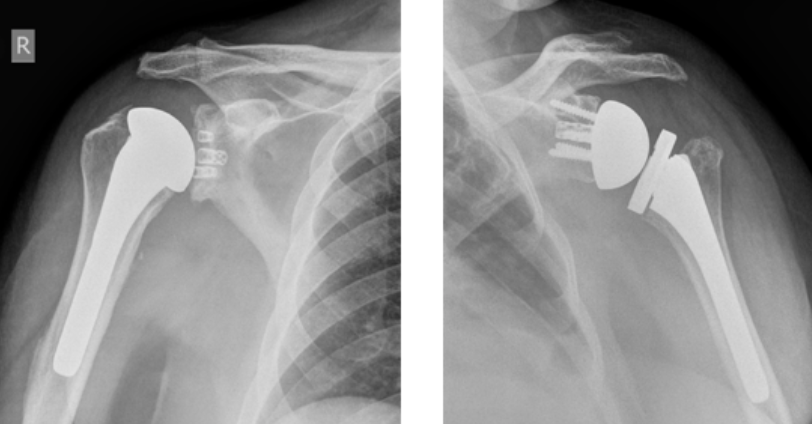

Saturday, April 3, 2021

Total shoulder risk is increased with increasing severity of anemia

 Increasing Severity of Anemia Is Associated with Poorer 30-Day Outcomes for Total Shoulder Arthroplasty


These authors conducted a retrospective analysis of the American College of Surgeons National Surgery Quality Improvement Project to identify all primary total shoulder arthroplasty procedures recorded in the 2015- 2018 timeframe.   

11,404 patients had greater than 38% preoperative hematocrit (HCT) and were classified as having normal HCT levels. 

2962 patients had HCT values between 33-38% and were classified as having mild anemia. 

819 patients had less than 33% HCT and were classified as having moderate/severe anemia.


The relationship between preoperative HCT and outcomes is shown in the chart below.


Multivariate analysis identified anemia as an independent predictor of readmissions, reoperations, minor complications, and major complications. Complications included postoperative myocardial infarction, cardiac arrest, unplanned reintubation, prolonged use of ventilators, increased rates of pneumonia and increased rates of urinary tract infection.


Comment: This study echoes the findings in previous publications (see this link). It is not known whether preoperative treatment designed to address anemia is effective in reducing the rates of complications.


Here are some videos that are of shoulder interest
Shoulder arthritis - what you need to know (see this link).
How to x-ray the shoulder (see this link).
The ream and run procedure (see this link).
The total shoulder arthroplasty (see this link).
The cuff tear arthropathy arthroplasty (see this link).
The reverse total shoulder arthroplasty (see this link).
The smooth and move procedure for irreparable rotator cuff tears (see this link).
Shoulder rehabilitation exercises (see this link).


Thursday, April 1, 2021

Total shoulders: complication rates for anatomic TSA and reverse TSA

 Comparison of complication types and rates associated with anatomic and reverse total shoulder arthroplasty

These authors sought to determine the complications following anatomic (aTSA) and reverse (rTSA) Equinoxe; Exactech arthroplasty.


A total of 2224 aTSA (male-female, 1090:1134) and 4158 rTSA (male-female, 1478:2680) patients were enrolled in an international database of primary shoulder arthroplasty performed by 40 different surgeons in the United States and Europe. 


The mean age of the aTSA patients at the time of surgery was 66 years with a mean follow-up of 34 months. 


The mean age of the rTSA patients at the time of surgery was 72 years with a mean follow-up of 22 months.


For the aTSA patients, 239 individual adverse events and 124 revisions were reported. The most common complications for aTSA were 

(a) rotator cuff tear/subscapularis failure (n = 69; 42 were revised), 

(b) aseptic glenoid loosening (n 55; 43 were revised), and 

(c) infection (n 28; 18 were revised). 


For the rTSA patients, 372 adverse events and 104 revisions were reported. The most common complications for rTSA were 

(a) acromial/scapular fracture/pain (n 102; no revisions were reported), 

(b) instability (n 60; 40 were revised, and 

(c) pain (n 49; 7 were revised).


Comment: This is an informative high volume case study that highlight the different complications experienced with the two different types of prostheses. While it may be tempting to conclude that aTSA is associated with a significantly greater complication and revision rate than rTSA, this may not be the case. When adjusted for the length of followup, the complication rates were 3.8%/year for the aTSA and 4.9%/year for the rTSA. When adjusted for the length of followup, the revision rates were 2.0%/year for the aTSA and 1.4%/year for the rTSA. Furthermore the complication and revision rates were not adjusted for patient age and diagnosis.


It is of note that for the rTSA acromial and spine fractures were more common that instability - this rank order is in contrast to that of many other series.


It would be of interest to know how the authors considered cases in which two complications occurred in the same shoulder, for example it is recognized that rotator cuff/subscapularis failure can lead to glenoid loosening. Were the 69 shoulders with cuff/subscapularis failure different than the 55 shoulders with glenoid loosening? Note that the revision rates were 1.9% for cuff/subscap failure and for glenoid loosening - were these revisions in the same patients?


Perhaps it would be a more meaningful comparison to compare the average complication rate per person to avoid double or triple counting patients that had more than one complication.


Here are some videos that are of shoulder interest
Shoulder arthritis - what you need to know (see this link).
How to x-ray the shoulder (see this link).
The ream and run procedure (see this link).
The total shoulder arthroplasty (see this link).
The cuff tear arthropathy arthroplasty (see this link).
The reverse total shoulder arthroplasty (see this link).
The smooth and move procedure for irreparable rotator cuff tears (see this link).
Shoulder rehabilitation exercises (see this link).


Thursday, September 17, 2020

Total shoulder for type C glenoids: is it necessary to use augmented glenoids or to change glenoid version?

Early to midterm outcomes of anatomic shoulder arthroplasty performed on dysplastic glenoids

These authors evaluated the outcomes of total shoulder arthroplasty (TSA) for Walch type C dysplastic

glenoids with standard (non-augmented) glenoid components compared with TSA for glenoids with concentric wear and minimal erosion (Walch type A1). 


Type C morphology was defined as having a uniconcave glenoid with greater than 25 degrees of retroversion and characteristic features, including hypoplasia of the posteroinferior glenoid or capular neck and reduced glenoid depth, but without humeral head decentering on the face of the glenoid. See this link.


Twenty-nine patients met inclusion criteria of a preoperative Walch type C dysplastic glenoid, treatment with TSA using standard (non-augmented) glenoid components and a minimum of 2-years clinical follow-up.  Importantly, at the time of surgery no effort was made to correct glenoid version through reaming or posterior bone graft.


A matched cohort of 58 patients with a type A1 glenoid and minimum of 2-years clinical follow-up for anatomic shoulder arthroplasty served as the control group. Matching was based on age, gender, BMI, shoulder dominance, and surgery date.


The mean follow-up for this study was 4.5 years (SD 2.6; range, 2-10). 


Baseline measures were not significantly different between the Walch type C dysplastic group and the matched type A1 cohort. 


The Walch type C group had no significant differences in ASES score, ASES pain, or SANE score compared to the matched type A1 cohort. The average percent of maximum possible improvement was 75% for each group. 


In the patients with a type C glenoid, there were 4 postoperative complications in  29 patients including one patient that required revision to reverse shoulder arthroplasty (RSA) and one patient that revision to RSA was recommended, giving an overall complication rate of 14% and revision rate of 7%. The complications were aseptic glenoid loosening (2), isolated subscapularis failure (1), and superior migration of the humeral head (1).


In the matched cohort patients with a type A1 glenoid, there were 10 postoperative complications in 10 of 58 patients with 7 revisions to RSA, resulting in a 17% complication rate and a 12% revision rate. All 7 revisions were to RSA for aseptic glenoid loosening at a mean of 7 years from index TSA (range, 3 to 10 years). Three of these 7 patients required glenoid bone grafting at the time of revision. Additionally, 2 patients were found to have nerve palsies following surgery; one had a partial brachial plexopathy presenting as mild biceps and hand weakness that resolved at 2 months, and the other an axillary nerve palsy in which motion and strength returned at 6 months but sensation has not returned at 5 years.


There were no differences in the rate of radiographic lucencies or Lazarus scores.


These authors concluded that anatomic TSA using standard, non-augmented glenoid components reliably produced clinically significant improvements in pain and function and similar short to midterm outcomes in patients with Walch type C dysplastic glenoids compared to patients with type A1 glenoids.


Comment: This paper again demonstrates that changing glenoid version either through preparation of the glenoid bone or through the use of augmented glenoid components does not appear to be necessary, even in extreme cases of glenohumeral pathoanatomy.  To see a related article, click on this link:

Does Postoperative Glenoid Retroversion Affect the 2-Year Clinical and Radiographic Outcomes for Total Shoulder Arthroplasty?


Our time tested approach to total shoulder arthroplasty is shown in this link.


To subscribe to this blog, enter your email in the box to your right that looks like the below


===
How you can support research in shoulder surgery Click on this link.

We have a new set of shoulder youtubes about the shoulder, check them out at this link.

Be sure to visit "Ream and Run - the state of the art" regarding this radically conservative approach to shoulder arthritis at this link and this link

Use the "Search" box to the right to find other topics of interest to you.

You may be interested in some of our most visited web pages  arthritis, total shoulder, ream and run, reverse total shoulder, CTA arthroplasty, and rotator cuff surgery as well as the 'ream and run essentials'


Sunday, August 9, 2020

Complications of anatomic and reverse total shoulders with a specific prosthesis

 Comparison of Complication Types and Rates Associated with Anatomic and Reverse Total Shoulder Arthroplasty

These authors sought to the determine the types, incidence and timing of complications following 2224 aTSAs (1090M/1134F)  and 4158 rTSAs (1478M/2680F) from an international database of patients who had a single platform total shoulder arthroplasty system (Equinoxe, Exactech) performed by 40 different surgeons in the US/Europe. Patients with revision of a previously placed hemiarthroplasty or total shoulder arthroplasty, or a diagnosis of proximal humerus fracture were excluded.


Comment: This is a comprehensive review of the complications reported with these prostheses for a very large patient cohort from an international group of surgeons.


This is a valuable guide for surgeons using this implant so that they can be aware of and seek to avoid the complications most frequent with each prosthesis type. 


=
To see a YouTube of our technique for a anatomic total shoulder arthroplasty, click on this link.
To see a YouTube of our technique for a reverse total shoulder arthroplasty, click on this link.


=====
To see our new series of youtube videos on important shoulder surgeries and how they are done, click here.

Use the "Search" box to the right to find other topics of interest to you.


You may be interested in some of our most visited web pages  arthritis, total shoulder, ream and run, reverse total shoulder, CTA arthroplasty, and rotator cuff surgery as well as the 'ream and run essentials'


Saturday, July 4, 2020

Total shoulder arthroplasty - "how soon can I have my other shoulder done?"

The Relationship of Bilateral Shoulder Arthroplasty Timing and Postoperative Complications

These authors reviewed patients from two insurance databases who underwent staged bilateral shoulder arthroplasty (either anatomic or reverse) between 2005 and 2016. Patients with prior infection, those undergoing hemiarthroplasty, arthroplasty for a diagnosis of proximal humerus fracture and revision shoulder arthroplasty were all excluded. Patients were then stratified by elapsed time between surgeries into four study groups: (1) less than three months, (2) 3-6 months, (3) 6-9 months, and (4) 9-12 months.

Surgical and perioperative medical complications of these patient cohorts were compared to a control group that underwent bilateral shoulder arthroplasty with greater than a one-year interval between surgeries.

From 2005-2016, 1,764 patients (6.3%) underwent bilateral shoulder arthroplasty out of 27,962 shoulder arthroplasties performed in the two databases.

Of the bilateral patients, 49.1% waited more than one year before their second shoulder arthroplasty. 

Patients waiting less than three months between surgeries comprised 4.9% of the total number of staged bilateral surgeries.

Implant complications were higher in patients with surgeries less than 3 months apart compared to controls, including revision arthroplasty (11.6% vs 5.4%), loosening/lysis (8.1% vs 3.5%) and periprosthetic fracture (4.7% vs 1.2%). 

There were no significant increases in any implant-related complications when surgeries were staged by 3 months or more compared to controls. 


Venous thromboembolism (8.1% vs 2.2%) and blood transfusion (9.3% vs 1.7%) occurred at a significantly higher rate in patients with less than 3 months between surgeries compared to controls. 

There were no differences in any medical complications when surgeries were staged by 3 months or more compared to controls.


Comment: Patients may be eager to have the "second side done", often because of the desire to minimize insurance deductibles by having both procedures done in the same year.  This article provides useful information regarding the risks of the second surgery within 3 months.

While it is not specifically addressed in this study, the data suggest that any major surgical procedure during the preoperative 3 months may increase the risk or surgical and medical complications from shoulder arthroplasty.

It is worth noting that complications after shoulder arthroplasty are not rare, even in the control group: 5.4% revision, 3.5% loosening/lysis, 1.2% periprosthetic fracture, 2.2% venous thromboembolism and 1.7% blood transfusion.

--
A respected colleague emailed:
"This type of study gives us information but does not interpret it.
Is it possible that surgeons who are willing to agree to do bilateral shoulder arthroplasties with short time interval are more likely to cause surgical or implant related complications. How about the potential psychosocial aspects of patients who are in a rush to have elective treatment?"
The point is that the decision to "rush" to have the second side done may reflect characteristics of the surgeon and of the patient.


=
To see a YouTube of our technique for total shoulder arthroplasty, click on this link.
=====
To see our new series of youtube videos on important shoulder surgeries and how they are done, click here.

Use the "Search" box to the right to find other topics of interest to you.


You may be interested in some of our most visited web pages  arthritis, total shoulder, ream and run, reverse total shoulder, CTA arthroplasty, and rotator cuff surgery as well as the 'ream and run essentials'

Thursday, July 2, 2020

Total shoulder arthroplasty - effect of BMI on risk of complications

Research Article
Underweight Patients Are the Greatest Risk Body Mass Index Group for 30-Day Perioperative Adverse Events After Total Shoulder Arthroplasty

These authors analyzed the spectrum of categories for body mass index (BMI) with 30-day perioperative adverse events after primary total shoulder arthroplasty (TSA) using the National Surgical Quality Improvement Program (NSQIP) databases from 2005 to 2016.

Underweight TSA patients (BMI , 18.5 kg/m2) had the greatest odds for multiple perioperative adverse events compared with any other BMI category. By multivariate analysis, underweight patients weremore likely to experience any adverse event (odds ratio [OR] = 2.22, P = 0.034), serious adverse events (OR = 3.18, P = 0.004), or have postoperative infections (OR = 2.77, P = 0.012) within 30 days when compared with normal-weight patients. No significant difference was observed in these complications for elevated BMI categories when compared with normal-weight patients.


=

To see a YouTube of our technique for total shoulder arthroplasty, click on this link.

=====

To see our new series of youtube videos on important shoulder surgeries and how they are done, click here.


Use the "Search" box to the right to find other topics of interest to you.


You may be interested in some of our most visited web pages  arthritis, total shoulder, ream and run, reverse total shoulder, CTA arthroplasty, and rotator cuff surgery as well as the 'ream and run essentials'

Sunday, June 28, 2020

Total shoulder - a low BMI more than doubles the rate of complications

Underweight Patients Are the Greatest Risk Body Mass Index Group for 30-Day Perioperative Adverse Events After Total Shoulder Arthroplasty

These authors point out that existing literature investigating the correlation of body mass index (BMI) with surgical complications has focused on those with elevated BMI.  They analyzed  the spectrum of categories for BMI with 30-day perioperative adverse events after primary total shoulder arthroplasty to assess where along the BMI spectrum patients are at risk for complications.

15,717 patients undergoing elective TSA were abstracted from the National Surgical Quality Improvement Program databases from 2005 to 2016. Patients were then aggregated into BMI categories, and 30-day adverse events were normalized to average risk of normal-weight subjects (BMI 18.5 to 24.9 kg/m2).

Underweight TSA patients (BMI < 18.5 kg/m2) had the greatest odds for multiple perioperative adverse events compared with any other BMI category.

In comparison to normal-weight patients, underweight patients were more likely to experience during the 30 days after surgery
 -any adverse event (odds ratio [OR] = 2.22, P = 0.034),
 -serious adverse events (OR = 3.18, P = 0.004), or
 -have postoperative infections (OR = 2.77, P = 0.012).

No significant difference was observed in these complications for elevated BMI categories when compared with normal-weight patients.

Comment: The association of low BMI with complications has been previously noted for reverse total shoulders, see this link. Malnutrition, as indicated by a low serum albumin, is also a recognized risk factors (see this link).  It remains to be seen if these risk factors can be effectively addressed before proceeding with shoulder arthroplasty.

====
To see a YouTube of on how we do total shoulder arthroplasty, please see this link.

===

We have a new set of shoulder youtubes about the shoulder, check them out at this link.

Be sure to visit "Ream and Run - the state of the art" regarding this radically conservative approach to shoulder arthritis at this link and this link

Use the "Search" box to the right to find other topics of interest to you.

You may be interested in some of our most visited web pages  arthritis, total shoulder, ream and run, reverse total shoulder, CTA arthroplasty, and rotator cuff surgery as well as the 'ream and run essentials'

Wednesday, March 18, 2020

Metal backed glenoids: the problem of poly failure

Medium-term rates of radiolucency after primary total shoulder arthroplasty using a cementless metal-backed pegged polyethylene glenoid

Shoulder & Elbow  2020 DOI: 10.1177/1758573219901122

These authors investigated periprosthetic radiolucency rates associated with an uncemented,metal-backed polyethylene glenoid component with medium-term results.

Methods: A single centre retrospective study examining radiological outcomes of the Epoca metal-backed glenoid component


Forty-one patients were followed up with a mean follow-up time of 5.5 years (3–8 years). At follow-up six patients had undergone revision (14.6%). Three patients required revision for cuff failure and were revised to reverse total shoulders. Three patients required revision for failure secondary to polyethylene wear and lysis
Six patients had  radiolucency on follow-up radiographs. 

Comment: The high failure rate of metal backed glenoids from polyethylene failure has been previously described. See the additional references below:

To review, the abstract is reproduced here

BACKGROUND: Glenoid component failure is a common and serious complication of total shoulder arthroplasty. The purpose of this study was to evaluate published evidence on whether metal backing lessens the rate of glenoid component failure.
METHODS: A comprehensive systematic review yielded twenty-one studies on radiolucency, radiographic failure, and revision after arthroplasty with metal-backed glenoid components and twenty-three studies with all-polyethylene components. Our analysis included data on 1571 metal-backed and 3035 all-polyethylene components. The mean duration of follow-up was 5.8 years in the studies with metal-backed components and 7.3 years with all-polyethylene components.
RESULTS: All-polyethylene components had a 42.5% rate of radiolucency compared with 34.9% for metal-backed components (p = 0.0026) and a 21.1% rate of radiographic loosening or failure compared with 16.8% for metal-backed components (p = 0.0005). However, the rate of revision was more than three times higher with metal-backed components (14.0%) than with all-polyethylene components (3.8%, p < 0.0001). Although 77% of the revisions of all-polyethylene components were for loosening, 62% of the revisions of metal-backed components were for other reasons, such as component fracture, screw breakage, component dissociation, polyethylene wear, metal wear, and rotator cuff tear (p < 0.0001).


CONCLUSIONS: The published evidence indicates that metal-backed glenoid components require revision at a significantly higher rate and for different reasons in comparison with all-polyethylene components.


These authors reviewed 165 cases of primary osteoarthritis treated with an anatomic total shoulder arthroplasty using an uncemented metal-backed (MB) glenoid components with a polyethylene (PE) insert; the mean patient age was 68 years.
Outcomes were assessed both clinically and radiologically with a minimum of 2 years of follow-up. The survival endpoint was either partial or complete revision.

Survival rate free of revision was 46% at 12 years. At a mean follow-up of 8.5 years (range, 2-16 years), revision was required in 61 patients (37%); 80% of shoulders undergoing revision (49 of 61) had evidence of PE wear. Glenoid loosening (because of osteolysis secondary to wear debris), soft tissue deficiency, and prosthetic instability were the most common modes of failure. Younger patients and biconcave glenoids (with posterior humeral subluxation) had a negative effect on implant survival. Proximal humerus osteolysis was significantly more frequent in shoulders with PE wear as shown in their figure below.


Exchange of the PE insert (with conservation of the MB tray) was possible in only 3% of the revised shoulders.

This study indicates that polyethylene wear with secondary osteolysis from polyethylene and metal debris are the primary failure mechanisms for metal backed glenoids in anatomic total shoulders. 

One of the most important figures in this paper is shown below. It indicates that the often applied standard of a minimum two year followup for arthroplasties does not come close to indicating the failure rate that occurs later on.
The high rate of failure of metal-backed glenoid components - especially with eccentric loading - is explained in large part by examining the Young's modulus of the materials involved. This quantity, also known as the tensile modulus or elastic is a measure of the stiffness of a material.

Here are some representative values of the materials of interest in total shoulder arthroplasty. Young's modulus is expressed in Giga Pascals (GPa).

Cancellous Bone 0.4
Ultra high molecular weight polyethylene 0.5
PMMA bone cement 2
Cortical Bone 8
Titanium 112
Cobalt chrome 200

Thus with a metal backed glenoid there are two critical mismatches of Young's modulus: (1) that of metal (100-200) to bone (0.4-8) and (2) that of metal (100-200) to polyethylene (0.5). The first may account for stress shielding of the glenoid bone and the second may account for the increased rate of polyethylene wear and polyethylene-metal dissociation seen with metal backed components. By contrast, all polyethylene components have better modulus matches with bone. PMMA bone cement also has a similar modulus to that of bone and polyethylene.

What this means is that when the component is loaded, the materials of similar Young's modulus deform similarly, whereas those with mismatched Young's modulus do not, resulting in relative displacement at the interface.

See also the post "The challenges of metal backed glenoids - why do they fail more often?" as well as the information posted here and here and here.


==
To see a YouTube of our technique for total shoulder arthroplasty, click on this link.

===

To see our new series of youtube videos on important shoulder surgeries and how they are done, click here.

Use the "Search" box to the right to find other topics of interest to you.


You may be interested in some of our most visited web pages  arthritis, total shoulder, ream and run, reverse total shoulder, CTA arthroplasty, and rotator cuff surgery as well as the 'ream and run essentials'