Showing posts with label volume. Show all posts

Friday, October 10, 2025

Overstuffing - what does the published literature get right?

In the prior post, I reviewed the concept of overstuffing - a limited volume with an excessive volume of stuff put in it.

Once more, it is emphasized that in anatomic shoulder arthroplasty, the volume available in the shoulder joint is not the "premorbid" volume, but rather the volume available at surgery after the osteophytes have been removed and after the soft tissue releases have been carried out. Attempting to restore premorbid anatomy to a shoulder with diminished volume will predictably cause a tight shoulder.

The volume of the components put into this space relates in part to the volume of the implants themselves (the chart below shows the humeral head volume in relation to the diameter of curvature and the thickness of the humeral head in a typical arthroplasty system)


but also to the position in which the component is placed. Shown below is overstuffing related to an insufficient humeral neck cut (red = actual, green = desired).


I found 14 English language articles containing the terms "overstuffing" and "shoulder" published since the original description of overstuffing.

The preponderance of these articles proposed the importance of two-dimensional radiographs to assess postoperative humeral positioning in relation to "premorbild" anatomy, failing to recognize that overstuffing is a three-dimensioinal issue related to the relationship of the intraoperative volume of the glenohumeral joint and the volume of the components added to this space.

However, one article pointed out that "anatomic' reconstruction is less important than good postoperative glenohumeral kinematics. It needs to be read by surgeons performing shoulder arthroplasty. 

The authors of How anatomic should anatomic total shoulder arthroplasty be? Evaluation of humeral head reconstruction with the best-fit circle demonstrated that "utilization of the best-fit circle in GHOA may lead to excessive humeral lateralization in aTSA." "This method of guiding humeral reconstruction and the addition of a 4-mm glenoid component resulted in a mean humeral lateralization of approximately 6.4 mm. The humeral lateralization was 7 mm or greater in one-third of cases. This is especially relevant in the context of standard anatomic glenoid preparation, which typically involves minimal bone reaming and the addition of an onlay glenoid which contributes to humeral lateralization. Joint line and humeral lateralization require balancing the benefits of improved stability and deltoid efficiency against the risks of rotator cuff over-tensioning and increased glenoid component loading, which may compromise early subscapularis repair healing and contribute to long-term rotator cuff and glenoid component failure. The available evidence and the findings of our study suggest that efforts to reconstruct the proximal humerus in aTSA performed using the best-fit circle as a guide should be considered with caution. The morphological bone changes and associated soft tissue contracture patterns of advanced GHOA need to be considered on a case by case basis in order to appropriately reconstruct anatomy, restore glenohumeral kinematics and function, and optimize survivorship of aTSA."

While the volume of the glenohumeral joing cannot be directly measured at surgery, the adequacy of the joint volume for a given set of trial implants can be inferred from the range of glenohumeral motion 


Here are the rest of the articles that focus on two-dimensional restoration of the "premorbid anatomy".


Does computerized CT-based 3D planning of the humeral head cut help to restore the anatomy of the proximal humerus after stemless total shoulder arthroplasty? These authors concluded that restoration of proximal humeral anatomy with stemless anatomic total shoulder using computed tomography-based 3D planning was not precise. A poorly performed humeral head cut was the main reason for overstuffing, which was seen in 88% of the cases with inaccurate restoration of premorbid proximal humeral anatomy. Preoperative small humeral head diameter, low humeral head height, and varus-angulated head neck angle were risk factors for poor restoration of premorbid proximal humeral anatomy with stemless TSA.

Extra-short humeral heads reduce glenohumeral joint overstuffing compared with short heads in anatomic total shoulder arthroplasty


The shoulder is not a two dimensional thing in FlatLand with the arm fixed at the side


The Shoulder is a Three-Dimensional Structure that Moves in Three Dimensions


Note the patagial bars on the shoulders of this red tailed hawk. 


Montlake
2024

Follow on twitter/X: https://x.com/RickMatsen
Follow on facebook: https://www.facebook.com/shoulder.arthritis
Follow on LinkedIn: https://www.linkedin.com/in/rick-matsen-88b1a8133/

Here are some videos that are of shoulder interest
Shoulder arthritis - what you need to know (see this link).
How to x-ray the shoulder (see this link).
The ream and run procedure (see this link)
The total shoulder arthroplasty (see this link)
The cuff tear arthropathy arthroplasty (see this link).
The reverse total shoulder arthroplasty (see this link).
The smooth and move procedure for irreparable rotator cuff tears (see this link)
Shoulder rehabilitation exercises (see this link).

Sunday, March 2, 2014

Trends in rotator cuff surgeries - is there evidence to support surgical treatment?

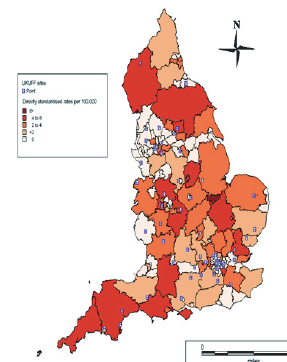
Temporal trends and geographical variation in the use of subacromial decompression and rotator cuff repair of the shoulder in England

These authors explored the trends over time and the geographical variation in the use of subacromial decompression and rotator cuff repair in 152 local health areas in England between 2000/2001 and 2009/2010.

The number of patients undergoing subacromial decompression alone rose by 746.4% from 5.2/100 000 to 40.2/100 000.

The authors point to a wide geographical range of rates of cuff repair ranging from 0 to 8/100,000 suggesting inconsistent application of indications for this surgery.


The authors conclude that "Given the lack of evidence for the effectiveness of these operations and the significant increase in the number of procedures being performed in England and elsewhere, there is an urgent need for well-designed clinical trials to determine evidence of clinical effectiveness."
===
Consultation for those who live a distance away from Seattle.

Check out the new Shoulder Arthritis Book - click here.

Click here to see the new Rotator Cuff Book

To see the topics covered in this Blog, click here

Use the "Search" box to the right to find other topics of interest to you.

You may be interested in some of our most visited web pages including:shoulder arthritis, total shoulder, ream and runreverse total shoulderCTA arthroplasty, and rotator cuff surgery as well as the 'ream and run essentials'


Wednesday, May 1, 2013

Surgeon experience, case volume, what difference do they make in outcome?

Center and surgeon volume influence the revision rate following unicondylar knee replacement: an analysis of 23,400 medial cemented unicondylar knee replacements

The effects of the learning curve and surgical experience on the rate of revision surgery is of extreme interest in a technical field like orthopaedics. If we skip to the bottom line of this article, we see that the authors suggest that the surgical workload for an orthopaedic procedure (in this case a unicondylar knee replacement, but it could be any other) be concentrated in centers and with surgeons, allowing them to accumulate the necessary volumes required to improve patient outcomes.

So here's the study. The authors analyzed 23,400 medial cemented Oxford unicondylar knee replacements for the treatment of osteoarthritis. Total center and surgeon operative volumes were calculated over an eight-year time span since the inception of the registry (April 2003 to December 2010). The revision rate was calculated according to center volume and surgeon volume.

A total of 919 surgeons and a total of 366 centers performed at least one replacement, with the majority performing a small number of procedures. The revision rate for the surgeons with the lowest volume (twenty-five or fewer procedures), 2.16 revisions per 100 component years, was significantly higher than that for the surgeons with the highest volume (more than 200 procedures), 0.80 revisions per 100 component years. The five-year survival rate of 90.1% for the lowest-volume surgeons was also significantly lower than the rate of 96.0% for the highest-volume surgeons. Stating this in the other way, the five year failure rate for low volume surgeons is 10%  in contrast to 4% per year for highest volume surgeons - less than half.

While the authors suggest a threshold level, their data indicates that the benefit of experience continues to increase with increasing volume:


In any event, their evidence indicates that high-volume centers and surgeons specializing in such procedures had superior results compared with their low-volume counterparts.

The mechanisms by which experience exerts its effect are probably multiple, including optimizing patient selection, surgical technique, surgical teamwork and rehabilitation.  What is clear is that a >50% reduction in failure rate is something  to consider.

===
Use the "Search" box to the right to find other topics of interest to you.

You may be interested in some of our most visited web pages including:shoulder arthritis, total shoulder, ream and runreverse total shoulderCTA arthroplasty, and rotator cuff surgery as well as the 'ream and run essentials'


See from which cities our patients come.


See the countries from which our readers come on this post.