Showing posts with label distalization. Show all posts

Friday, September 19, 2025

In comparison to anatomic total shoulder, reverse total shoulder is associated with greater anterior shoulder pain and internal rotation dysfunction in patients with osteoarthritis.

While there is a trend toward increasing use of reverse total shoulder arthroplasty (rTSA) instead of the traditional anatomic total shoulder (aTSA) in the surgical management of glenohumeral arthritis with an intact rotator cuff, the patient outcomes of rTSA can be complicated by anterior shoulder pain (Conjoint tendon release for persistent anterior shoulder pain following reverse total shoulder arthroplasty) and deficits in internal rotator function (Internal rotation limitation is prevalent following modern reverse shoulder arthroplasty and negatively affects patients' subjective rating of the procedure). 

The authors of Comparison of anterior shoulder pain and internal rotation dysfunction after anatomic and reverse shoulder arthroplasty for osteoarthritis assessed these two complications at two years in similar patients with arthritis having rTSA or aTSA using an anterior shoulder pain and dysfunction score (ASPDS) and the functional internal rotation (FIR) score [these two questionnaires are shown at the end of this post].

Twenty-six patients were included in each of the aTSA and rTSA groups. Mean ASPDS scores were lower in the rTSA group (p=.001). 


Mean FIR score was also worse in the rTSA group compared with the aTSA group (p = .004). 

The ASES, SANE, and VAS scores were not signficantly different between the two groups (I believe this is because only 2 out of 100 points of the ASES score are given for internal rotation; the SANE and VAS scores are each a single number without any functional specificity). The Simple Shoulder Test was not used in this study (High and low performers in internal rotation after reverse total shoulder arthroplasty: A biplane fluoroscopic study found that the SST was sensitive to loss of internal rotation function).

In their discussion, the authors state, "In our experience, patients who undergo rTSA more commonly identify anterior shoulder pain and discomfort with tasks requiring forward elevation. rTSA patients scored an average of 3.5 points lower on the ASPDS compared to aTSA. Specifically, these patients reported worse outcomes on the questions about having anterior shoulder pain with activity, reaching out to shake someone’s hand or grab a TV remote, raising their arm to touch their face and hair, lifting a grocery bag to the counter, and pushing open a heavy door." These are substantial disabilities.

Comment: This is an important study in that it showed that patients having reverse total shoulder arthroplasty for arthritis had significantly greater problems with anterior shoulder pain and internal rotation dysfunction than those having anatomic total shoulder arthroplasty.

The authors of another recent study, Extension of the Shoulder is Essential for Functional Internal Rotation After Reverse Total Shoulder Arthroplasty proposed that limitation of reach behind the body after RTSA may not be primarily related to a deficit of glenohumeral internal rotation but rather due to a lack of humerothoracic extension.


From the above I suspect that anterior shoulder pain and loss of functional internal rotation are both due to over-tightening of the coracoid muscles by excessive distalization of the humeral component in reverse total shoulder arthroplasty. Surgeons can examine humerothoracic extension with the trial rTSA components in place. If extension is limited, the surgeon can consider modifying the amount of distalization or release of the short head of the biceps and coracobrachialis from the coracoid.

Keeping in mind that the tension in the coracoid muscles is always increased by reverse total shoulder arthroplasty, surgeons can measure the amount of distalization (and lateralization) on preoperative and postoperative radiographs and use these measurements as part of the evalation of patients who have postoperative anterior shoulder pain and internal rotation functional deficits. In the example below the humerus has been distalized relative to the acromion by 24 mm, from 15.1 mm before surgery to 39.1 mm after surgery.


These potential adverse outcomes merit consideration of the choice of type of arthroplasty (rTSA vs aTSA) for patients with cuff-intact osteoarthritis.

The potential complications of reverse total shoulder are worth a good look


Western Tanager
Matsen backyard
2020

You can support cutting edge shoulder research that is leading to better care for patients with shoulder problems, click on this link

Follow on twitter/X: https://x.com/RickMatsen
Follow on facebook: https://www.facebook.com/shoulder.arthritis
Follow on LinkedIn: https://www.linkedin.com/in/rick-matsen-88b1a8133/

Here are some videos that are of shoulder interest
Shoulder arthritis - what you need to know (see this link).
How to x-ray the shoulder (see this link).
The ream and run procedure (see this link).
The total shoulder arthroplasty (see this link).
The cuff tear arthropathy arthroplasty (see this link).
The reverse total shoulder arthroplasty (see this link).
The smooth and move procedure for irreparable rotator cuff tears (see this link)
Shoulder rehabilitation exercises (see this link).


------------

Internal rotation scores


Sunday, July 13, 2025

Measuring humeral distalization and lateralization in reverse total shoulder

A prior post, Do lateralization and distalization after reverse total shoulder have a clinically significant relationship with patient outcome? pointed out that humeral lateralization and distalization are commonly measured by angles: the LSA (lateralization shoulder angle) and the DSA (distalization shoulder angle) as shown below


It seems curious that distalization (a linear dimension) is being measured as an angle, rather than as a linear dimension (see yellow line) and


that laterialization (a linear dimension) is being measured as an angle, rather than as a linear dimension (see yellow line).


A recent article Reverse shoulder arthroplasty design inlay vs. onlay: does it really make a difference? emphasized the importance of distalization and lateralization to the outcome of reverse total shoulder and showed a similar method for the linear measurement of each of these linear dimensions. 


The authors point out that humeral distalization and lateralization depend on (a) whether the implant is "inlay" or "onlay" in design,


 (b) the placement of the humeral implant in the bone, 


and (c) the position and geometry of the glenosphere.

Fortunately, the readily available PACS (Picture Archiving and Communication System) makes measurement of distalization (white) and lateralization (yellow) on plan films quite straightforward.


These tools can make the same measurements on the preoperative film, so that the change in distalization and lateralization can be quantified. In this example, the reverse total shoulder medicalized the humerus by 1.9 mm and distalized in by 24 mm.


Making these linear measurements in a standard way sets the stage for assessing the effect of humeral lateralization and distalization on patient outcomes.


 Position is everything


Anna's Hummingbird
Anne's garden, Seattle
Spring 2021

You can support cutting edge shoulder research that is leading to better care for patients with shoulder problems, click on this link

Follow on twitter/X: https://x.com/RickMatsen
Follow on facebook: https://www.facebook.com/shoulder.arthritis
Follow on LinkedIn: https://www.linkedin.com/in/rick-matsen-88b1a8133/

Here are some videos that are of shoulder interest
Shoulder arthritis - what you need to know (see this link).
How to x-ray the shoulder (see this link).
The ream and run procedure (see this link).
The total shoulder arthroplasty (see this link).
The cuff tear arthropathy arthroplasty (see this link).
The reverse total shoulder arthroplasty (see this link).
The smooth and move procedure for irreparable rotator cuff tears (see this link)
Shoulder rehabilitation exercises (see this link).


Sunday, July 23, 2023

Reverse total shoulder arthroplasty: do lateralization and distalization correlate with clinical outcome?

Surgeons want to know how the postoperative position of the humerus in relation to the scapula relates to the clinical outcome after reverse total shoulder arthroplasty (RSA).

The authors of The lateralization and distalization shoulder angles are important determinants of clinical outcomes in reverse shoulder arthroplasty studied these relationships in 46 patients having RSA for cuff tear arthropathy (CTA) using measurements of the lateralization shoulder angle (LSA) and the distalization shoulder angle (DSA) as shown below. Four different implant combinations were included.


Although they found positive correlations between the LSA and the ADLER score and the Constant score, they found no significant correlations between the LSA and ASES, SST, or SSV scores.

While they found negative correlations between the DSA and the ADLER score, they found no significant correlations between the DSA and the total Constant, ASES, SST, or SSV scores.
 
More recently the authors of Lateralization and distalization shoulder angles do not predict outcome in reverse shoulder arthroplasty for cuff tear arthropathy reviewed a larger series of 630 primary RSAs for patients with CTA. Five different implants were used.  The regression calculations for LSA or DSA did not reveal significant associations with any of the clinical outcomes.

In Influence of humeral lengthening on clinical outcomes in reverse shoulder arthroplasty no clear relationship between humeral lengthening and clinical outcomes was identified. 

In Negligible Correlation between Radiographic Measurements and Clinical Outcomes in Patients Following Primary Reverse Total Shoulder Arthroplasty the importance of radiographic measurements and their correlation with clinical and functional outcomes following rTSA was found to be limited. 

In Does glenohumeral offset affect clinical outcomes in a lateralized reverse total shoulder arthroplasty? the magnitude of lateralization did not significantly affect the clinical outcomes. 

In Medialized vs. lateralized humeral implant in reverse total shoulder arthroplasty: the comparison of outcomes in pseudoparalysis with massive rotator cuff tear  the postoperative active elevation range and functional outcomes were not affected by medialization or lateralization of the humeral implant. 

Finally, the authors of Managing rotator cuff tear arthropathy: A role for cuff tear arthropathy hemiarthroplasty as well as reverse total shoulder arthroplasty studied the postoperative relationships in 58 patients having RSA for CTA, including: 
(1) the superior/inferior position of the greater tuberosity in relation to the acromion tip
(2) the medial/lateral position of the greater tuberosity in relation to the acromion  tip
(3) the superior/inferior position of the center of rotation in relation to the bony glenoid center
(4) the medial/lateral position of the center of rotation in relation to the bony glenoid center
(5) the abduction moment 
(6) the distance from the center of rotation to the greater tuberosity
(7) the distance from the center of rotation to the acromion 

As in the prior reports, none of these parameters were significantly associated with clinical outcome.

Comment: Factors other than postoperative radiographic parameters are responsible for the amount of improvement in patient comfort and function following RSA.

You can support cutting edge shoulder research that is leading to better care for patients with shoulder problems, click on this link.

Follow on twitter: https://twitter.com/shoulderarth
Follow on facebook: click on this link
Follow on facebook: https://www.facebook.com/frederick.matsen
Follow on LinkedIn: https://www.linkedin.com/in/rick-matsen-88b1a8133/

Here are some videos that are of shoulder interest
Shoulder arthritis - what you need to know (see this link).
How to x-ray the shoulder (see this link).
The ream and run procedure (see this link).
The total shoulder arthroplasty (see this link).
The cuff tear arthropathy arthroplasty (see this link).
The reverse total shoulder arthroplasty (see this link).
The smooth and move procedure for irreparable rotator cuff tears (see this link).
Shoulder rehabilitation exercises (see this link).


Sunday, December 25, 2022

What determines the outcome of reverse total shoulder arthroplasty - does geometry matter? Part 1

Since the introduction of the reverse total shoulder arthroplasty (RSA), surgeons have attempted to correlate radiographic measures with clinical outcomes. However, studies such as those listed below did not find clinically significant associations between radiographic measurements and patient-reported outcome measures:

Negligible Correlation between Radiographic Measurements and Clinical Outcomes in Patients Following Primary Reverse Total Shoulder Arthroplasty

Medialized vs. lateralized humeral implant in reverse total shoulder arthroplasty: the comparison of outcomes in pseudoparalysis with massive rotator cuff tear

The lateralization and distalization shoulder angles are important determinants of clinical outcomes in reverse shoulder arthroplasty

A comprehensive evaluation of the association of radiographic measures of lateralization on clinical outcomes following reverse total shoulder arthroplasty


Recently the authors of Influence of Humeral Lengthening on Clinical Outcomes in Reverse Shoulder Arthroplasty assessed the relationship between humeral lengthening and minimal two-year clinical outcomes after RSA, pointing out that while deltoid tensioning from humeral lengthening is theorized to improve the range of motion it might also predispose patients to acromial/scapular spine fractures and neurologic injury. They studied 284 RSAs performed using a single prosthesis design (Exactech/Equinoxe).


They defined humeral lengthening as preoperative to postoperative change in the "subacromial height" (the vertical difference between the most inferolateral aspect of the acromion and the most superior aspect of the greater tuberosity).


The amount of lengthening varied through a broad range:


They found no clinically important differences between shoulders with ≤25 vs. >25 mm of lengthening with respect to ROM measures, outcome scores, or shoulder strength.

The relationship between the postoperative Simple Shoulder Test (left) and improvement in the Simple Shoulder Test (right) as a function of arm lengthening is shown below.


They noted no significant difference in the amount of humeral lengthening between patients with complications and those without complications. Patients with lengthening >25 mm did not have greater rates of acromial fracture or neurologic injury.

The authors of another recent article, Postoperative acromiohumeral interval affects shoulder range of motions following reverse total shoulder arthroplasty sought to analyze various radiographic parameters that may be predictive of clinical outcomes after RSA in 55 patients at a minimum of 2 years followup.
Radiographic parameters included critical shoulder angle, acromial index, acromiohumeral interval, deltoid lever arm, acromial angulation, glenoid version, and acromial height.

They found a very weak negative correlation between the postoperative acromiohumeral interval (see figure below) and forward flexion (r = − 0.270; p = 0.046) and internal rotation (r = 0.275; p = 0.042).


The association between postoperative acromiohumeral interval and external rotation was stronger (r = − 0.421; p = 0.001). A postoperative acromiohumeral interval less than 29 mm had an 86% positive predictive value of obtaining 130° of forward flexion and 45° of external rotation. Excessive distalization reduced forward flexion and external rotation motion of the shoulder.
 
However, essentially radiographic parameters were significantly associated with patient reported outcomes as seen below.


Yet another strudy, Does glenohumeral offset affect clinical outcomes in a lateralized reverse total shoulder arthroplasty? pointed out that there are at least three different RSA geometries:


The authors sought to evaluate how increasing glenohumeral offset affects outcomes after RSA, specifically in a lateralized humerus - medialized glenoid implant model (right hand figure in the illustration above).  

Pre- and postoperative radiographs were analyzed for measurement of glenohumeral offset, defined as the acromial-tuberosity offset (ATO) distance on the anteroposterior radiograph in 130 RSAs.


The mean postoperative absolute ATO was 16 mm, and the mean delta ATO (difference from pre- to postoperatively) was 4.6 mm further lateralized.  When assessing for the effects of lateralization on patient reported outcomes, multivariate analysis failed to reveal a significant effect from the absolute postoperative ATO or the change in ATO on any outcome parameter.

For example, while the Simple Shoulder Test (SST) score improved from 4.0 to 11.0 (p<.001), the SST score was not related to change in ATO: the mean SST was 6.1 for shoulders with a change in ATO <4.6 mm and 6.3 for shoulders with a change in ATO ≥ 4.6 mm. 

The authors concluded that RSA using a lateralized humerus . medialized glenoid implant exhibited excellent clinical outcomes in range of motion and patient recorded outcomes. However, the magnitude of lateralization as measured radiographically by the ATO did not significantly affect these outcomes; patients exhibited universally good outcomes irrespective of the degree of offset.


Comment: Radiographic measures have not been shown to significantly correlated with patient reported clinical outcomes of reverse total shoulder arthroplasty. This finding has three important implications:
(1) currently surgeons do not have robust evidence on which to base their positioning of reverse total shoulder components
(2) the outcomes of reverse total shoulder arthroplasty are largely influenced by factors other than component positioning
(3) clinical research directed a optimizing the clinical outcome of reverse total shoulder arthroplasty needs to include not only data on implant type and positioning, but also the characteristics of the patient (see, for example, One in three patients having shoulder arthroplasty have depression) as well as details of the preoperative condition of the shoulder. 

You can support cutting edge shoulder research that is leading to better care for patients with shoulder problems, click on this link.

To add this blog to your reading list in Google Chrome, click on the reading list icon


Follow on twitter: https://twitter.com/shoulderarth
Follow on facebook: click on this link
Follow on facebook: https://www.facebook.com/frederick.matsen
Follow on LinkedIn: https://www.linkedin.com/in/rick-matsen-88b1a8133/

Here are some videos that are of shoulder interest
Shoulder arthritis - what you need to know (see this link).
How to x-ray the shoulder (see this link).
The ream and run procedure (see this link).
The total shoulder arthroplasty (see this link).
The cuff tear arthropathy arthroplasty (see this link).
The reverse total shoulder arthroplasty (see this link).
The smooth and move procedure for irreparable rotator cuff tears (see this link).
Shoulder rehabilitation exercises (see this link).


Saturday, May 21, 2022

Nerve injuries after reverse total shoulder arthroplasty.

Persistent and Profound Peripheral Nerve Injuries Following Reverse Total Shoulder Arthroplasty


These authors point out that peripheral nerve injuries associated with reverse total shoulder arthroplasty (rTSA) are uncommonly recognized and are often dismissed as neuropraxias, particularly in the setting of perioperative nerve blocks. 


They conducted a retrospective review of 22 patients referred to a nerve injury service who had undergone rTSA and had a concomitant major nerve injury. The average time from surgery to referral to a nerve injury practice was 9.0 months.


Injury patterns were variable and involved diffuse pan-plexopathies with severity localized to the posterior and medial cords (11), the upper trunk (5), lateral cord (2) and axillary nerve (4). 


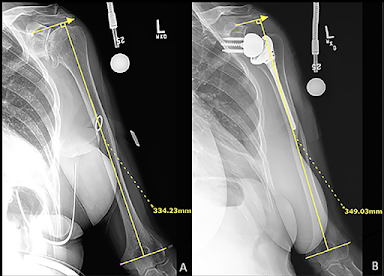
The average postoperative acromiohumeral distance (AHD) was 3.7 cm with an average change of 2.9 cm. 


17 patients were confirmed to have undergone preoperative nerve blocks, which were initially attributed as the etiology of nerve injury. 


18 patients were initially treated with observation: 11 experienced residual debilitating neuropathic pain and/or disability and 7 had substantial improvement. 


Complete axillary nerve injury was seen in 4 patients, of which none resolved spontaneously. Patients with upper trunk or lateral cord injuries spontaneously resolved over the course of their 18.8 month follow-up.  There were 13 cord level injuries of which 11 were medial/posterior cord combined injuries. These were the most serious, especially the medial cord injuries which severely affected hand function via ulnar nerve injury. Of these 11 posterior/medial cord injuries, all had altered ulnar nerve function with loss of intrinsic function, thumb adduction and digital flexion with altered ulnar nerve sensation. Four of the 11 required reconstructive hand surgery to improve their pattern of grasp. All 11 had disabilities consistent with permanent ulnar nerve dysfunction as evidenced by their high Quick DASH scores and need for neuropathic medications.


The authors concluded that these nerve injuries were secondary to traction at the time of arthroplasty, and/or substantial distalization and lateralization of the implants.


Comment: One of the important lessons from this study is that the use of nerve block anesthesia may prevent the surgeon from promptly recognizing a postoperative nerve injury and eliminate the possibility of prompt intervention. A second lesson is that these nerve injuries can be long lasting and disabling in terms of pain and loss of function.  A third lesson is that the average distalization of the humerus in these cases was 2.9 cm. While there is not a comparison group of measurements in reverses without nerve injuries, it seems likely that distalization can result in a traction injury to the nerves of the plexus as explained nicely in this link.


The nerve injuries reported in this article were major. It seems likely that many less severe injuries occur in association with reverse total shoulder arthroplasty and that these injuries might account for compromised deltoid function as well as postoperative pain.


While some surgeons prefer substantial distalization (below left), our technique (see this link) strives for a more anatomic reconstruction with only a small amount of distalizalization and less tension on the nerves (below right). We also avoid brachial plexus blocks on our patients having shoulder arthroplasty so that a complete examination can be documented in the recovery room.


You can support cutting edge shoulder research that is leading to better care for patients with shoulder problems, click on this link.

Follow on twitter: https://twitter.com/shoulderarth

Follow on facebook: click on this link

Follow on facebook: https://www.facebook.com/frederick.matsen

Follow on LinkedIn: https://www.linkedin.com/in/rick-matsen-88b1a8133/

Here are some videos that are of shoulder interest
Shoulder arthritis - what you need to know (see this link).
How to x-ray the shoulder (see this link).
The ream and run procedure (see this link).
The total shoulder arthroplasty (see this link).
The cuff tear arthropathy arthroplasty (see this link).
The reverse total shoulder arthroplasty (see this link).
The smooth and move procedure for irreparable rotator cuff tears (see this link).
Shoulder rehabilitation exercises (see this link).


Thursday, November 11, 2021

Reverse total shoulder - do radiographic measurements relate to the patient outcome?

While reverse total shoulder can be a successful surgery for patients with pseudoparalysis, fracture and failed anatomic arthroplasty, the clinically ideal positioning and type of implant have yet to be determined. For example, while distalization of the glenosphere may lead to an increase in motion and lower risk for scapular notching, it comes with increased risk for neurological injury, acromial/scapular stress fractures and deltoid fatigue. Less distal positioning of the glenosphere may result in collision of the greater tuberosity against the acromion, with risk of loss of range of motion and acromial/spine fracture. 

In an attempt to correlate component type and position with the rate of complications and clinical outcomes, many radiographic measurements have been proposed. 

One example is "arm length" measurement - the distance between the transepicondylar line to the inferior aspect of the acromion. "Humeral lengthening" is the difference between this measurement before and after surgery.


Two other measurements are the lateralization shoulder angle (LSA below left) and the distalization shoulder angle (DSA below right)


It can be seen that these measurements do not directly reflect the position of the center of rotation nor the type or position of the humeral component. A recent article examined the clinical importance of these measurements.

Assessing the validity of the distalization and lateralization shoulder angles following reverse total shoulder arthroplasty

These authors explored the relationship between the distalization shoulder angle (DSA) and lateralization shoulder angle (LSA) and clinical outcome after reverse total shoulder arthroplasty performed in 238 patients by an individual surgeon. 


One group had a 155 degree medialized design  (Anatomical Shoulder Reverse System, Zimmer), 2.5 mm of lateral offset and a 36 mm glenosphere. 


Another group had a 135 degree laterally offset design (AltiVate 
system from DJO) All females with a lateralized implant had a 32 mm glenosphere with 6 mm of lateral COR offset, while all males had a 32 mm glenosphere with 10 mm of offset.


The reasons for choosing the different prostheses are not provided.


Lateralized prostheses were associated with higher LSAs (88 ± 7) vs. 82 ± 7 for medialized prostheses. While the difference was statistically significant, there was substantial overlap.


The distalization shoulder angle did not correlate with humeral lengthening.


Neither the DSA or the LSA were strongly correlated with 2-year postoperative American Shoulder and Elbow Surgeons score or shoulder range of motion.


Comment: This study did not include a multivariate analysis of the many demographic (e.g. age, sex, diagnosis) and surgical variables (e.g. implant type, size and position) that may influence outcome.  On univariate analysis the authors did not find evidence to support the view that measurements of LSA and DSA have a major influence on the function of a reverse total shoulder. 


Further study, probably using different measurements will be necessary to elucidate the reverse total shoulder geometries that are associated with the best function and the lowest risk of complications. 


Follow on twitter: https://twitter.com/shoulderarth

Follow on facebook: https://www.facebook.com/frederick.matsen

Follow on LinkedIn: https://www.linkedin.com/in/rick-matsen-88b1a8133/


How you can support research in shoulder surgery Click on this link.

Here are some videos that are of shoulder interest
Shoulder arthritis - what you need to know (see this link)
Shoulder arthritis - x-ray appearance (see this link)
The smooth and move for irreparable cuff tears (see this link)
The total shoulder arthroplasty (see this link).
The ream and run technique is shown in this link.
The cuff tear arthropathy arthroplasty (see this link).
The reverse total shoulder arthroplasty (see this link).

Shoulder rehabilitation exercises (see this link).

This is a non-commercial site, the purpose of which is education, consistent with "Fair Use" as defined in Title 17 of the U.S. Code.          

Note that author has no financial relationships with any orthopaedic companies.