Showing posts with label notching. Show all posts

Thursday, December 3, 2020

Reverse total shoulder: avoiding notching

 Clinical and radiological outcomes of eccentric glenosphere versus concentric glenosphere in reverse shoulder arthroplasty

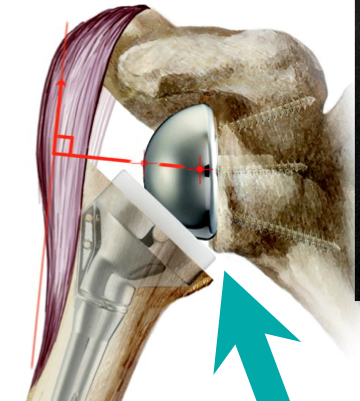
Scapular notching is an important complication of reverse total shoulder arthroplasty


It results from unwanted contact between the humeral polyethylene and the neck of the scapula


These authors conducted a retrospective analysis of 49 reverse total shoulders with an inferiorly eccentric glenoid (EG) and 49 RSAs with a concentric glenoid (CG) at a minimum 60 months. Notching was observed 2.7 times more often in the CG group (p=0.040). However the notching severity was not statistically relevant between the groups.

 Compared to a CG, an EG did not increase the percentage of radiolucent lines around the screws,


As pointed out be the authors, the eccentric glenosphere reduces the risk of notching by moving the humerus further distally away from the scapular neck.


Moving the humerus distally can result in a relatively un-anatomic reconstruction with increase tension on the deltoid, acromion and brachial plexus.


An alternative method for minimizing the risk of notching is to use a glenosphere with an extended neck  that moves the humeral component laterally (rather than inferiorly) away form the the scapular neck resulting in a more anatomic reconstruction.


Some designs of RSA create a major disruption of the normal anatomic relationships of the shoulder while others do not (see this link).  One way to look at this is to consider the arch created by the medial aspect of the humerus and the lateral aspect of the scapula. This arch can be referred to as "Bani's line", described in 1981 (Bandi W Die Läsion der Rotatorenmanschette. Helv Chir Acta 48:537-549). 


Some approaches create minimal disruption of the arch (i.e. a more "anatomic" reverse)


While other approaches create greater disruption of the normal relationships as indicated by the break in the arch.


If the arch is disrupted, several things happen: (1) increased stress is put on the acromion and scapular spine leading to an increased risk of acromial and scapular spine fractures, (2) increase stress is placed on the brachial plexus, and (3) the normal alignment of residual infraspinus and subscapularis is disrupted.


To see our technique for reverse total shoulder, click on this link.

To support our research to improve outcomes for patients with shoulder problems, click here.

To subscribe to this blog, enter your email in the box to your right

=====
How you can support research in shoulder surgery Click on this link.

To see our new series of youtube videos on important shoulder surgeries and how they are done, click here.

Be sure to visit "Ream and Run - the state of the art"  regarding this radically conservative approach to shoulder arthritis at this link and this link. Also see the essentials of the ream and run.

Use the "Search" box to the right to find other topics of interest to you.

You may be interested in some of our most visited web pages   arthritis, total shoulder, ream and runreverse total shoulderCTA arthroplasty, and rotator cuff surgery 


Wednesday, November 27, 2019

Reverse total shoulder scapular notching - it's not only about the scapula

Impact of scapular notching on reverse total shoulder arthroplasty midterm outcomes: 5-year minimum follow-up

These authors observe that the impact of scapula notching on reverse total shoulder arthroplasty (rTSA) clinical outcomes is controversial. They conducted an analysis of 324 rTSA patients with 5 years of minimum (average (75 mo)  follow-up to evaluate the relationships between notching and clinical outcome.

47 patients (14.5%) had scapular notching; for these patients, the average notching grade was 1.7 0.8 (24 grade 1, 15 grade 2, and 8 grade 3). The average time to notch development was 51.4 months; grade 1, grade 2, and grade 3 notches developed at 49.0 months, 57.5 months, and 71.6 months, respectively. No preoperative differences were observed between cohorts. 

At latest follow-up, scapular notching patients had significantly worse outcome scores and significantly less active abduction, forward flexion, and strength.


Finally, scapular notching patients had significantly more complications, revisions, and humeral radiolucent lines.


Comment: From these results it can be seen that patients with scapular notching do, on average, less well than those without.

Scapular notching is a phenomenon observed on x-rays as shown below. It can extend to the point where the screw fixation of the glenoid base plate is jeopardized.


What cannot be seen on x-ray is what is on the other side of the notching, i.e. the polyethylene of the humeral cup. The poly fares poorly when it repeatedly contacts the bone of the scapula. When the poly is eroded (see below) small particles of poly debris are released into the joint, where they can cause pain and stiffness. This particulate debris can also contribute to loosening of the humeral and glenoid components.


Anytime we have unintended contact between high density polyethylene and bone, it is a problem. Scapular notching is a radiographic finding, but the real concerns are about (1) the damage to the poly of the humeral cup, (2) loss of the bone of the scapula that supports the glenoid component, and (3) the potential for instability resulting from leverage of one against the other. See this previous post which discusses this phenomenon in some detail.


In the Grammont-type reverse total shoulder, contact of the adducted humeral component against the scapula is not uncommon as shown in this figure from a manufacturer's website.


These authors retrospectively reviewed 448 patients who underwent a Grammont-type reverse total shoulder  (461 shoulders) performed for rotator cuff tear arthropathy or osteoarthritis with cuff deficiency with a mean followup of 51 months (range, 24-206 months). They found notching of the scapula in 68% of the cases; it was present in 48% at one year after surgery. 

Notching was more common in active patients, in patients with cuff tear arthropathy, and in patients with greater degrees of superior displacement of the humeral head before surgery. Strength and range of motion were compromised in patients with notching.

Importantly, 36% of shoulders with notching had humeral radiolucent lines (in contrast to 17% in those without notching), suggesting the possibility that polyethylene particles from the humeral cup causing bone resorption. Similarly glenoid loosening was three times more common in the presence of notching.

The authors point out that standardized plain x-rays are necessary for the evaluation of notching, noting that sometimes notching is better seen on the axillary view.

Comment: Scapular notching is important and can be expected to adversely affect the long term durability and function of the reverse. It is best avoided by (1) use of a glenoid component design that offsets the center of rotation from the scapula, (2) proper positioning of the glenoid component at the inferior aspect of the glenoid, (3) avoiding superior tilt of the glenoid component, and carefully checking for contact between the humeral component and scapula at surgery when the arm is adducted and rotated. If contact is noted after component implantation, careful resection of the contacting scapular bone may be helpful.


To see a YouTube of our technique for a reverse total shoulder arthroplasty, click on this link.

=====
To see our new series of youtube videos on important shoulder surgeries and how they are done, click here.

Use the "Search" box to the right to find other topics of interest to you.


You may be interested in some of our most visited web pages  arthritis, total shoulder, ream and runreverse total shoulderCTA arthroplasty, and rotator cuff surgery as well as the 'ream and run essentials'

Monday, March 6, 2017

Reverse total shoulder - is an eccentric glenosphere of value?


These authors compared the clinical and radiological results of Reverse Shoulder Arthroplasty (RSA) using an eccentric glenosphere (SMR Reverse Shoulder Prosthesis) (11 patients) to those using a concentric glenosphere (9). All glenoid components were placed with 15°of inferior tilt.

There was no statistically significant difference between the two groups in clinical outcome.

9 patients with concentric glenospheres developed notching


 compared with 2 of 11 patients with eccentric glenospheres (p = 0.022).


Comment: While in the past scapular notching has been dismissed as a finding without clinical importance, more recent publications point to its association with inferior clinical outcomes. See this link.

While this report focuses on the concentricity / eccentricity of the glenosphere, it seems that the lateral offset of the glenosphere, the placement of the glenosphere on the scapula, adequate resection of potentially contacting bone, and the humeral component design are at least as important in avoiding unwanted contact between the humeral component and the scapula as described here:

Contact mechanics of reverse total shoulder arthroplasty during abduction: the effect of neck-shaft angle, humeral cup depth, and glenosphere diameter.

These authors created finite element reverse shoulder arthroplasty (RSA) models with varying neck-shaft angles (155°, 145°, 135°), sizes (38 mm, 42 mm), and cup depths (deep, normal, shallow) were loaded with 400 N at physiological abduction angles.

They found that the location of maximum contact stress were typically located inferomedially in the polyethylene humeral cup. 

Reducing the neck-shaft angle reduced the contact area and increased maximum contact stress. 

Increasing the glenosphere size increased the contact area and slightly decreased maximum contact stress. 

Decreasing the cup depth reduced the contact area  and increased maximum contact stress.

Note the tradeoff: although reducing the neck-shaft angle and cup depth can improve range of motion these changes may have negative effects on contact mechanics.

It is of interest that current practice of RSA is tending toward implant modifications that increase range of motion: reduced neck shaft angle, smaller glenosphere diameter and shallower cups, all changes that may increase the risk of cup wear.


Thus in reverse total shoulder arthroplasty, design does matter. As we pointed out in a recent post and here,  different component designs have different effects on the position of the center of rotation - both superiorinferiorly (which affects deltoid tension) and mediolaterally (which affects stability and the proximity of the medial aspect of the humeral component to the glenoid).  The design of the component also determines the shape of the glenoid polyethylene and the varus/valgus orientation of the humeral cup. Stated simply, designs that place more polyethylene beneath the glenosphere tend to be more stable on one hand while increasing the risk of notching on the other.

Contact between the polyethylene at the medial aspect of the humeral cup and the scapula is bad; it can give rise to (1) scapula notching, (2) instability from levering of the humeral component away from the glenoid, (3) limited range of motion and (4) destruction of the polyethylene as shown below and as described here and here with the production of polyethylene debris.


Consider the figures below, each of which was taken from the website of a vendor of a reverse total shoulder (please recall that we have no financial relationships with any company making orthopaedic implants). Note the relationship of the center of rotation of the glenoid component to the proximity of the medial aspect of the humeral cup to the scapula. Interestingly some illustrations show the arm in abduction, which can mask the proximity when the arm is adducted. 


Some authors have advocated modifying the medial/lateral position of the glenosphere by the insertion of a bone graft with the explicit goal of minimizing the risk of notching as shown below.
Some prosthetic designs accomplish the same effect by adding a neck to the glenosphere.
This change in design has an effect on the medial/lateral position of the center of rotation and adding distance between the humeral component and the scapula.

It is important to keep an eye on the mechanisms of reverse total shoulder failure as posted here and here and here and here

Our current approach to reverse total shoulder arthroplasty is shown in this post


Finally, when considering a given prosthesis design, it is important to consider its overall track record. Here is a chart from the Australian Orthopaedic Association National Joint Replacement Registry Annual Report 2015 - Shoulder Arthroplasty suggesting a higher revision rate for the prosthesis used in this study


Similar results with longer followup were reported in the 2016 report (see this link).


=


To see the topics covered in this Blog, click here

Use the "Search" box to the right to find other topics of interest to you.

You may be interested in some of our most visited web pages including:shoulder arthritis, total shoulder, ream and runreverse total shoulderCTA arthroplasty, and rotator cuff surgery as well as the 'ream and run essentials'

Sunday, February 26, 2017

Reverse total shoulder - unwanted contact

Humeral version in reverse shoulder arthroplasty affects impingement in activities of daily living

These authors used a computer model of a specific reverse implant

to predict the relationship between bone-prosthesis contact and humeral component version in activities of daily living. 

In their model they found that for this particular prosthesis, 0° version showed the least amount of unwanted contact. The site of contact changed with version: retroversion increased the risk of extra-articular contact and contact of the humeral cup with the anterior glenoid border in hygienic and feeding activities. Anteversion increased unwanted contact between the inferior scapula border and the humeral cup.

Comment: The reverse total shoulder achieves stability because the socket captures the ball to a much greater extent than in an anatomic shoulder. The price for this stability is the risk of unwanted bone-prosthesis contact in different functional positions. When unwanted contact takes place the results can include polyethylene damage, instability and loss of range of motion (see this link).

Because x-rays do not show the humeral polyethylene cup, bone-prosthesis contact may not be evident; compare the x-ray below to the image of the same component shown above.


A common site of bone-prothesis contact is at the inferior-medial aspect of the joint when the arm is adducted.

but as the authors point out, unwanted bone-bone contact can occur in abduction

The occurrence of unwanted contact depends not only on the version in which the humeral component is inserted, but also the relationship of the humeral cup to the tuberosity (shown above) and other key variables: (a) the geometry (Grammont vs offset) and positioning (low vs high; inclined vs not) of the glenoid component, (b) the geometry of the humeral cup (inferiorly extended vs not, retentive vs standard) and (c) the often altered local bone anatomy.

In performing a reverse total shoulder, we take time with trial components in place to examine the stability and the range of the shoulder in all functional directions. We attempt to identify and resolve unwanted contact that may limit the range of motion, the stability or the durability of the reconstruction. Sometimes the unwanted contact can be resolved by removing bone; other times modification of the prothesis geometry or positioning is required.

As we say, "It is easier to resolve unwanted contact while the wound is still open."

===


Friday, January 31, 2014

Scapular notching in reverse shoulder arthroplasty - it is important!


Anytime we have unintended contact between high density polyethylene and bone, it is a problem. Scapular notching is a radiographic finding, but the real concerns are about (1) the damage to the poly of the humeral cup, (2) loss of the bone of the scapula that supports the glenoid component, and (3) the potential for instability resulting from leverage of one against the other. See this previous post which discusses this phenomenon in some detail.


In the Grammont-type reverse total shoulder, contact of the adducted humeral component against the scapula is not uncommon as shown in this figure from a manufacturer's website.


These authors retrospectively reviewed 448 patients who underwent a Grammont-type reverse total shoulder  (461 shoulders) performed for rotator cuff tear arthropathy or osteoarthritis with cuff deficiency with a mean followup of 51 months (range, 24-206 months). They found notching of the scapula in 68% of the cases; it was present in 48% at one year after surgery. 

Notching was more common in active patients, in patients with cuff tear arthropathy, and in patients with greater degrees of superior displacement of the humeral head before surgery. Strength and range of motion were compromised in patients with notching.

Importantly, 36% of shoulders with notching had humeral radiolucent lines (in contrast to 17% in those without notching), suggesting the possibility that polyethylene particles from the humeral cup causing bone resorption. Similarly glenoid loosening was three times more common in the presence of notching.

The authors point out that standardized plain x-rays are necessary for the evaluation of notching, noting that sometimes notching is better seen on the axillary view.

Comment: Scapular notching is important and can be expected to adversely affect the long term durability and function of the reverse. It is best avoided by (1) use of a glenoid component design that offsets the center of rotation from the scapula, (2) proper positioning of the glenoid component at the inferior aspect of the glenoid, (3) avoiding superior tilt of the glenoid component, and carefully checking for contact between the humeral component and scapula at surgery when the arm is adducted and rotated. If contact is noted after component implantation, careful resection of the contacting scapular bone may be helpful.


===
Consultation for those who live a distance away from Seattle.

Check out the new Shoulder Arthritis Book - click here.

Click here to see the new Rotator Cuff Book

To see the topics covered in this Blog, click here

Use the "Search" box to the right to find other topics of interest to you.

You may be interested in some of our most visited web pages including:shoulder arthritis, total shoulder, ream and runreverse total shoulderCTA arthroplasty, and rotator cuff surgery as well as the 'ream and run essentials'


Monday, July 22, 2013

The effect of lateral offset and glenosphere size on notching in reverse total shoulder

Evaluation of the role of glenosphere design and humeral component retroversion in avoiding scapular notching during reverse shoulder arthroplasty

The others observe that scapular notching has been noted in 60% of reverse total shoulders at 2 years after surgery. The stated purpose of this study was to evaluate the effect of Aequalis Reversed Shoulder Prosthesis (Tornier) glenosphere design and humeral component retroversion on inferior scapular impingement in 40 cadaver shoulders.

8 different combinations were tested: 36-mm glenosphere: centered (standard), eccentric, with an inferior tilt, or with the center of rotation (COR) lateralized by 5 or 7 mm; and 42-mm centered glenosphere: used alone or with the COR lateralized by 7 or 10 mm.

In comparison to to a 36-mm centered glenosphere, a 42-mm glenosphere, especially when it was lateralized by 10 mm resulted in greater degrees of adduction before contact between the humeral component and the scapula occurred. Positioning of the humeral component in 10° or 20° of retroversion or in anatomical retroversion was also effective at avoiding inferior impingement.

However, the authors point out that the patient suffering from cuff tear arthropathy is often a woman of small stature so that the use of a large-diameter glenosphere may difficult because of its excessive volume.

They conclude that glenoid combinations with a 7- or 10-mm-thick lateralization and a 42-mm glenosphere were most effective at reducing the risk of scapular notching.

While some have advocated lateralization of the glenosphere with a bone graft, the risk of glenoid component loosening is also greater because of higher loads at the glenoid base plate–bone interface and because of the potential for graft failure - especially if it is harvested from an osteoporotic humeral head. 


To see the topics covered in this Blog, click here

Use the "Search" box to the right to find other topics of interest to you.

You may be interested in some of our most visited web pages including:shoulder arthritis, total shoulder, ream and runreverse total shoulderCTA arthroplasty, and rotator cuff surgery as well as the 'ream and run essentials'


See from which cities our patients come.


See the countries from which our readers come on this post.


Tuesday, June 18, 2013

Reverse total shoulder - glenosphere fixation - scapular notching


The impact of scapular notching on reverse shoulder glenoid fixation.

These authors used a plastic composite scapula model to evaluate reverse shoulder glenoid baseplate fixation and the effect of scapular notching. They used acyclic test to simulate 55° of humeral abduction in the scapular plane as a 750-N axial load was applied to induce a variable shear and compressive load. Before and after cyclic loading, a displacement test was conducted to measure glenoid baseplate displacement.

They found that scapulae without a scapular notch, glenoid baseplate displacement did not exceed 150-μm - a suggested threshold for osseous integration. For the scapulae with a scapular notch, glenoid baseplate displacement exceeded 150 μm in 2 of the 7 samples before cyclic loading and in 3 of the 7 samples after cyclic loading. The average pre-cyclic glenoid baseplate displacement in the direction of the shear load was significantly greater in scapulae with a scapular notch than those without a scapular notch both before and after cyclic loading.

We've previously posted on a related study: Radiographic analysis of the effects of glenosphere position on scapular notching following reverse total shoulder arthroplasty

Comment: Glenoid loosening rates for reverse total shoulders have been reported to range between 0% and 12%. This complication is multifactorial, depending on component design, glenosphere placement, surgical technique, the degree of glenoid bone reaming, bone quality and the loads applied by the patient. Some designs, such as the one studied here, depend on bone ingrowth for fixation - thus the attention to the described 'threshold for osseous integration'. The problem with bone ingrowth is that one cannot be sure how long it takes before good fixation is achieved and, in each case, how long the shoulder should be protected from loading to assure that the micromotion threshold is not exceeded. Other designs, such as the one shown here provide immediate fixation without need to wait for bone ingrowth. The clinical environment surrounding each patient's reverse total shoulder is unique and this variability cannot be simulated in the lab. Only long term clinical studies will reveal what designs and techniques are best suited for which patients.

===
Use the "Search" box to the right to find other topics of interest to you.

You may be interested in some of our most visited web pages including:shoulder arthritis, total shoulder, ream and runreverse total shoulderCTA arthroplasty, and rotator cuff surgery as well as the 'ream and run essentials'


See from which cities our patients come.


See the countries from which our readers come on this post.

Monday, December 31, 2012

Lateralization in reverse total shoulder

Lateralized Reverse Shoulder Arthroplasty Maintains Rotational Function of the Remaining Rotator Cuff

In this paper the authors sought to determine the rotational moment arms, the origin-to-insertion distances of the teres minor and subscapularis, and the flexion and abduction moment arms. In seven cadaveric shoulder specimens. Three-dimensional shoulder surface models were created from CT scans before and after implantation. The implant investigated is shown below.


Inspection of this illustration in relation to the scaplar anatomy makes us wonder how contact between the medial humeral component and the lateral scapula (notching) is avoided with this implant. 

While the authors did not examine the effects of non-lateralized glenospheres in this study, a prior study, Reverse shoulder arthroplasty leads to significant biomechanical changes in the remaining rotator cuff., found that moment arms for humeral rotation were significantly smaller for the cranial segments of the subscapularis and the teres minor in abduction angles of 30 degrees and above. Origin to insertion distances were significantly smaller for all muscles. These findings may  be a possible explanation for the clinically observed impaired external and internal rotation when the center of rotation

In their study, the authors achieved lateralization using an 8 mm thick block implanted between the baseplate of the glenosphere and the glenoid. Not only does this lateralization reduce the risk of notching but the authors found that after lateralized reversed total shoulder arthroplasty, the subscapularis and teres minor maintained their length and rotational moment arms, their flexion forces were increased, and abduction capability decreased. They suggested that these finding might  explain clinically improved rotation in lateralized RSA in comparison to nonlateralized reverse total shoulders. 

It is of interest that different designs of reverse total shoulder result in different locations of the center of rotation, these differences result in differences in stability and as this recent article shows, differences in the moment arms for the residual external rotators. Thus it is important to understand these effects and to know the reverse system you are using. Some designs of reverse total shoulder have the lateralization built into the design of the glenoid component, so that a bone graft (with possible risk of resorption or collapse) is not needed.

---
Use the "Search" box to the right to find other topics of interest to you.

You may be interested in some of our most visited web pages including:shoulder arthritis, total shoulder, ream and runreverse total shoulderCTA arthroplasty,  and rotator cuff surgery.