Showing posts with label peg. Show all posts

Saturday, February 9, 2013

Glenoid components - peg or keel?

Rates of Radiolucency and Loosening After Total Shoulder Arthroplasty with Pegged or Keeled Glenoid Components

There is no question that survivorship of the glenoid component is the key to survivorship of a total shoulder arthroplasty. We have presented our approach to glenoid arthroplasty here.


This is an important study in that it seeks literature evidence on the cost-effectivenss of pegged vs. keeled glenoid components with particular emphasis on the risk of revision surgery. After a thorough analysis of the published data, they found that pooled risk ratio for revision was 0.27 (95% CI, 0.08 to 0.88) in favor of pegged components (p = 0.028). Their value analysis indicated that pegged glenoid designs were more cost-effective than keeled glenoid designs.

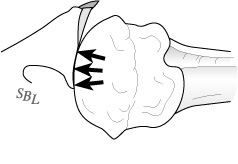
One of the key differences between a pegged and keeled component is that with a pegged component the geometry of the fit is more precisely controlled by the fact that concentric reaming takes place around the same axis as is used to fix the component.

Thus the risk of poor bony support for the component (shown below) is reduced. 


==

Use the "Search" box to the right to find other topics of interest to you.

You may be interested in some of our most visited web pages including:shoulder arthritis, total shoulder, ream and runreverse total shoulderCTA arthroplasty,  and rotator cuff surgery.


Saturday, June 25, 2011

Shoulder arthritis articles from the June JBJS - glenoid preparation, rocking horse loosening

The June issue of the JBJS provides a "specialty update" on 'What's New in Shoulder and Elbow Surgery'.
The authors state that 'asymmetric reaming to correct glenoid retroversion is commonly performed, but is thought to decrease the glenoid bone available for component implantation'. This is a critical point, since preservation of glenoid bone is a key element of glenohumeral arthroplasty - overzealous reaming sacrifices this precious commodity as shown below.


 It turns out that soft tissue balance, and not glenoid version, is the key element of shoulder arthroplasty stability. Thus our approach is to accept a substantial amount of retroversion, if necessary, to preserve the glenoid bone stock, as shown below, and achieve stability by soft tissue balancing.

The authors of this review suggest that it is preferable to insert a smaller sized glenoid component in less retroversion. Our experience is the opposite: shoulders are more stable with a larger glenoid component - inserted in retroversion if necessary - coupled with soft tissue balancing.

The authors of this review go on to comment on the amount of retroversion that can be 'corrected' before a pegged glenoid component would penetrate the vault. Actually, penetration of the glenoid vault by fixation pegs is not a critical consideration, in that the support of the component comes primarily from the accuracy of the contouring of the surface on which the component is placed as demonstrated by our fellow David Collins in his study on eccentric loading 

This review also comments on the use of computer-assisted technology to 'improve the accuracy of glenoid implantation'. While computer assistance yielded 'correct' glenoid version more consistently, there is no evidence presented that 'correcting' glenoid version improved stability or the clinical result. It did signficantly lengthen operative time, however.

Finally, the authors point to a randomized comparison of pegged versus keeled glenoid components. After 26 months, the keeled components had a 46% glenoid lucency rate as compared to a 15% lucency rate for the pegged components. This replicated the results of our fellow Mark Lazarus published in 2002. The superiority of peg fixation may be in part due to the unique positioning of component on the glenoid surface reamed around the central radial peg as shown below. Such precise positioning is more difficult to accomplish with a keeled component.
The superiority of pegs over keels may also be due to the ability of pegs that are not all in line to resist the 'lift off' seen with rocking horse loosening of the glenoid component.


--

Use the "Search the Blog" box to the right to find other topics of interest to you.

You may be interested in some of our most visited web pages including: shoulder arthritis, total shoulder, ream and runreverse total shoulderCTA arthroplasty, and rotator cuff surgery.


Friday, May 13, 2011

Shoulder joint replacement: minimizing risk of loosening with surgical technique

We have seen that the technique with which the polyethylene glenoid component is inserted is a major factor in its durability. One of the special challenges of the shoulder is that as the shoulder is moved, the ball does not stay centered in the socket, but rather translates across its surface. As shown in the figure below.
This translation causes the plastic socket to be loaded eccentrically. Eccentric loading can potentially cause the polyethylene component to wobble, warp and loosen by a mechanisms we have called "rocking horse loosening, diagrammed below.
Shoulder fellow Collins demonstrated that good carpentry in the preparation of the glenoid component can minimize wobble and warp when the shoulder is loaded eccentrically. The results of this study are shown below
The use of glenoid reaming to create the best fit is shown in the figure below.
When the surface of the glenoid bone is properly reamed, rocking horse loosening can be further resisted by a glenoid fixation system that has pegs in front of and behind its center to resist 'lift-off' as shown below on the right in contrast to the keel fixation as shown below on left.
The effectiveness of our approach has been clinically demonstrated by shoulder fellow Lazarus in his article on radiographic evaluation of keeled and pegged glenoid components. He showed that pegged components inserted by an experienced surgeons have a better track record.


Not infrequently in shoulder arthritis, the back of the bony glenoid is worn more than the front, creating a 'bi-concave' glenoid surface. 
When there is a major bi-concavity, we adjust the angle of the reamer to avoid excessive bone removal.


We find this vastly preferable to trying to fill the gap with 'putty carpentry' in which case the wedge of cement may displace leaving the glenoid component unsupported.

--

--

Use the "Search" box to the right to find other topics of interest to you.

You may be interested in some of our most visited web pages including:shoulder arthritis, total shoulder, ream and runreverse total shoulderCTA arthroplasty,  and rotator cuff surgery.