Showing posts with label single stage. Show all posts

Monday, August 11, 2025

Return to swimming by a woman after single stage revision for Cutibacterium PJI

Here are the x-rays of an active woman in her 60s with degenerative arthritis and a Simple Shoulder Test of 5/12.


After a discussion of the options and in consideration of her active lifestyle, she elected to proceed with a ream and run procedure in order to avoid the potential risks and limitations of a prosthetic glenoid component.

At her six weeks check her shoulder was a bit stiff in spite of her great rehabilitative effort; she elected to have a manipulation under anesthesia and complete muscle relaxation - a full range of passive motion was achieved.

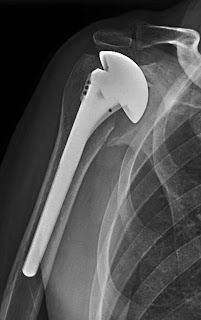
Four months after the ream and run, she returned with a much improved shoulder and these x-rays

Note the impaction grafted stem and the conservatively reamed glenoid, now with a radiographic joint space between it and the prosthetic humeral component.

Five months after her surgery she was swimming at Coogee beach, the site of the famous "shark arm case (see this link)".


 and kindly gave us permission to show her swimming form here.

Three years after her ream and run she developed a painful, stiff shoulder without an obvious cause.

Because of our high suspicion for a periprosthetic infection we elected to explore her shoulder. The joint fluid was cloudy and a synovial biopsy showed papillary hyperplasia, fibrosis, and mixed acute and chronic inflammation with focally greater than 20 neutrophils per high power field. The humeral component was mildly loose and surrounded by a membrane. A single stage exchange with thorough debridement was followed by a course of intravenous antibiotics. Two weeks after surgery her intraoperative cultures were positive for Cutibacterium.

Three months after the single stage exchange she was back swimming. 

Fifteen years after her single stage revision she reports "I hope you are well too! It’s been great.  Swimming and pilates seem both to be very very good for the shoulder.  Got good strength and range of motion.  Thanks again."

Follow on twitter/X: https://x.com/RickMatsen
Follow on facebook: https://www.facebook.com/shoulder.arthritis
Follow on LinkedIn: https://www.linkedin.com/in/rick-matsen-88b1a8133/

Here are some videos that are of shoulder interest
Shoulder arthritis - what you need to know (see this link).
How to x-ray the shoulder (see this link).
The ream and run procedure (see this link).
The total shoulder arthroplasty (see this link).
The cuff tear arthropathy arthroplasty (see this link).
The reverse total shoulder arthroplasty (see this link).
The smooth and move procedure for irreparable rotator cuff tears (see this link)
Shoulder rehabilitation exercises (see this link).

Sunday, October 20, 2024

Single stage or two stage revision for suspected arthroplasty infection? What is the Paused Single Stage?

Here is a presentation from a recent course at the meeting of the American Shoulder and Elbow Surgeons that addresses some commonly asked questions.


What about the case in which  complete removal of all metal and cement would jeopardize the integrity of the humerus and long term function? Inspired by Dr. Hatzidakis and Jason Hsu we consider the Paused Single Stage (PaSS) as shown in this case.


You can support cutting edge shoulder research that is leading to better care for patients with shoulder problems, click on this link

Follow on twitter/X: https://x.com/RickMatsen
Follow on facebook: https://www.facebook.com/shoulder.arthritis
Follow on LinkedIn: https://www.linkedin.com/in/rick-matsen-88b1a8133/

Here are some videos that are of shoulder interest
Shoulder arthritis - what you need to know (see this link).
How to x-ray the shoulder (see this link).
The ream and run procedure (see this link).
The total shoulder arthroplasty (see this link).
The cuff tear arthropathy arthroplasty (see this link).
The reverse total shoulder arthroplasty (see this link).
The smooth and move procedure for irreparable rotator cuff tears (see this link).
Shoulder rehabilitation exercises (see this link). 


Saturday, November 11, 2023

Periprosthetic infections: what we don't know.


Let's consider a case of an active male who had a ream and run procedure. His shoulder was somewhat stiff from the start. His stiffness did not resolve with therapy; he developed increasing pain. He had no fever, chills, or abnormal blood markers for infection.

Two years after his index procedure he had a single stage revision. At that time his synovial fluid showed 1000 neutrophils; two frozen section specimens had more than 10 cells per high-power field.

Postoperatively, he was placed on oral amoxicillin/clavulanate.

After surgery, eight tissue specimens each cultured positive for low levels of Cutibacterium.

So here are some clinically relevant questions:

(1) Were his pre-revision findings of stiffness and pain suggestive of a periprosthetic infection?

(2) Would a preoperative aspiration or arthroscopic biopsy have changed the management of this case?

(3) Were his surgical findings diagnostic of a periprosthetic infection?

(4) For this patient, how do the benefits and risks compare between a single stage and a two-stage revision?

(5) Postoperatively, while the culture results are pending (i.e. the organism is not yet unidentified), how do the benefits and risks compare between oral and intravenous antibiotics?

(6) Immediately after surgery (before culture results are available) what would be the antibiotic of choice?

(7) If the patient has ongoing pain and stiffness of the shoulder after his single stage revision, how will the surgeon know if there is a persisting infection?

(8) "For this review, the rate of reinfection after a revision arthroplasty for a shoulder PJI was the main outcome assessed." How is a "reinfection" diagnosed? Does the definition require a re-operation to see if deep tissue specimens are culture positive (and for the same organism as was found in the index revision)? If a patient is doing poorly after a revision but does not have a re-operation, how does one know whether there is a "reinfection"?

(9) In this review, why is the complication rate for two-stage revision (21.26%) higher than that for one-stage revision (6.11%)? It may be that a shoulder having two procedures is more likely to have more complications than a shoulder having a single procedure. 

(10) Why was the "reinfection rate" with a single stage (one stage) revision (1.14%) lower than that after a two-stage revision (8.81%). This gets to #7 above: how does a surgeon know if there is a "reinfection" if the shoulder is not re-operated with cultures taken at the time of re-operation. Since the complication rate was three times higher with the two-stage revisions, it seems likely that more of the two-stage revisions would have had re-operations and re-culturing.

(11) Does the organism cultured from the time of revision matter to the treatment and to the outcome? The isolated bacteria reported in the analyzed studies varied widely with respect to virulence, including Cutibacterium, Coagulase-negative Staph, Methicillin resistant Staph Aureus, E. Fecalis, Strep Viridans, and Pseudomonas. Reliable studies comparing the efficacy of different surgical and antibiotic regimens will require controlling for the infecting organism.

(12) What are the indications for a two-stage revision of a periprosthetic infection?


Comments: Some things we think we know

(1) Some perioprosthetic infections are obvious (pain, swelling, drainage, fever, chills, elevated serum inflammatory markers).


While the diagnosis of PJI may not difficult, it is still important to identify the causative organism.

(2) Many periprosthetic infections have a stealth presentation (unexplained onset of pain and stiffness after a "honeymoon" period of benign post-arthroplasty recovery).


These infections are typically caused by low virulence organisms, such as Cutibacterium. Often the diagnosis is made by obtaining specimens for culture at the time of a revision procedure performed for pain and stiffness. In that the results of these cultures are not finalized until weeks after the revision, the surgical and immediate postoperative antibiotic treatment must be decided without this information.

(3) Single stage revision with thorough debridement, prosthesis exchange and post-operative antibiotics can be effective treatment of shoulder periprosthetic infections caused by Cutibacterium. (see Single-Stage Revision Is Effective for Failed Shoulder Arthroplasty with Positive Cultures for Propionibacterium).

(4) Two-stage revision is more morbid, has a higher complication rate and is more costly than a single stage revision, but can be considered in cases of obvious infection from a high virulence organism or when a prior single stage revision has failed.

(5) Postoperative intravenous antibiotics are more morbid, have a higher complication rate and are more costly than oral antibiotics, but can be considered in cases of obvious infection from a high virulence organism (see The Use and Adverse Effects of Oral and Intravenous Antibiotic Administration for Suspected Infection After Revision Shoulder Arthroplasty).

You can support cutting edge shoulder research and education that are leading to better care for patients with shoulder problems, click on this link.

Follow on twitter: https://twitter.com/RickMatsen or https://twitter.com/shoulderarth
Follow on facebook: click on this link
Follow on facebook: https://www.facebook.com/frederick.matsen
Follow on LinkedIn: https://www.linkedin.com/in/rick-matsen-88b1a8133/

Here are some videos that are of shoulder interest
Shoulder arthritis - what you need to know (see this link).
How to x-ray the shoulder (see this link).
The ream and run procedure (see this link).
The total shoulder arthroplasty (see this link).
The cuff tear arthropathy arthroplasty (see this link).
The reverse total shoulder arthroplasty (see this link).
The smooth and move procedure for irreparable rotator cuff tears (see this link).
Shoulder rehabilitation exercises (see this link).

Friday, August 25, 2023

Shoulder infections - 20 things to know.


Infection can be a major complication for patients having shoulder surgery. 

Posts on this shoulder blog have provided evidence that:
(1) Cutibacterium - commensal bacteria commonly found in the dermis of normal skin - are the most common organism causing periprosthetic infections (PJI) of the shoulder. By contrast infections of total hip and total knee replacements are usually caused by other types of bacteria. 
(2) Cutibacterium are often isolated from specimens obtained at revision for a failed arthroplasty, even in the absence of a preoperative suspicion of PJI.
(3) The risk of Cutibacterium PJI is increased in young, healthy male patients having had prior surgery, patients having high loads of Cutibacterium on their skin surface, in patients taking supplemental testosterone, and those with recent steroid injections of the shoulder.
(4) These organisms are released into the surgical wound from the dermis when the skin incision is made
(5) Cutibacterium cannot be eliminated from the dermis by presurgical skin treatment, preoperative antibiotics, or surgical skin preparation
(6) While Betadine or antibiotic irrigation solutions and in-wound antibiotics may be helpful in reducing the load of bacteria in the surgical field, the evidence that they reduce the rate of infection is not robust.
(7) Cutibacterium tend to form an adherent biofilm, especially on titanium-alloy stems; thus, complete prosthesis exchange after debridement may be necessary to resolve an infection.
(8) Some infections are obvious (redness, swelling, tenderness, elevated serum and synovial fluid inflammatory markers); however, Cutibacterium infections typically have a stealth presentation with the otherwise unexplained onset of pain and stiffness months after the index arthroplasty.
(9) Joint fluid aspiration can be helpful if the fluid is culture positive, but negative cultures do not rule out infection.
(10) At the time of revision surgery at least 5 deep specimens (tissue / explants) need to be submitted for culture in order to optimize the identification of a PJI.
(11) Specimens taken to detect Cutibacterium must be cultured on aerobic and anaerobic media and observed for at least two weeks.
(12) Because the results of these cultures are not finalized for weeks after surgery, patients are placed on antibiotics after revision surgery until the culture results are known.
(13) In rare cases if an infection is diagnosed soon after the primary arthroplasty, consideration can be given to debridement and irrigation with retention of the implants and antibiotic therapy after surgery. This may be an option for patients with cemented implants and patients who may not be sufficiently healthy for a major revision.
(14) In cases with a stealth presentation of pain and stiffness after a "honeymoon" period of routine post-arthroplasty recovery, consideration is often given to a single stage exchange with vigorous debridement and postoperative antibiotics until the culture results are finalized.
(15) In cases of obvious infection (redness, tenderness, swelling, drainage, elevated inflammatory markers, or wound drainage) and in cases of failed single stage revision, a two-stage revision can be considered (stage 1: implant removal, cultures, irrigation, implantation of an antibiotic-containing spacer, post operative antibiotics; when evidence of infection no longer present=>stage 2: repeat debridement, cultures, definitive implant insertion, and postoperative antibiotics).
(16) Two stage revisions are more costly and complication-prone than single stage revisions
(17) With either single stage or the second of a two-stage, it is possible that a re-revision may be necessary - this possibility should be considered in selecting how the implants are fixed in the bone.
(20) With respect to post operative antibiotics: (a) in most cases, oral antibiotics seem to be as cost-effective as IV antibiotics and (b) at least six weeks of antibiotics are recommended if >2 of the deep specimens are culture positive for the same organism. Prolonged antibiotic therapy is considered in cases where recurrent infection is more likely.

Use search box (upper right of this page) to find more posts on these topics
 
Here are a few recent articles that may be of interest.

Prevention


Does preoperative corticosteroid injection increase the risk of periprosthetic joint infection after reverse shoulder arthroplasty? reported a significantly increased risk of PJI in patients who received corticosteroid injections (CJI) within 1 month of reverse total shoulder, but not those who received CSI more than 1 month before RSA. Alcohol abuse, chronic kidney disease, and depression were also identified as factors increasing the risk of PJI.

The authors of Effect of supplemental testosterone use on shoulder arthroplasty infection rates concluded that testosterone use within 6 months of shoulder arthroplasty may be associated with higher rates of prosthesis joint infection. 

Photodynamic therapy for Cutibacterium acnes decolonization of the shoulder dermis found that the use of photodynamic therapy did not significantly reduce dermal colonization of Cutibacterium (as determined by punch biopsy cultures) as compared to standard skin preparation. The overall positive culture rate was 54%. All positive cultures identified Cutibacterium except for one.

Effect of Making Skin Incision with Electrocautery on Positive Cutibacterium acnes Culture Rates in Shoulder Arthroplasty: A Prospective Randomized Clinical Trial discovered that cultures obtained from the incised dermal edge immediately after skin incision were less likely to be positive if electrocautery was used in making the skin incision. However, there was no significant difference in the positive culture rate in samples from gloves and forceps taken immediately prior to humeral component implantation. Thus, use of cautery did not reduce the rate of wound innoculation.


Bariatric surgery performed with the goal of reducing body mass is associated with higher risks of PJI, implant failure, and dislocation, especially if the arthroplasty is performed within two years of the bariatric surgery. [Prior bariatric surgery is associated with an increased rate of complications after primary shoulder arthroplasty independent of body mass index[Does bariatric surgery prior to primary total knee arthroplasty improve outcomes?][Does Bariatric Surgery Prior to Primary Total Hip Arthroplasty Really Improve Outcomes?]


Diagnosis


The Incidence of Subclinical Infection in Patients Undergoing Revision Shoulder Stabilization Surgery: A Retrospective Chart Review twenty-nine (27%) of 107 patients having revision surgery had positive cultures. Twenty-six patients had positive Cutibacterium cultures; these cultures took an average of 10.65 days to turn positive. The authors suggest that surgeons consider infection as a reason for lack of clinical improvement and possibly needing revision surgery after shoulder stabilization. 

In The role of sonication in the diagnosis of periprosthetic joint infection in total shoulder arthroplasty the standard synovial fluid cultures combined with intraoperative periprosthetic tissue cultures had a sensitivity of 95%, specificity of 95% and total accuracy of 95%. Sonication cultures had a sensitivity of 91%, specificity of 68% and total accuracy of 80%. 

Treatment

Outcomes after Debridement, Antibiotics, and Implant Retention for Prosthetic Joint Infection in Shoulder Arthroplasty found that 29.4% of thee patients were diagnosed as having recurrent infection on chart review.

High infection control rate after systematic one-stage procedure for shoulder arthroplasty chronic infection found that 36/40 patients had no recurrence of infection after the one stage revision. Cutibacterium was the most frequent pathogen isolated, found in 67.5% (27/40) of the patients. The infection was polymicrobial in 40% (16/40) of the cases.

One-stage revision for infected shoulder arthroplasty: prospective, observational study of 37 patients
 found that 95% did not have evidence of recurrent infection. The most commonly isolated pathogen was Cutibacterium acnes (68%), isolated alone (15 patients, 41%) or as polymicrobial infections (10 patients, 27%). 

Outcomes after resection arthroplasty versus permanent antibiotic spacer for salvage treatment of shoulder periprosthetic joint infections: a systematic review and meta-analysis found that when implant exchange after shoulder PJI is not feasible, permanent antibiotic spacers and resection arthroplasty are both salvage procedures that provide similar rates of infection eradication. Although both can decrease pain levels, the permanent antibiotic spacer may result in better functional outcomes compared with resection arthroplasty.

Comment: It is apparent that the experience in the diagnosis and treatment hip and knee PJI cannot be directly applied to the shoulder because of the difference in causative bacteria. 

The diagnosis of shoulder PJI is complicated by the relative frequency of Cutibacterium as the infecting bacteria. Another confunder is the difficulty in differentiating between osteolysis due to particles from polyethylene failure and osteolysis fron PJI. See Loose glenoid component - is the shoulder infected?

Determing the success rates for different treatments of periprosthetic shoulder infections is difficult to assess. Many of the publications reporting different therapeutic approaches lack appropriate controls and clear measures of treatment effectiveness.

 Often shoulders continue to be painful and stiff after a revision procedure. Because clinical symptoms, signs and lab tests are insensitive to the presence of Cutibacterium, the diagnosis of recurrent infection may be overlooked unless a re-revision with intraoperative cultures is performed. The lack of a re-revision procedure is not proof that an infection has been resolved. Alternatively, re-revision may be indicated for non-infectious issues and does not necessarily indicate failure of the treatment of infection. 

Considering all of the above, an approach to the management of the failed arthroplasty is to consider the possibility of infection unless another cause of failure is evident.

You can support cutting edge shoulder research that is leading to better care for patients with shoulder problems, click on this link.

Follow on twitter: https://twitter.com/shoulderarth
Follow on facebook: click on this link
Follow on facebook: https://www.facebook.com/frederick.matsen
Follow on LinkedIn: https://www.linkedin.com/in/rick-matsen-88b1a8133/

Here are some videos that are of shoulder interest
Shoulder arthritis - what you need to know (see this link).
How to x-ray the shoulder (see this link).
The ream and run procedure (see this link).
The total shoulder arthroplasty (see this link).
The cuff tear arthropathy arthroplasty (see this link).
The reverse total shoulder arthroplasty (see this link).
The smooth and move procedure for irreparable rotator cuff tears (see this link).
Shoulder rehabilitation exercises (see this link).

Friday, February 24, 2023

Managing the failed anatomic total shoulder

Wear, loosening, and migration of the prosthetic glenoid component can complicate anatomic total shoulder arthroplasty.


Polyethylene wear can cause osteolysis of the bone around the glenoid and humeral components leading to insufficient bone stock and bone quality for re-implantation.


Although there is a trend to manage failed anatomic total shoulder arthroplasties (aTSA) with revision to a reverse total shoulder arthroplasty, such revisions can be complicated by introperative fracture, difficulties in baseplate fixation, postoperative component loosening, instability, infection, neurologic injury and acromial or scapular spine stress fractures.

Some cases of failed aTSA can be successfuly revised to a hemiarthroplasty (HA).


The authors of Revision of total shoulder arthroplasty to hemiarthroplasty: results at mean 5-year follow-up investigated the outcomes reported by patients after conversion from aTSA to HA. Intraoperative glenoid or humeral component loosening was found in all 29 patients.

76% of the patients were satisfied with the procedure. Pain improved in 87% of the patients with mean pain scores improving significantly from 6.2 to 3.1. Simple Shoulder Test (SST) scores improved from a mean of 4.1 to 7.3. 62% had improvement exceeding the SST MCID threshold of 2.4. No significant differences in patient or shoulder characteristics were found in comparing those patients who improved by an amount greater than the MCID of the SST to those patients who improved less than the MCID. However, among the 6 patients who underwent conversion from aTSA to HA with cuff failure, only 3 (50%) attained MCID improvement of SST and 3 (50%) were satisfied with their revision.

59% of the patients had ≥2 positive cultures with the same bacteria; 82% of these were with Cutibacterium. Thus obtaining cultures at the time of revision is important. Furthermore, in view of the observation that over half of the revisions met the definition of having a periprosthetic infection (even though there were no obvious preoperative signs of infection), surgeons should consider complete, rather than partial, single-stage exchange and postoperative antibiotic therapy. Seven (88%) of the 8 patients with a loose humeral component had ≥2 positive cultures with the same bacteria. Surgeons should have an even higher index of suspicion for infection in cases of humeral component loosening.

Four patients (14%) required conversion to total shoulder arthroplasty: 2 to anatomic and 2 to reverse. An additional 3 patients (10%) had a revision HA performed because of persistent pain and stiffness.

There were no intraoperative fractures, problems with component fixation, infections, neurologic injuries or scapular stress fractures.

Comment: While the technique for revision of a failed total shoulder to hemiarthroplasty is not discussed in this paper, there are several options to be considered.

(1) Humeral head component removal, retention of a securely fixed humeral stem, glenoid component removal, debridement, culturing of deep tissue and explants for Cutibacterium, smoothing of the residual glenoid bone, insertion of a new humeral head with modifications of eccentricity, head diameter of curvature, and head thickness as needed to balance the shoulder's smoothness, mobility and stability, followed by a course of antibiotics until the results of the cultures are finalized. Some case examples of this method are shown below. In the case on the left, note the use of an inferiorly excentric humeral head component. In the case on the right, note the upsizing of the diameter of curvature to help distribute the load to the rim of the remaining glenoid bone. Glenoid bone grafting was not used in these cases.


(2) Complete single stage exchange with humeral head and body removal, glenoid component removal, debridement, culturing of deep tissue and explants for Cutibacterium, smoothing of the residual glenoid bone, insertion of a new body and a humeral head with eccentricity, head diameter of curvature, and head thickness as needed to balance the shoulder's smoothness, mobility and stability, followed by a course of antibiotics until the results of the cultures are finalized. The case for this approach is based on the observation that over 50% of cases in this study had culture evidence of periprosthetic infection (PJI), even in the absence of preoperative signs of infection. The problem is that the results of the cultures are not available in time to influence the surgical decision or the decision about antibiotics immediately after surgery. Complete single stage revision would seem to be particularly indicated in cases of humeral component loosening in view of the even higher association with PJI. (see Single-Stage Revision Is Effective for Failed Shoulder Arthroplasty with Positive Cultures for Propionibacterium). See the illustrative case below.

(3) Primary conversion to a reverse with removal of humeral head and body removal, glenoid component removal, debridement, culturing of deep tissue and explants for Cutibacterium, smoothing of the residual glenoid bone, insertion of a reverse total shoulder followed by a course of antibiotics until the results of the cultures are finalized. This approach would seem to be most applicable to shoulders with combined prosthetic and rotator cuff failure - especially if the patient has pseudoparalysis. It should be undertaken with the recognition of a high complication rate as pointed out by the authors of Salvage reverse total shoulder arthroplasty for failed anatomic total shoulder arthroplasty: a cohort analysis

See this related paper What is the optimal management of a loose glenoid component after anatomic total shoulder arthroplasty: a systematic review, that discusses four types of revision: hemiarthroplasty, 1-stage TSA, 2-stage TSA, and RSA, each of which had as high as a 20% re-revision rate!

You can support cutting edge shoulder research that is leading to better care for patients with shoulder problems, click on this link.

Follow on twitter: https://twitter.com/shoulderarth
Follow on facebook: click on this link
Follow on facebook: https://www.facebook.com/frederick.matsen
Follow on LinkedIn: https://www.linkedin.com/in/rick-matsen-88b1a8133/

Here are some videos that are of shoulder interest
Shoulder arthritis - what you need to know (see this link).
How to x-ray the shoulder (see this link).
The ream and run procedure (see this link).
The total shoulder arthroplasty (see this link).
The cuff tear arthropathy arthroplasty (see this link).
The reverse total shoulder arthroplasty (see this link).
The smooth and move procedure for irreparable rotator cuff tears (see this link).
Shoulder rehabilitation exercises (see this link).

Friday, October 21, 2022

Periprosthetic shoulder infections, single stage and two-stage revision

Periprosthetic joint infections (PJI) of the shoulder can be difficult to diagnose and difficult to treat. The most commonly infecting organisms are those that are commensal inhabitants of normal skin: Cutibacterium and coagulase negative Staphylococcus.

The clinical onset of a shoulder PJI can range from a "stealth" presentation (with the insidious onset of unexplained pain and stiffness months or years after the arthroplasty (see this link)) to an "obvious" presentation with swelling, erythema, component loosening and wound drainage (see this link).


The stealth presentation of a shoulder PJI


With stealth presentations, the surgeon cannot be sure at the time of surgery whether or not the pain and stiffness are due to infection or to some other cause - the final diagnosis must wait until cultures of deep specimens harvested at the time of revision are finalized several weeks after surgery. In that situation, a single stage revision - vigorous debridement, irrigation, and prosthesis exchange followed by antibiotic therapy until the culture results are finalized - provides an effective approach as demonstrated in Single-Stage Revision Is Effective for Failed Shoulder Arthroplasty with Positive Cultures for Propionibacterium. The effectiveness of this approach is illustrated in the case presented below,

A 49 year old athletic man presented with osteoarthritis of the right shoulder, a Simple Shoulder Test score of 6 out of 12, and a type B2 glenoid with biconcavity, retroversion and posterior decentering.


Because of his active lifestyle he elected a ream and run arthroplasty. His six week postoperative films show centering of the humeral prosthesis in a concave glenoid.


Following this procedure, the patient was able to return to regular competitive swimming at the master’s level.


Five years after his index arthroplasty, he returned to the office with complaints of the insidious onset of pain and stiffness without an identified explanation (what we refer to is the "Honeymoon" phenomenon). His Simple Shoulder Test score was 3 out of 12. His CBC, sedimentation rate and C-reactive protein were all within normal limits. His radiographs showed glenoid erosion.


Six years after his index arthroplasty he had a single stage revision. At the time of his revision he was 55 years of age, ASA 2, BMI 24. The preoperative Propionibacterium cultures of his unprepared skin over the area of the  prior incision were strongly positive with a EpidermalSpPV of 2. His intraoperative findings included synovitis. His revision was followed by six weeks of intravenous antibiotic treatment (Ceftriaxone) and 6 months of Augmentin. At 3 weeks after surgery his eight deep intraoperative cultures were strongly positive with a total Propionibacterium score (ShPS) of 7.4.

One year after his revision arthroplasty his Simple Shoulder Test score was 11 out of 12. His radiographs showed showed a centered humeral head with radiographic joint space between the humeral head and the glenoid.


He has returned to his regular swimming program


The obvious presentation of a shoulder PJI


In the obvious presentation of a shoulder PJI the shoulder typically shows signs of tenderness, swelling, drainage and component loosening along with laboratory evidence of inflammation in tests of serum and joint fluid and cultures positive for virulent organisms.
In this situation and in cases of failed single stage revision, surgeons often prefer a two-stage revision, with prothesis removal, debridement, irrigation and insertion of a methyl methacrylate spacer containing up to 5 grams of heat-resistant antibiotics, such as vancomycin, tobramycin and/or genatamycin in 40 grams of methyl methacrylate bone cement. The rationale for the use of these spacers is two-fold: (1) to provide ongoing local elution of antibiotics during the postoperative period and (2) to preserve the joint space for later re-implantation of a definitive arthroplasty; this is the "two-stage" approach to revision. The authors of Antibiotic Spacers for Shoulder Periprosthetic Joint Infection conducted an extensive review of the use of spacers to treat obvious periprosthetic infections of the shoulder. The sense of the literature gained from multiple relatively small case series is that the two stage approach is often effective in eradication of infection, but that the resulting shoulder comfort and function is only modest. The complications of antibiotic spacers include bone erosion, fracture of the spacer, loosening and rotation of the spacer, and humeral shaft fracture.

These authors prefer to manage obvious shoulder periprosthetic infections by fabricating shoulder spacers intraoperatively with the use of commercially available molds allowing for the creation of press-fit stems and the ability to control the antibiotic choice and concentration. After spacer implantation, patients are treated with intravenous antibiotics for 6 weeks based on culture-specific sensitivities. They then check ESR and CRP levels and do a shoulder aspiration once intravenous antibiotics have been discontinued for a minimum of 2 weeks. If serum markers remain elevated or if cultures are positive, then repeat irrigation and débridement is performed with insertion of a new spacer. If serum markers return to normal levels and aspirate cultures are negative, they proceed to the second stage of revision (insertion of a definitive arthroplasty implant) at 10 to 12 weeks after the placement of the antibiotic spacer. Five sets of intraoperative cultures are obtained at the time of reimplantation. Patients are started on oral antibiotics until these cultures finalize. If cultures are negative, then oral antibiotics are discontinued. If positive, intravenous antibiotics are restarted for a 6-week duration followed by possible lifetime suppression with oral antibiotic therapy.

It is noted that some patients elect to retain the methyl methacrylate spacer, rather than proceeding with the second of the two stage revision as shown in the example below. Spacer retention carries the risk of glenoid erosion.


You can support cutting edge shoulder research that is leading to better care for patients with shoulder problems, click on this link.

To add this blog to your reading list in Google Chrome, click on the reading list icon


Follow on twitter: https://twitter.com/shoulderarth

Follow on facebook: click on this link

Follow on facebook: https://www.facebook.com/frederick.matsen

Follow on LinkedIn: https://www.linkedin.com/in/rick-matsen-88b1a8133/

Here are some videos that are of shoulder interest
Shoulder arthritis - what you need to know (see this link).
How to x-ray the shoulder (see this link).
The ream and run procedure (see this link).
The total shoulder arthroplasty (see this link).
The cuff tear arthropathy arthroplasty (see this link).
The reverse total shoulder arthroplasty (see this link).
The smooth and move procedure for irreparable rotator cuff tears (see this link).
Shoulder rehabilitation exercises (see this link).