Showing posts with label cuff repair failure. Show all posts

Thursday, May 18, 2023

Failure of healing after cuff repair - why are the rates so high?

The normal attachment of the rotator cuff tendons to the bone of the tuberosity is through a complicated transition from flexible tendon, to unmineralized fibrocartilage, to mineralized fibrocartilage to bone (see Assembly, maturation, and degradation of the supraspinatus enthesis)

This progressive transition from flexible tendon to stiff bone enables the insertion to manage the twisting, traction and compression loads to which it is exposed throughout life. Nature's strategy is similar to that used in the construction of an electrical plug, with progressive transition from stiff to flexible with the goal of minimizing wire breakage with use.


When we attempt to repair a torn rotator cuff, our approximation of the edge of the torn tendon to bone does not re-establish a normal enthesis; thus our repair is inferior to the normal insertion and, as such, vulnerable to failure. "Healing and repair of an injured and degenerated supraspinatus enthesis remain a challenge, as the original graded transitional tissue of the fibrocartilaginous insertion is not re-created after the tendon is surgically reattached to bone. Instead, mechanically inferior and disorganized tissue forms at the healing site because of scar tissue formation."


In addition there are other factors that challenge  the durable healing of a rotator cuff repair:

1. the tendon and bone are relatively avascular

2. tears often occur in tendons that have degenerated with compromised quantity and quality increasing the risk of sutures puling through the tendon

3. approximation of the retracted tendon to the repair site puts it under tension

4. it is difficult to completely immobilize the shoulder to protect the repair

5. the repair site is bathed in joint fluid that contain enzymes that can interfere with the healing response such as 
    *elastase (breaks down elastin and collagen fibers), 
    *plasmin (degrades fibrin clots, breaks down proteins and extracellular matrix)
    *collagenases (break down collagen), 
    *matrix metalloproteinases (degrade components of the extracellular matrix)
    *phospholipases (break down phospholipids, important components of cell membranes) 
    *cathepsin B and cathepsin D (breakdown of proteins)

As pointed out in Failure With Continuity in Rotator Cuff Repair "Healing" even when it appears that the cuff repair has healed by MRI, the tendon edge may not have actually healed to bone.

It is generally believed that early repair of acute traumatic cuff tears provides the highest chance of healing. However, the authors of Factors associated with healing failure after early repair of acute, trauma-related rotator cuff tears, found that even in this situation, healing failure occurred in more than 1 in 3 cases. They sought to identify factors associated with healing failure in 62 previously asymptomatic patients (median age 61 years, range 42 to 75) with trauma-related rotator cuff tears treated with early arthroscopic repair verified by MRI. Fatty infiltration (FI) was analyzed as global index, as well as in individual muscles separately. Surprisingly, only 79% of the individuals had a normal index for global FI preoperatively despite the fact that their cohort comprised trauma related tears in individuals without any history of shoulder dysfunction. 57 of these patients (92%) completed a 1-year follow-up and had repair integrity assessed on MR images according to Sugaya. 

In spite of the fact that these patients seemed to have optimal conditions for successful repair - traumatic tears repaired within 6 weeks of injury - 37% of the repairs were not intact at one year after surgery.

Risk factors for healing failure were a high degree of fatty infiltration of the supraspinatus muscle, disruption of rotator cable integrity, and older age. Histopathologic degeneration of the tendon at the time of repair was not significantly associated with healing failure.

Another recent study illustrates again the difficult in achieving durable integrity of the cuff tendon attachment to bone.. The authors of Massive Rotator Cuff Tears With Short Tendon Length Can Be Successfully Repaired Using Synthetic Patch Augmentation. They evaluated 15 patients having massive cuff tears with good muscle quality but short tendon length (mean age 57 years,  86.7% male) at a mean follow-up of 43.8 months (27-55 months) after repair with patch augmentation. By MRI, there were three Sugaya grade 4 and five Sugaya grade 5 re-ruptures resulting in a re-tear rate of 53%. 


In that the goal of cuff repair surgery is to durably attach the tendon to bone,  a look at the articles published in 2023 indicates that failure of tendon healing continues to be an important issue after cuff repair. The retear rates (in bold) reported in these studies are affected by the nature of the tear, the age of the patients, the method for determining the postoperative integrity of the cuff, and the length of followup. 

13-20% Outcome of Intraoperative Injection of Collagen in Arthroscopic Repair of Full Thickness Rotator Cuff Tear: A Retrospective Cohort Study
14-17% Comparison of suture-bridge and independent double-row techniques for medium to massive posterosuperior cuff tears: a two-year retrospective study
18-57% Prospective Randomized Trial of Biologic Augmentation With Bone Marrow Aspirate Concentrate in Patients Undergoing Arthroscopic Rotator Cuff Repair
23% Prospective study of 90 arthroscopic rotator cuff repairs for isolated distal supraspinatus tear, assessing the impact of cardiovascular risk factors on tendon healing
10-63% Arthroscopic Rotator Cuff Repair Results in Improved Clinical Outcomes and Low Revision Rates at 10-Year Follow-Up: A Systematic Review
13-18% Functional and Structural Outcomes After Arthroscopic Rotator Cuff Repair With or Without Preoperative Corticosteroid Injections
12-19% Comparison of cost, surgical time, and clinical results between arthroscopic transosseous rotator cuff repair with lateral cortical augmentation and arthroscopic transosseous equivalent suture bridge: A propensity score-matched analysis
17-25% Onlay patch augmentation in rotator cuff repair for moderate to large tears in elderly patients: clinical and radiologic outcomes
13-27% Efficacy of bone marrow stimulation for arthroscopic knotless suture bridge rotator cuff repair: a prospective randomized controlled trial
33-38% Functional outcomes and MRI-based tendon healing after (antero-) superior rotator cuff repair among patients under 50 years: retrospective analysis of traumatic versus non-traumatic rotator cuff tears
26-28% Local Intraoperative Marrow-Derived Augmentation for Primary Rotator Cuff Repair: An Updated Systematic Review and Meta-analysis of Studies From 2010 to 2022
21-25% Non-selective NSAIDs do not increase retear rates post-arthroscopic rotator cuff repair: A meta-analysis
17-23% Postoperative HbA1c Level as a Predictor of Rotator Cuff Integrity After Arthroscopic Rotator Cuff Repair in Patients With Type 2 Diabetes
21% Prognostic factors affecting structural integrity after arthroscopic rotator cuff repair: a clinical and histological study
14% Re-Tear Rates Following Rotator Cuff Repair Surgery
19-34% The relationship between preoperative Goutallier stage and retear rates following posterosuperior rotator cuff repair: a systematic review
18-29% The role of bone marrow stimulation in rotator cuff repair: a systematic review and meta-analysis

Are efforts to repair the tendon attachment worthwhile?  
A couple of recent articles suggest that it doesn't much matter if the tendon heals or not. If that's the case, why do we put so much effort into the repair?

The authors of The clinical impact of retears after repair of posterosuperior rotator cuff tears: a systematic review and meta-analysis state "The negative impact of retears on pain and function was statistically significant but judged to be of minor clinical importance. The results indicate that most patients may expect satisfactory outcomes despite retears."  While the authors of Functional outcomes and MRI-based tendon healing after (antero-) superior rotator cuff repair among patients under 50 years: retrospective analysis of traumatic versus non-traumatic rotator cuff tears state "Cuff integrity at follow-up was not predictive of superior scores or strength."

On the the other hand, Harryman et al (Repairs of the rotator cuff. Correlation of functional results with integrity of the cuff) evaluated the results of 105 open repairs of tears of the rotator cuff in eighty-nine patients at an average of five years postoperatively. They correlated the functional result with the integrity of the cuff, as determined by ultrasonography. Eighty per cent of the repairs of a tear involving only the supraspinatus tendon were intact at the time of the most recent follow-up, while more than 50 per cent of the repairs of a tear involving more than the supraspinatus tendon had a recurrent defect. Older patients and patients in whom a larger tear had been repaired had a greater prevalence of recurrent defects. At the time of the most recent follow-up, most of the patients were more comfortable and were satisfied with the result of the repair, even when they had sonographic evidence of a recurrent defect. The shoulders in which the repaired cuff was intact at the time of follow-up had better function during activities of daily living and a better range of active flexion compared with the shoulders that had a large recurrent defect. Similar correlations were noted for the range of active external and internal rotation and for strength of flexion, abduction, and internal rotation. In the shoulders in which the cuff was not intact, the degree of functional loss was related to the size of the recurrent defect.

The anatomic results of rotator cuff repair reported in 2023 do not seem to be much of an improvement on these results published 32 years ago

You can support cutting edge shoulder research that is leading to better care for patients with shoulder problems, click on this link.

Follow on twitter: https://twitter.com/shoulderarth
Follow on facebook: click on this link
Follow on facebook: https://www.facebook.com/frederick.matsen
Follow on LinkedIn: https://www.linkedin.com/in/rick-matsen-88b1a8133/

Here are some videos that are of shoulder interest
Shoulder arthritis - what you need to know (see this link).
How to x-ray the shoulder (see this link).
The ream and run procedure (see this link).
The total shoulder arthroplasty (see this link).
The cuff tear arthropathy arthroplasty (see this link).
The reverse total shoulder arthroplasty (see this link).
The smooth and move procedure for irreparable rotator cuff tears (see this link).
Shoulder rehabilitation exercises (see this link).

Monday, November 8, 2021

Symptomatic re-tears after arthroscopic cuff repair - association with subacromial steroid injections and depression.

 Risk factors for symptomatic retears after arthroscopic repair of full-thickness rotator cuff tears


These authors analyzed consecutive patients having full-thickness tears of the supraspinatus repaired arthroscopically.


They identified symptomatic re-tears, defined as "Sugaya type IV and V on magnetic resonance imaging that were associated with intensive pain and/or functional impairment."


These patients were compared to those without symptomatic re-tears with respect to potential risk factors for symptomatic re-tears.

Corticosteroid injection (CSI) was defined when the patient received 1 or more preoperative injections.

Depression was defined when the patient had a medical diagnosis of depression at the time of the surgical assessment and/or was receiving antidepressant treatment because of depression. 

The symptomatic retear rate was 9.5% in 158 patients. Patients in the symptomatic retear group were more likely to be smoking, to have massive tears, a short acromiohumeral distance, and moderate to severe fatty infiltration.

On multivariate analysis, corticosteroid injections were associated with a 7 fold increase and depression was associated with an 8 fold increase in symptomatic re-tear risk.


Comment:  It is well recognized that a high percentage of rotator cuff repair attempts fail to durably re-establish a secure connection between the torn tendon and bone, even for repairs of tears confined to the supraspinatus. It is also recognized that a high percentage of anatomically failed repair attempts yield improved postoperative shoulder comfort and function in spite of having a Sugaya 4 or 5 re-tear. 

Patients with re-tears but without substantial symptoms would have been assigned to the "control" group in this study: asymptomatic patients were not routinely examined by MRI. Thus the "symptomatic retear rate" of 9.5% (15 of 158 patients) in this study is likely to be substantially lower than the actual anatomic failure rate. Only 25 postoperative MRIs were obtained in 158 patients.

Most of the findings of this study are consistent with prior publications regarding the risks factors for rotator cuff repair failure. The observation that depression was associated with post operative intensive pain and/or functional impairment and Sugaya types IV and V on magnetic resonance imaging may be due to the fact that patients with depression are more likely to have "intensive pain and/or functional impairment" after surgery and thus to meet the criteria for a "symptomatic re-tear".

Follow on twitter: https://twitter.com/shoulderarth

Follow on facebook: https://www.facebook.com/frederick.matsen

Follow on LinkedIn: https://www.linkedin.com/in/rick-matsen-88b1a8133/


How you can support research in shoulder surgery Click on this link.

Here are some videos that are of shoulder interest
Shoulder arthritis - what you need to know (see this link)
Shoulder arthritis - x-ray appearance (see this link)
The smooth and move for irreparable cuff tears (see this link)
The total shoulder arthroplasty (see this link).
The ream and run technique is shown in this link.
The cuff tear arthropathy arthroplasty (see this link).
The reverse total shoulder arthroplasty (see this link).

Shoulder rehabilitation exercises (see this link).

This is a non-commercial site, the purpose of which is education, consistent with "Fair Use" as defined in Title 17 of the U.S. Code.          

Note that author has no financial relationships with any orthopaedic companies.


Sunday, July 25, 2021

Does healing of a rotator cuff repair matter to the patient?

Significance of the acromiohumeral distance on stress radiography for predicting healing and function after arthroscopic repair of massive rotator cuff tears

These authors point out that a decreased acromiohumeral distance (AHD) is commonly detected in patients with massive rotator cuff tears (mRCTs). They aimed to evaluate the predictive role of the preoperative AHD measured using stress radiography (AHD_stress) in rotator cuff healing and function after arthroscopic repair of mRCTs in 113 patients.


Postoperative cuff integrity was evaluated using magnetic resonance imaging at 1 year, and shoulder function was evaluated at a mean of 35 months postoperatively. 


Forty-seven patients (42%) failed to heal the repair. 


The preoperative AHD and AHD_stress were defined as the shortest distances from the inferior acromion to the superior humerus on standard anteroposterior radiography and stress radiography (5.4-kg weight applied inferiorly in a neutral position), respectively. The AHD difference (AHD_diff) was defined as the difference between the AHD and AHD_stress values. 


The preoperative AHD_diff value was significantly higher in the healed group (4.4 mm) than in the healing failure group (3.0 mm). 

Patients with a preoperative AHD_diff value  3.2 mm showed a lower healing failure rate (28.9% vs. 71.1%) and higher functional scores than patients with an AHD_diff value < 3.2 mm. 

The preoperative AHD_diff value was higher in patients with an American Shoulder and Elbow Surgeons (ASES) score  80 (4.9 mm) than in those with an ASES score < 80 (3.1). 


The patients' outcome scores were essentially the same for failed repairs and healed repairs.


Comment:  These authors suggest that a preoperative AHD that increased by 3.2 mm under stress radiography could be defined as a reducible AHD. and that a reducible AHD obtained from preoperative stress radiography can be used in predicting cuff healing and function in patients with mRCTs.


Patients with a reducible AHD had healing failure rates of 28.9% while those without reducible AHD had healing failure rates of 71.1%. They suggest that in cases with fixed humeral head elevation, it may be difficult to re-center the humeral head in the glenoid. 


Basically they are using preoperative stress views to identify shoulders in which the humeral head is "stuck up" - i.e. inferior traction cannot restore the normal register of the humeral head in the glenoid. In these stuck up shoulders, cuff repair is much more likely to fail.


The other important finding in this study is that the success of cuff repair (i.e. healing by MRI) did not affect the clinical outcomes, either with respect to range of motion or patient reported outcome. This finding is consistent with many other studies demonstrating a lack of correlation between cuff healing and functional improvement realized by the patient. So the interesting question is, "why did the patients with failed repairs get better?"


How you can support research in shoulder surgery Click on this link.

Here are some videos that are of shoulder interest
Shoulder arthritis - what you need to know (see this link).
How to x-ray the shoulder (see this link).
The total shoulder arthroplasty (see this link).
The ream and run technique is shown in this link.
The cuff tear arthropathy arthroplasty (see this link).
The reverse total shoulder arthroplasty (see this link).
Shoulder rehabilitation exercises (see this link).
Follow on twitter: Frederick Matsen (@shoulderarth)


Sunday, January 17, 2021

Which cuff repairs fail and does failure affect the clinical outcome?

 Combination of risk factors affecting retear after arthroscopic rotator cuff repair: a decision tree analysis

These authors investigated factors associated with retear of rotator cuff repairs in 286 patients having magnetic resonance (MR) imaging at 6 months after arthroscopic cuff repair. 254 of the repairs were intact at 6 months and 32 (11%) had failed.


The mean patient age was 65 years, and the mean symptom duration was 10 months. The tear was of small/medium size in 177 patients and large/massive in 109 patients. The technique for surgical repair was single row in 42 patients, double row in 60 patients, and suture bridging in 216 patients. 


On univariate analysis there were significant differences between the patients with healed and failed repairs in the anteroposterior (AP) tear size, mediolateral tear size, hyperlipidemia, global fatty degeneration index, supraspinatus fatty degeneration stage, and critical shoulder angle (CSA).

.


Comment: These data confirm that repairs of bigger tears in tendons with poorer muscle quality have a higher risk of failing. While the difference in average CSA between the healed and failed repairs was statistically significant, this average difference was only of two degrees while the standard deviations of the averages where almost twice as large. Thus it is difficult to attach clinical significance to this difference in the average CSA.


It is of interest that the clinical scores were not significantly different between the healed and failed groups. How important is integrity of the repair to the clinical outcome? Does it benefit the patient to repair large tears of higher Goutalier grade?


To support our research to improve outcomes for patients with shoulder problems, click here.
To subscribe to this blog, enter your email in the box to your right that looks like the below


===
How you can support research in shoulder surgery Click on this link.

We have a new set of shoulder youtubes about the shoulder, check them out at this link.

Be sure to visit "Ream and Run - the state of the art" regarding this radically conservative approach to shoulder arthritis at this link and this link

Use the "Search" box to the right to find other topics of interest to you.

You may be interested in some of our most visited web pages  arthritis, total shoulder, ream and runreverse total shoulderCTA arthroplasty, and rotator cuff surgery as well as the 'ream and run essentials'

Wednesday, September 11, 2019

Complications of shoulder surgery - an instructive history

Here is an instructive story:

Operation 1. A woman had a cuff repair that failed. 
Operation 2. A year later another repair was attempted, but failed. 
Operation 3. A year later she had a total shoulder arthroplasty. 
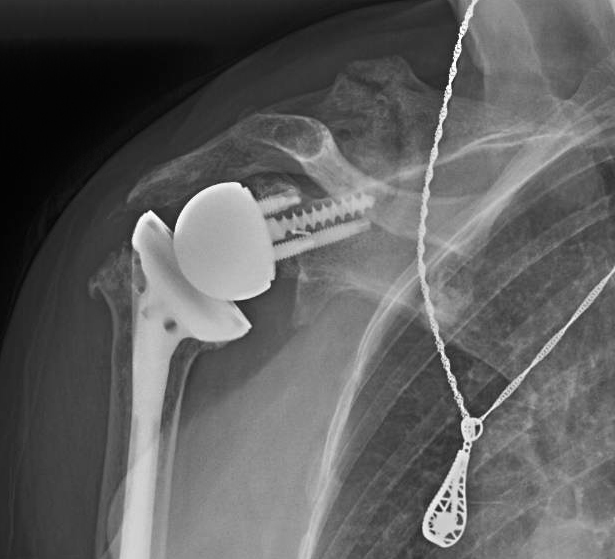
Operation 4. This failed and the humeral component was revised to a CTA head. Five years later she had painful dysfunctional shoulder she had these radiographs and pseudoparalysis of her shoulder.


Operation 5. This was revised to a reverse total shoulder 


Four months later she developed pain in the back of her shoulder. Radiographs showed a fatigue fracture of her scapular spine (see arrow in the x-ray below).

A month later the fracture displaced allowing the acromion to angulate inferiorly (compare the scapular spine to the immediate postoperative radiographs.

11 months later the fracture appeared to be healing

Four months later there was increased healing
                                     

Two months later the fracture was asymptomatic but the shoulder had very limited elevation with pain and popping as the superior aspect of the humeral component abutted against the inferior aspect of the lateral acromion.
Comment: This case demonstrates (a) complications of cuff surgery, (b) complications of total shoulder, (c) complications of reverse total shoulder, and (d) consequences of a displaced scapular spine fracture. 

=====
We have a new set of shoulder youtubes about the shoulder, check them out at this link.

Be sure to visit "Ream and Run - the state of the art"  regarding this radically conservative approach to shoulder arthritis at this link and this link

Use the "Search" box to the right to find other topics of interest to you.


You may be interested in some of our most visited web pages   arthritis, total shoulder, ream and runreverse total shoulderCTA arthroplasty, and rotator cuff surgery as well as the 'ream and run essentials'

Friday, January 18, 2019

Rotator cuff repair - does failure matter?

Outcomes of arthroscopic rotator cuff repair with muscle advancement for massive rotator cuff tears

In patients of average age of 67 years with retained elevation (average >120 degrees), these authors performed arthroscopic rotator cuff repair combined with mini-open supraspinatus and infraspinatus muscle advancement for massive rotator cuff tears (RCTs) in an effort to decrease tension at the repair site. 

They evaluated the clinical outcomes and failure rates after this procedure.

Their study included 47 patients diagnosed with chronic massive RCTs, of these, 21 had transosseous equivalent repair only (control group), and 26 underwent transosseous equivalent repair with muscle advancement (study group).  

There was substantial down time after these surgeries: the affected arm was immobilized for 6 weeks in an abduction brace. Passive range of motion exercise commenced from 1 week, active ROM exercise commenced from 4 weeks, and rotator cuff and deltoid muscle strengthening exercises commenced from 12 weeks.

Failure rates were determined by postoperative magnetic resonance imaging. The failure rates were high in in both groups, but lower in the study group than in the control group (23.1% and 52.4%; P = .03).  In spite of the observation that the failure rate was twice as high in the control group, there was no difference in the clinical outcomes between the two groups as reflected by the Constant and UCLA scores. Leading one to ask, "does failure matter"?

Comment: The failure rate of repair of massive cuff tears remains high.

In our practice, we discuss the possibility of a smooth and move procedure with patients who have retained elevation and massive tears. This procedure is short, safe and avoids the need for protracted down time after surgery, as described below.

Treatment of irreparable cuff tears with smoothing of the humeroscapular motion interface without acromioplasty

These authors sought to determine whether shoulders with irreparable rotator cuff tears and retained active elevation (>100 degrees) can be durably improved using a conservative surgical procedure that smoothes the interface between the proximal humeral convexity and the concave undersurface of the coracoacromial arch followed by immediate range of motion exercises.

The typical pathology in these cases is shown in the figure below.

The surgical approach is through a deltoid splitting incision that preserves the deltoid origin, the acromion and the coracoacromial ligament.


The coracoacromial arch is preserved to avoid the complication of anterosuperior escape that is commonly encountered when acromioplasty is performed in the presence of a large cuff tear.

The surgery includes smoothing of the prominence of the greater tuberosity that is exposed in cuff tears along with resection of adhesions in the humeroscapular motion interface and a gentle manipulation under anesthesia to resolve the stiffness that is commonly associated with chronic cuff tears. Immediate active assisted and active motion are encouraged immediately after surgery. Because no repair or reconstruction has been performed, activities, including deltoid strengthening can be resumed as soon as they are comfortable. 

They reviewed 151 patients with a mean age of 63.4 (range 40–90) years at a mean of 7.3 (range 2–19) years after this surgery. The patient data are shown below, contrasting the patients that did and did not improve by the MCID of 2 in the Simple Shoulder Test


In 77 shoulders with previously unrepaired irreparable tears, Simple Shoulder Test (SST) scores improved from an average of 4.6 (range 0–12) to 8.5 (range 1–12) (p < 0.001). Fifty-four patients (70%) improved by at least the minimally clinically important difference (MCID) of 2 SST points. 

For 74 shoulders with irreparable failed prior repairs, SST scores improved from 4.0 (range 0–11) to 7.5 (range 0–12) (p < 0.001). Fifty-four patients (73%) improved by the MCID of 2 SST points.

They provided this case example. A rancher in his mid 60s had a right rotator cuff reconstruction with freeze-dried acellular human dermal collagen tissue matrix that subsequently became infected. He presented to us with a painful stiff right shoulder. At surgery there was extensive scar throughout the humeral scapular motion interface. The subscapularis was detached but was reconstructible. The supraspinatus was absent. The upper 2/3 of the infraspinatus was absent as well. The tuberosities were prominent. He had a smooth and move procedure at which time the abundant scar in the humeral scapular motion interface was debrided. The previous sutures and Graft Jacket were excised. The bursa was removed. The prominent tuberosities were resected using a rongeur and a burr. A manipulation under anesthesia was performed to assure a full passive range of motion. Passive and active range of motion exercises were started immediately after surgery. Three years later he reported excellent shoulder comfort and function and sent us this photo of his return to one of his favorite activities


They concluded that smoothing of the humeroscapular interface can durably improve symptomatic shoulders with irreparable cuff tears and retained active elevation > 100 degrees. They point out that this conservative procedure offers an alternative to more complex procedures in the management of irreparable rotator cuff tears.

Currently surgeons are actively pursing a variety of methods for managing patients with symptomatic irreparable rotator cuff tears, including marginal convergence, patch grafts, superior capsular reconstructions, degrading subacromial 'balloons' tendon transfers and reverse shoulder arthroplasty. Each of these procedures is more complex than the smooth and move procedure described in this article and none offers the opportunity for immediate postoperative resumption of active use of the shoulder.

These results from 151 patients having the smooth and move procedure can be contrasted to those from 24 patients having a 'superior capsular reconstruction' using an 8 mm fascia lata graft harvested from the patients thigh have been reported by Mihata et al (see this link). After the superior capsular reconstruction it is recommended that an abduction pillow be used for 4 weeks after the reconstruction with active exercises not started until 8 weeks after surgery.


Of note is that standard dermal grafts that used instead of fascial lata are often <2mm depending on the company selling them.

While future clinical research will hopefully clarify the indications for the superior capsular reconstruction and other more complex procedures, the advantages of the smooth and move procedure lie in its simplicity, its avoidance of tissue autograft or commercially available decellularized dermal allograft, its lack of postoperative 'down time', its high rate of durable improvement, and the fact that it does not preclude other surgical options should it fail to yield the desired result.


=====
We have a new set of shoulder youtubes about the shoulder, check them out at this link.

Be sure to visit "Ream and Run - the state of the art"  regarding this radically conservative approach to shoulder arthritis at this link and this link

Use the "Search" box to the right to find other topics of interest to you.


You may be interested in some of our most visited web pages   arthritis, total shoulder, ream and runreverse total shoulderCTA arthroplasty, and rotator cuff surgery as well as the 'ream and run essentials'

Sunday, July 8, 2018

Failed and healed cuff repairs: is there a clinically important difference in outcome?

What Influence Does Progression of a Nonhealing Rotator Cuff Tear Have on Shoulder Pain and Function?

These authors asked (1) Do patients with healed arthroscopic rotator cuff repairs have better outcomes, less pain, and more strength than patients whose repair did not heal? (2) In patients with nonhealed rotator cuff tendons, does tear size progression (increase or decrease) affect outcomes, pain, and strength? (3) Is there continued improvement beyond 6 months in outcomes, pain, and strength; and how do the improvements differ based on whether the tear size has increased or decreased?

They investigated 442 of 647 patients underwent arthroscopic rotator cuff repair for fullthickness tears who had all MRI and clinical information at a minimum of 2 years followup.

Eighty-two of 442 tears (19%) were not healed. The patients with failed repairs were older with a relatively higher percentage of large to massive tears.


Of the nonhealed tears, 45 (55%) had a decrease and 37 (45%) had an increase in tear size. Shoulder function outcomes using the American Shoulder and Elbow Surgeon (ASES) and Constant scores and pain severity using VAS scores were evaluated preoperatively, at 6 months postoperatively, and at the latest followup. Some preoperative (A) and postoperative (B) images are shown below.


Compared with patients with nonhealed tendons after arthroscopic rotator cuff repair, patients with healed repairs had improved ASES scores (healed, 93 ± 5; nonhealed, 89 ± 8; mean difference, 4; 95% CI, 3–5; p< 0.001), better Constant scores (healed, 91 ± 5; nonhealed, 85 ± 8; mean difference, 6; 95% CI, 4–7; p<0.001); however there was no difference in pain level based on VAS scores.


The authors concluded that patients who had healed tendons after arthroscopic rotator cuff repair had better shoulder function than patients who had nonhealed tendons. Among patients with nonhealed rotator cuff tendons after surgery, those with decreased tear size, observed on their 6-month postoperative MRI, compared with their initial tear size, showed better shoulder function and muscle strength than those with increased tear size beyond 6 months.

Comment: It would have been useful to have the preoperative scores for the different patient groups rather than only the postoperative scores so that the reader could compare the amount of improvement and determine the percent of maximum possible improvement for failed and intact repairs. 

For patients having rotator cuff repairs MCID (minimal clinically important difference) for  the ASES score is 12-17 and for the Constant Score is 10. Thus, the patients in this series with intact repairs did not  have clinically significantly better average outcomes than those with failed repairs. 
=====
Use the "Search" box to the right to find other topics of interest to you. 


You may be interested in some of our most visited web pages including:shoulder arthritis, total shoulder, ream and runreverse total shoulderCTA arthroplasty, and rotator cuff surgery as well as the 'ream and run essentials'

Sunday, May 27, 2018

What cuff tears are irreparable?

Factors affecting rotator cuff integrity after arthroscopic repair for medium-sized or larger cuff tears: a retrospective cohort study

These authors sought to identify the preoperative prognostic factors associated with structural integrity after repair of medium-sized and larger rotator cuff tears and to determine the cutoff values using receiver operating characteristic curve analysis. The study included 180 patients with medium-sized and larger rotator cuff tears. Each had a minimum 2-year postoperative follow-up by magnetic resonance imaging. 

The extent of retraction was measured by the straight line distance between the medial margin of the footprint of the supraspinatus and the medial margin of the retracted cuff on oblique coronal T2-weighted images.  The supraspinatus  occupation ratio was measured as shown in this figure


Retears occurred in 28 of the 180 patients (15.6%).  In the multivariate analysis, body mass index, diabetes, dyslipidemia, extent of retraction, delamination, distance from musculotendinous junction to face of glenoid, occupation ratio, fatty infiltration of infraspinatus, and acromiohumeral interval were significant risk factors. The extent of retraction (22.2 mm) and the occupation ratio (53.5%) showed highly accurate cutoff values for predicting retear.

Comment: The goal of rotator cuff repair is to durably re-establish the integrity of the cuff tendon insertion to the humeral tuberosity. It is a costly procedure that requires a substantial period of 'downtime' for recovery and rehabilitation. It should be offered to patients with cuff tears that are likely to achieve durable cuff integrity as a result of the repair. This study provides some guidelines for identifying those patients in whom cuff repair is likely to fail.

====
Use the "Search" box to the right to find other topics of interest to you.


You may be interested in some of our most visited web pages including:shoulder arthritis, total shoulder, ream and runreverse total shoulderCTA arthroplasty, and rotator cuff surgery as well as the 'ream and run essentials'


Sunday, November 13, 2016

42% failure rate for rotator cuff repair - are the patient's genes at fault?

Identification of a genetic variant associated with rotator cuff repair healing.


These authors studied 72 patients undergoing arthroscopic rotator cuff repair for a full-thickness posterosuperior tear.  Magnetic resonance imaging studies were performed at a minimum of 1 year postoperatively (average, 2.6 years). Of 72 rotator cuff repairs 42% failed to heal (39% of small and medium-sized tears failed; 46% of large and massive tears failed) as shown in the MRI below.


42% of the patients reported a family history of rotator cuff tear. Multivariate regression analysis showed a significant association between familiality and overall healing failure.


An increased risk for the presence of a rare allele for SNP rs17583842 was present in lateral failures compared with those that healed (P = .005).

The authors concluded that individuals with a family history of rotator cuff tearing were more likely to have repair failures. 

Comment: This study shows a high rate of cuff repair failure, at least some of which may be attributed to the patient's genetics. This points to the importance of collecting a family history for patients considering cuff repair. 

It would have been of interest to know the difference in clinical outcome between the patient with healed and failed repairs.

The high rate of cuff repair failure and the significance of repair failure on clinical outcome has been the topic of many of our posts, including these: