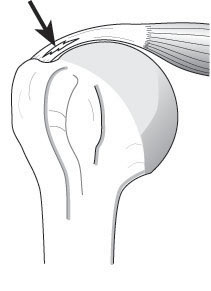
A review of published randomized trials and meta-analyses indicates that non-operative treatment is effective for the majority of patients with conditions of the rotator cuff, including rotator cuff tears.


Local corticosteroid injections are sometimes used in non-operative treatment, however they apparently have no biologic effect in terms of regenerating or reversing the degenerative changes occurring in rotator cuff tendons and their clinical benefit usually wears off quickly.
It has been suggested that local injection of platelet-rich plasma (PRP) may promote stem and progenitor cell proliferation, modulate inflammatory responses, stimulate angiogenesis, enhance the proliferation of tenocytes, stimulate the production of extracellular matrix proteins, protect against oxidative stress, and inhibit inflammation (see Platelet-Rich Plasma in Orthopaedic Surgery: A Critical Analysis Review) and that these effects may benefit patients with rotator cuff tendinopathies before structural failure of the rotator cuff occurs.
The authors of Subacromial injection of platelet-rich plasma provides greater improvement in pain and functional outcomes compared to corticosteroids at 1-year follow-up: a double-blinded randomized controlled trial attempted to answer this question in a randomized clinical trial of patients between 18 and 50 years old (mean age 28 years) who had both a clinical and magnetic resonance imaging diagnosis of supraspinatus tendinopathy refractory to conservative treatment.
A total of 50 patients received a single subacromial injection of PRP, whereas 50 patients received a single subacromial corticosteroid injection. All the patients completed 12 months of clinical follow-up.
At 12 months, in comparison to the those receiving cortisone, patients in the PRP group showed a significantly greater improvement in
the VAS score: 1.68 vs. 2.3
the American Shoulder and Elbow Surgeons (ASES) score, 89.8 vs. 78.0
the Single Assessment Numeric Evaluation (SANE) score, 89.2 vs. 80.5
and the the Pittsburgh Sleep Quality Index (PSQI) score, 2.72 vs. 4.02
The overall failure rate was significantly higher in the corticosteroid group (30%) than in the PRP group (12%) (P < .01).
It was particularly interesting to note that the difference in the course of the two groups was not evident until 6 months after the injection. As Michael Pearl pointed out, it is possible that the PRP folks would have gotten better anyway (i.e. the PRP may not have had an effect). We'd need a saline injected control arm to examine that possibility.
It does seem that the corticosteroid injected group tended to do less well with time and their greater failure rate may be related to the adverse effects of cortisone on tendons. As Dr Pearl says "An alternative explanation could be that cortisone is deleterious and the PRP less interfered with the natural history. "
It is notable that the ASES score difference between 3 and 12 months (85 to 90) does not exceed the minimal clinically important difference for ASES of 15.

Comment: This double blinded randomized clinical trial showed that young patients with rotator cuff tendinosis having subacromial injection of PRP did better than comparable patients having subacromial injection of cortisone. It does not show that patients having subacromial injection of PRP would do better than those with no treatment or with a placebo control. Keep in mind that these patients had an average age of 28, folks who have a lot of potential for recovery with time and rehab.
A possible benefit of PRP in cuff tendinosis cannot be extrapolated to the treatment of cuff tendons with structural failure, as demonstrated by the authors of Subacromial Platelet-Rich Plasma Injections Produce Significantly Worse Improvement in Functional Outcomes in Patients With Partial Supraspinatus Tears Than in Patients With Isolated Tendinopathy who found that improvement in the ASES score was significantly greater in the group without tears than in the group with partial cuff tears (PTRCTs) at all follow-up times. 94% of the patients in the isolated tendinopathy group but less than half of patients in the PTRCTs group achieved a substantial clinical benefit at 12 months follow-up.
Furthermore, a review of published randomized controlled trials and meta-analyses failed to demonstrate a clinically significant benefit to the patient of the use of PRP in conjunction with surgical repair of a torn rotator cuff.


You can support cutting edge shoulder research that is leading to better care for patients with shoulder problems, click on this link
Follow on twitter/X: https://x.com/RickMatsen
Follow on facebook: https://www.facebook.com/shoulder.arthritis
Follow on LinkedIn: https://www.linkedin.com/in/rick-matsen-88b1a8133/
Here are some videos that are of shoulder interest
Shoulder arthritis - what you need to know (see this link).
How to x-ray the shoulder (see this link).
The ream and run procedure (see this link).
The total shoulder arthroplasty (see this link).
The cuff tear arthropathy arthroplasty (see this link).
The reverse total shoulder arthroplasty (see this link).
The smooth and move procedure for irreparable rotator cuff tears (see this link).
Shoulder rehabilitation exercises (see this link).