Showing posts with label CTA prosthesis. Show all posts

Wednesday, August 31, 2022

The versatile, inexpensive and safe CTA hemiarthroplasty for patients with preserved active elevation

The cuff tear arthropathy (CTA) hemiarthroplasty - using an extended humeral articular surface that articulates with the coracoacromial arch - is a versatile, effective and inexpensive reconstructive procedure for shoulders with cuff deficiency, arthritis and active elevation beyond 90 degrees. See Treating cuff tear arthropathy in the active patient - the CTA prosthesis. The technical details for this procedure are shown in this link.  In contrast to the reverse total shoulder arthroplasty, the CTA hemiarthroplasty avoids the risks of dislocation, acromial and scapular spine fractures, notching, baseplate loosening, glenoid fracture, and dissociation of the glenosphere from the baseplate.

Yesterday, we saw three patients in followup after this procedure demonstrating its application for different shoulder pathologies.

Case 1.

A man in his sixties had a proximal humeral fracture treated previously with plate fixation. This was complicated by loss of fixation and avascular necrosis. Preoperatively he had active flexion >90 degrees and the x-rays shown below.


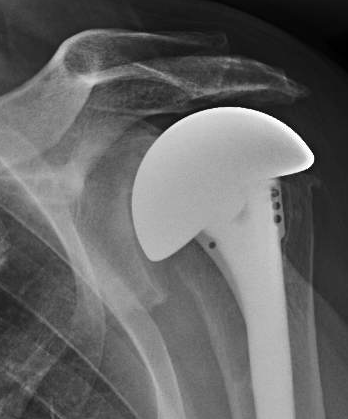
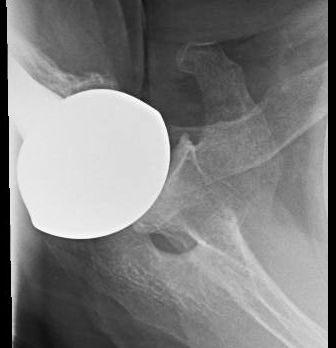
At surgery the supraspinatus and infraspinaturs were absent. The plate and humeral head were removed and a CTA hemiarthroplasty with reconstruction of his subscapularis was performed. Eight years after surgery he returned for routine followup. His x-rays at that time are shown below.


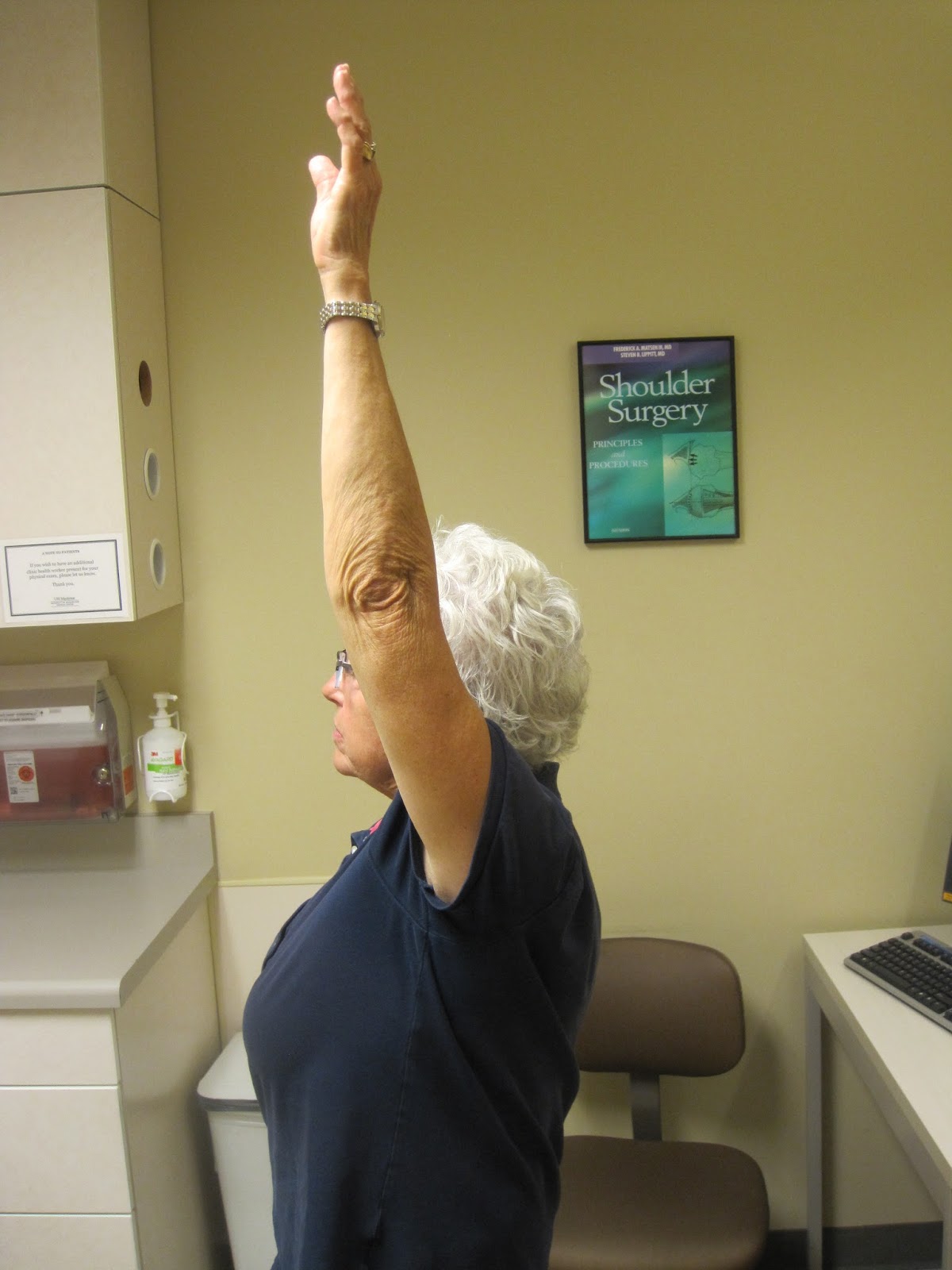
His shoulder comfort and function were good with active elevation of 150 degrees as shown below.


Case 2. 

A man in his seventies presented with pain and stiffness of the left shoulder after a failed rotator cuff repair. He had active elevation above 90 degrees. His preoperative images showed cuff tear arthropathy, heterotopic bone and retained suture anchors.


At surgery he was found to have no supraspinatus or infraspinatus. He had a CTA hemiarthroplasty with debridement of unwanted bone and suture anchors. His subscapularis was reconstructed.

He returned six weeks after surgery with good comfort of the shoulder and active elevation greater than 90 degrees at this early stage of his rehab. His x-ray at that time is shown below.


Case 3.

A man in his seventies presented with pain and loss of function in his right shoulder. He had active elevation greater than 90 degrees. His preoperative x-rays are shown below.


At surgery he had no supraspinatus or infraspinatus. His subscapularis was reconstructed.

Three years after surgery he returned for routine followup. His x-rays at that time are shown below.


He had comfortable active elevation of 160 degrees as shown below.


Comment: As reported by the authors of  Clinical effectiveness and safety of the extended humeral head arthroplasty for selected patients with rotator cuff tear arthropathy, the CTA hemiarthroplasty is a safe and effective treatment for patients with cuff tear arthropathy and retained active elevation. It is substantially less expensive than a reverse total shoulder and does not require preoperative CT scans or 3D planning.

You can support cutting edge shoulder research that is leading to better care for patients with shoulder problems, click on this link.


Follow on twitter: https://twitter.com/shoulderarth

Follow on facebook: click on this link

Follow on facebook: https://www.facebook.com/frederick.matsen

Follow on LinkedIn: https://www.linkedin.com/in/rick-matsen-88b1a8133/

Here are some videos that are of shoulder interest
Shoulder arthritis - what you need to know (see this link).
How to x-ray the shoulder (see this link).
The ream and run procedure (see this link).
The total shoulder arthroplasty (see this link).
The cuff tear arthropathy arthroplasty (see this link).
The reverse total shoulder arthroplasty (see this link).
The smooth and move procedure for irreparable rotator cuff tears (see this link).
Shoulder rehabilitation exercises (see this link).


Saturday, July 2, 2022

CTA hemiarthroplasty or reverse total shoulder for cuff tear arthopathy? It depends.

Shoulders with cuff tear arthropathy (CTA), 


can be successfully treated with 
CTA hemiarthroplasty (CTA-H, hemiarthroplasty with an extended humeral articular surface) provided that the shoulder has active glenohumeral elevation and an intact coracoacromial arch


or with a reverse total shoulder arthroplasty (RSA) 


The RSA is more expensive and has complications including, instability, acromial and scapular fractures, baseplate failure, and scapular notching that are not seen with the CTA-H (see Mechanical Failure of Reverse Total Shoulder). As stated by the authors of The modern use of the extended humeral head (cuff tear arthropathy) hemiarthroplasty, "Today, the treatment of osteoarthritis in the rotator cuff–deficient population is largely dominated by reverse shoulder arthroplasty (RSA). Despite the popularity of and increased familiarity with this procedure, the complication rate of RSA remains significant. An extended humeral head hemiarthroplasty may provide a less invasive alternative for select patients with cuff tear arthropathy (CTA) and preserved glenohumeral active elevation. With the indications for reverse arthroplasty expanding to younger patients, there are concerns about the longevity of this implant, as well as the associated revision burden. In the setting of failed RSA, the bone stock available for glenosphere

baseplate fixation can be inadequate for reimplantation."


The authors of Drivers of Inpatient Hospitalization Costs, Joint-Specific Patient-Reported Outcomes, and Health-Related Quality of Life in Shoulder Arthroplasty for Cuff Tear Arthropathy sought to assess the hospitalization costs and improvements in comfort, function and health related quality of life (HRQoL) for these two types of shoulder arthroplasty in the management of CTA. CTA-H was selected in patients with retained active elevation, an intact coracoacromial (CA) arch, and an intact subscapularis, while RSA was selected in patients with pseudoparalysis or glenohumeral instability. Seventy-two patients (39 CTA-H and 33 RSA) were treated during the study time period.


The Simple Shoulder Test (SST) was used as a joint-specific patient-reported outcome measure of comfort and function. Improvement in quality adjusted life years (QALYs) was measured using the Short-Form 36 (SF-36). 


Costs associated with inpatient care were collected from hospital financial records.


Significant improvements in SST and SF-36 physical component scores were seen in both groups. 


Inpatient hospitalization costs were significantly higher in the RSA group compared to the CTA-H group ($15,074 ± $1,614 vs. $10,389 ± $1,948, p<0.001) driven primarily by supplies including the cost of the prosthesis ($9,005 ± $2,521 vs. $4,715 ± $2,091, p<0.001). 


Both procedures led to significant improvements in HRQoL and joint-specific measures:


SST comparison at two years after surgery:


SF36 Physical Component Summary comparison at two years after surgery:


SF 36 Mental Component Summary comparison at two years after surgery:


The revision rate for RSAs was twice that of CTA-Hs: 12% of the RSAs and 5% of the CTA-H shoulders required revision.


The diagnosis of diabetes was an independent predictor of higher inpatient hospitalization costs for both groups. 


Comment: It is of note that this study did not compare the two types of arthroplasty in patients with similar preoperative characteristics. Instead it compared the outcomes of the more conservative, less expensive CTA-H in shoulders with retained active elevation, intact coracoacromial arch, and intact subscapularis to the outcomes of RSA in shoulders that did not meet these indications for CTA-H.  


The results suggest that the cost-effectiveness of shoulder arthroplasty for cuff tear arthropathy may be optimized by reserving RSA for cases of CTA that do not meet the indications for the extended humeral head CTA-H arthroplasty. The cuff tear arthropathy arthroplasty technique is shown in this link.

You can support cutting edge shoulder research that is leading to better care for patients with shoulder problems, click on this link.

Follow on twitter: https://twitter.com/shoulderarth

Follow on facebook: click on this link

Follow on facebook: https://www.facebook.com/frederick.matsen

Follow on LinkedIn: https://www.linkedin.com/in/rick-matsen-88b1a8133/

Here are some videos that are of shoulder interest
Shoulder arthritis - what you need to know (see this link).
How to x-ray the shoulder (see this link).
The ream and run procedure (see this link).
The total shoulder arthroplasty (see this link).
The cuff tear arthropathy arthroplasty (see this link).
The reverse total shoulder arthroplasty (see this link).
The smooth and move procedure for irreparable rotator cuff tears (see this link).
Shoulder rehabilitation exercises (see this link).


Tuesday, April 5, 2022

Four types of shoulder arthroplasty: safe and dependable techniques

There are four basic types of shoulder arthroplasty: anatomic total shoulder, ream and run arthroplasty, cuff tear arthropathy arthroplasty, and reverse total shoulder arthroplasty.

Here we present videos of safe, effective and cost-effective techniques for each

The total shoulder arthroplasty (see this link).


The ream and run arthroplasty (see this link).


The cuff tear arthropathy arthroplasty (see this link).


The reverse total shoulder arthroplasty (see this link).


See also

Shoulder arthritis - what you need to know (see this link).

How to x-ray the shoulder (see this link).

Shoulder rehabilitation exercises (see this link).

The smooth and move procedure for irreparable rotator cuff tears (see this link).

You can support cutting edge shoulder research that is leading to better care for patients with shoulder problems, click on this link.

Follow on twitter: https://twitter.com/shoulderarth

Follow on facebook: click on this link

Follow on facebook: https://www.facebook.com/frederick.matsen

Follow on LinkedIn: https://www.linkedin.com/in/rick-matsen-88b1a8133/


Thursday, November 21, 2019

Cuff tear arthropathy in an active 70 year old

An active man in is life 70s presents with a chronically painful shoulder and this x-ray


In spite of the severity of his cuff tear arthropathy, he had active elevation to 140 degrees.

Because of his desire to continue a high level of physical activity, he elected to have a cuff tear arthropathy arthroplasty. At the time of surgery, the supraspinatus and infraspinatus tendons were absent and the subscapularis was detached. His coracoacromial arch was intact.

At three months after surgery he returned to the office where the x-ray below was obtained.


His shoulder was comfortable and he was back at his physical activities. He kindly gave us permission to present this video of his motion.


While many surgeons may have recommended a reverse total shoulder for this patient, we are impressed with the comfort and function that can be achieved for active individuals using the robust CTA arthroplasty. A video of the technique for this procedure can be found at this link.

=====
To see our new series of youtube videos on important shoulder surgeries and how they are done, click here.

Use the "Search" box to the right to find other topics of interest to you.


You may be interested in some of our most visited web pages  arthritis, total shoulder, ream and run, reverse total shoulder, CTA arthroplasty, and rotator cuff surgery as well as the 'ream and run essentials'

Monday, February 18, 2019

Cuff tear arthropathy - is there a safe and effective alternative to the reverse total shoulder?

Clinical effectiveness and safety of the extended humeral head arthroplasty for selected patients with rotator cuff tear arthropathy

Cuff tear arthropathy is a type of shoulder arthritis in which both rotator cuff and the cartilage normally covering the joint are both deficient.


When the patient is unable to elevate the arm above the horizontal, cuff tear arthropathy is often treated using a reverse total shoulder. 


However, when active elevation of the arm is present,  a humeral hemiarthroplasty with an extended humeral head (the CTA arthroplasty) can provide a safe, effective and less invasive alternative.  In this procedure the resurfaced humeral head articulates with the undersurface of the intact coracoacromial arch.


This surgical procedure requires matching of the diameter of curvature of the native humeral head


And preserving the stabilizing tissue covering the anterior aspect of the humeral head.

Appropriate sizing of the humeral head prosthesis can re-tension the deltoid.

This procedure cannot be used when the shoulder has been destabilized by a prior acromioplasty


More about this technique can be seen in this youtube (link).

Here is an example of a shoulder with cuff tear arthropathy before surgery. In spite of the destruction of the joint surface, the patient was able to actively elevate her arm.


She elected to have a CTA arthroplasty. At surgery she had complete and irreparable failure of her supraspinatus or infraspinatus.

Here is her shoulder shoulder nine years after the CTA arthroplasty, showing remodeling of her coracoacromial arch.


She generously granted permission for us to show her function nine years after surgery.


This paper analyzed the preoperative characteristics, surgical findings, and clinical outcomes for 42 patients selected for extended head hemiarthroplasty - the CTA arthroplasty.

At an average of 2-years after surgery, there were no complications or revisions. Specifically the complications that have been associated with a reverse total shoulder were avoided: no component dissociations, no baseplate failures, and no dislocations.

The Simple Shoulder Test score improved from a median of 3.0 to 8.0 (P < .001). The median percentage of maximal possible improvement was 50% (P < .001). The percentage of patients able to perform each of the functions of the Simple Shoulder Test was significantly improved; for example, the ability to sleep comfortably increased from 19% to 71%, and the ability to place a coin on the shelf at shoulder level increased from 38% to 86% (P < .001).


Comment:
There are circumstances in which reverse total shoulder is clearly the preferred procedure for cuff tear arthropathy, including pseudoparalysis, anterosuperior escape, and glenohumeral instability; however, in shoulders with preserved active motion and stability of the humeral head provided by an intact coracoacromial arch, the extended head humeral arthroplasty can enable selected patients to realize improved comfort and function without the potential risks of RTSA.

===
We have a new set of shoulder youtubes about the shoulder, check them out at this link.

Be sure to visit "Ream and Run - the state of the art" regarding this radically conservative approach to shoulder arthritis at this link and this link

Use the "Search" box to the right to find other topics of interest to you.

Monday, March 19, 2018

Arthritis + a rotator cuff tear

Functional Outcomes and Predictors of Failure After Rotator Cuff Repair During Total Shoulder Arthroplasty

These authors point out that a well-functioning rotator cuff is necessary for the best results from an anatomic total shoulder arthroplasty (TSA).

They evaluated 45 of their patients who underwent concomitant TSA and rotator cuff repair (RCR): 22 had high-grade partial-thickness and 23 had full-thickness tears). 

Fourteen (31%) patients were labeled as having a poor result; 8 (18%) patients required reoperation. 

The indications for TSA were as follows: osteoarthritis (n=34), rheumatoid arthritis/inflammatory (n=7), posttraumatic (n=4), and avascular necrosis (n=1). Average follow-up was 4.7 years (range, 2.0-14.4 years) 

The mean AFE improved from 101° (range, 40°-160°) preoperatively to 139° (range, 30°-180°) postoperatively (P<.0001; 95% confidence interval, 26°- 50°). The mean AER improved from 20.0° (range, -20° to 40°) preoperatively to 40° (range, 0°-75°) postoperatively (P<.0001; 95% confidence interval, 14°-27°). 

There was a significant difference between the acromiohumeral interval preoperatively and immediately postoperatively (P=.013). However, at maximum radiographic follow-up, the acromiohumeral interval was not significantly different from preoperative values (P=.86). 

Patients with a preoperative acromiohumeral interval of less than 8 mm had an increased rate of cuff-related reoperation (P=.003). 

Comment: This report concerns a mixed group of pathologies: some with full thickness cuff tears, some with inflammatory arthropathy, and some with preoperative active elevation of 160 degrees. In our practice each of these characteristics would influence our shared surgeon-patient decision making. We rarely perform a cuff repair at the time of a shoulder arthroplasty because of the conflicting rehabilitation programs after these two procedures (protection for the first and motion for the second). Many patients with shoulder arthritis have "partial tears" that need not change the surgical approach as long as the shoulder has good active motion. Cuff repairs in individuals with inflammatory arthropathy have a high failure rate. Patients with shoulder arthritis and 160 degrees of preoperative motion may not need a cuff repair.

Our algorithm for patients with glenohumeral arthritis and cuff pathology is as follows:
(1) consider  total shoulder without cuff repair if there is no superior migration of the humeral head with respect to the scapula and if there is active elevation > 90 degrees
(2) consider CTA arthroplasty (see this link) without cuff repair if there is superior migration of the humeral head with respect to the scapula and if there is active elevation > 90 degrees
(3) consider reverse total shoulder if is active elevation is < 90 degrees.
(4) avoid concurrent arthroplasty and cuff repair
(5) avoid cuff repair in patients with inflammatory arthropathy
=====
The reader may also be interested in these posts:


Consultation for those who live a distance away from Seattle.

Click here to see the new Shoulder Arthritis Book.

Click here to see the new Rotator Cuff Book

Information about shoulder exercises can be found at this link.

Use the "Search" box to the right to find other topics of interest to you.

You may be interested in some of our most visited web pages including:shoulder arthritis, total shoulder, ream and run, reverse total shoulder, CTA arthroplasty, and rotator cuff surgery as well as the 'ream and run essentials'

See from which cities our patients come.


Sunday, February 4, 2018

Cuff tear arthropathy, is there an alternative to a reverse total shoulder?

The reverse total shoulder is often used in the management of rotator cuff tear arthropathy that has been unresponsive to a trial of non-operative management. While commonly successful, this procedure can be associated with complications such as baseplate failure, glenosphere/baseplate dissociation, failure of the polyethylene liner, and dislocation(see link, link, link, link, and link. In patient with cuff tear arthropathy who can still actively elevate their arm, we have found that a less complex surgical approach - the CTA arthroplasty (see this link) - can safely restore shoulder comfort and function. 

Here are two examples, both in patients in their 70s.

Preoperative and postoperative x-rays


Shoulder function at two years after surgery


===
Preoperative and postoperative x-rays


Shoulder function at nine years after surgery.


Comment: There are cases in which a reverse total shoulder arthroplasty may be the preferred procedure for rotator cuff tear arthropathy, including those with pseudoparalysis, anterosuperior escape, and glenohumeral instability. However in shoulders with preserved active motion and stability of the humeral head provided by an intact coracoacromial arch, the extended head CTA humeral arthroplasty may enable patients to realize improved comfort and function without the potential complexities of a reverse total shoulder.

=====
The reader may also be interested in these posts:


Consultation for those who live a distance away from Seattle.

Click here to see the new Shoulder Arthritis Book.

Click here to see the new Rotator Cuff Book

Information about shoulder exercises can be found at this link.

Use the "Search" box to the right to find other topics of interest to you.

You may be interested in some of our most visited web pages including:shoulder arthritis, total shoulder, ream and run, reverse total shoulder, CTA arthroplasty, and rotator cuff surgery as well as the 'ream and run essentials'

See from which cities our patients come.

See the countries from which our readers come on this post.

Sunday, November 12, 2017

Cuff tear arthropathy: is a reverse necessary? The CTA arthoplasty

What Factors are Associated With Clinically Important Improvement After Shoulder Hemiarthroplasty for Cuff Tear Arthropathy?

These authors sought to determine the factors associated with achieving the minimum clinically important improvement in the Simple Shoulder Test (SST) in 42 patients (24 males/18 females) at a mean of 48 months (range, 24–132 months) after hemiarthroplasty for cuff tear arthropathy performed between 1991 and 2007.

The authors' indication for hemiarthroplasty was superior translation on plain radiographs of the humeral head with respect to the glenoid, loss of articular surface of the humeral head, bone loss of the superior glenoid, and erosion of the greater tuberosity and undersurface of the acromion. They excluded shoulders with instability of the shoulder with attempted forward elevation (anterosuperior escape), active infection, and inflammatory arthritis.

21 shoulders received a conventional humeral head replacement and 21 received a cuff tear arthropathy arthroplasty prosthesis. At surgery, soft tissue balancing
was thought to be ideal when the following criteria were achieved: (1) posterior drawer testing with 40% to 60% translation of the center of the prosthetic head relative to the center of the glenoid, (2) 60 internal rotation was present with the arm positioned in 90 abduction, (3) the hand on the involved side could be placed on the superior aspect of the contralateral shoulder without protraction of the scapula, and (4) there was 45 external rotation with the subscapularis approximated to the proximal humeral osteotomy site. Assisted motion was started immediately after surgery with progressive activities as comfort allowed.

At latest followup, 33 of 42 patients (79%) achieved a clinically important percentage of maximum possible improvement (%MPI), defined as an improvement of 30% of the total possible improvement on the 12-point SST scale. They reported no complications and no revision procedures.

Intraoperative findings of a rotator cuff tear limited to the supraspinatus and infraspinatus and limited preoperative external rotation were associated with achieving the defined minimum functional improvement (30% of MPI) on multivariate analysis. Preoperative active elevation and use of a CTA-specific implant were not significantly associated with achievement of 30% of MPI.

The results of the univariate analysis are shown here


and the results of their multivariate analysis are shown here


Comment: As appears to be the case in the practice of these authors, many of our patients with classical cuff tear arthropathy want to lead active lives. They wish to avoid a reverse total shoulder because of concerns about activity limitations, dislocation, screw breakage or humeral shaft fracture should they fall. If these individuals have active elevation > 90 degrees and have no evidence of anterior superior instability, we discuss the option of a CTA prosthesis.

Here's the example of a lady in her mid sixties with a failed cuff repair. Two years after that surgery she presented to us with a weak and painful shoulder. She was taking prednisone, methotrexate and Humira for her rheumatoid arthritis. She had active elevation to 110 and passive elevation to 160 degrees. Her x-rays at this time are shown below.


She elected a CTA arthroplasty. At surgery she had an irreparable cuff defect involving her supraspinatus and infraspinatus.

She dropped by to see us nine years after surgery. Her films at that time are shown below.

Her shoulder was painless. Her active elevation is shown below.


As another example we recently we saw an active physician-rancher who had had bilateral CTA prostheses performed after failed cuff repairs. Because he recognized that his ranching was demanding on his shoulders and carried the risk of falls, he preferred the CTA over the reverse total shoulder.

Before his left shoulder surgery his films were as shown below and he reported the ability to perform only 5 of the 12 Simple Shoulder Test functions. He was able to elevate his arm to over 90 degrees and had no anterosuperior instability.


At the time of surgery he had no supraspinatus, no infraspinatus and a detached subscapularis.
We were able to reattach his subscapularis.

At four years after surgery, he could perform 8 of the 12 SST functions and had the radiographs shown below. Note the impaction grafted humeral stem and the articulation of the prosthesis with the undersurface of the coracoacromial arch.


Two years ago he presented with a similar situation in his right shoulder. His SST score was 3/12. He had active elevation of 100 degrees without anterosuperior escape. His preoperative x-rays shown below.

Two years after his right shoulder arthroplasty he could perform 8/12 SST functions and was back at work on his ranch. His 2 year films are shown below.


Here's a video of his function at his last clinic visit.


Here is a video of an active women two years after her CTA arthroplasty for cuff tear arthropathy.


Here are the x-rays and the shoulder function of a man one year out from his CTA arthroplasty


Comment:  From our standpoint, the CTA arthroplasty is a most attractive option for consideration by active individuals with cuff tear arthropathy and the ability to actively elevate the arm above 90 degrees without manifesting anterosuperior instability.

It has a very low complication and revision rate, avoids issues of modular components and activity restrictions.

Inserting the prosthesis with impaction grafting makes for an easy conversion to a reverse should that be necessary, fortunately this is rarely the case. The cuff tear arthropathy prosthesis is considered for individuals with active elevation of 90 or more degrees without anterosuperior escape – especially those who desire higher levels of physical activity or those who are at increased risk of falls. It is important to realize that this prosthesis has an extended lateral joint surface for articulation with the undersurface of the coracoacromial arch, thus it is distinct from the usual hemiarthroplasty prosthesis. The implant system should allow selection of the appropriate diameter of curvature and should enable fixation by impaction grafting.


The surgical keys to a successful CTA arthroplasty are (1) optimizing stability and (2) matching the prosthetic diameter of curvature to that of the resected humeral head. The patient positioning, anesthetic, prophylactic antibiotics, skin preparation, and skin incision are identical to that for an anatomic arthroplasty. 


In exposing the humeral head, we retain as much as possible of the clavipectoral fascia attached to the coracoacromial ligament (the “CA+”) as an additional barrier to anterosuperior instability. 


The subscapularis is carefully incised from the lesser tuberosity taking care to keep the subjacent capsule attached to its deep side. The humerus is exposed by gentle external rotation allowing for debridement of cuff tendon remnants and osteophytes as well as sectioning of the long head tendon of the biceps if it remains intact. The humeral head height and diameter of curvature are measured, ideally before the head is resected.


The medullary canal is entered and progressively larger reamers inserted as sizers until the diaphyseal endosteal cortex is encountered at a depth corresponding to the length of the prosthetic stem (‘love at first bite’); this reamer defines the orthopaedic axis. The humeral head is resected at an angle of 45 degrees with the orthopaedic axis; the proximal humerus is prepared as for a standard humeral arthroplasty. The lateral tuberosity is resected. The humeral head diameter of curvature is chosen to match that of the resected head. Trial reduction is carried out. The height of the prosthesis is selected so that the deltoid is under mild-moderate tension when the arm is adducted. Impaction grafting is carried out using bone from the resected humeral head. If the biceps tendon is available, an in-and-out biceps tenodesis is performed. Drill holes are placed for reattachment of the subscapularis. The is prosthesis assembled and inserted and the subscapularis is securely repaired.


Additional relevant posts can be found here and here and here

We first described our approach over two decades ago in a publication, Prosthetic replacement of the shoulder for the treatment of defects in the rotator cuff and the surface of the glenohumeral joint, which reported on twenty-one shoulders in nineteen patients, fifty-four to eighty-four years old, who had disabling pain attributable to a massive tear of the rotator cuff, accompanied by loss of the surface of the glenohumeral joint. These patients were not candidates for total shoulder replacement because of the massive deficiency in the cuff and the fixed upward displacement of the humeral head. At that time reverse total shoulder was not an option. A prerequisite for hemiarthroplasty was a functionally intact coracoacromial arch to provide superior secondary stability for the prosthesis. One important aspect of the operative technique was the selection of a sufficiently small prosthesis so that excessive tightness of the posterior aspect of the capsule could be avoided. Eighteen shoulders in sixteen patients were available for follow-up, which ranged from twenty-five to 122 months. Pain decreased from marked or disabling in fourteen shoulders preoperatively to none or slight in ten and to pain only after unusual activity in four. Active forward elevation improved from an average of 66 degrees preoperatively to an average of 109 degrees postoperatively. One patient, who had had an excellent result, fell and sustained an acromial fracture, so the functional result changed to poor. Three patients had persistent, substantial pain in the shoulder that led to a revision. Neither infection nor prosthetic loosening nor instability developed in any shoulder.


=====
The reader may also be interested in these posts:


Consultation for those who live a distance away from Seattle.

Click here to see the new Shoulder Arthritis Book.

Click here to see the new Rotator Cuff Book

Information about shoulder exercises can be found at this link.

Use the "Search" box to the right to find other topics of interest to you.

You may be interested in some of our most visited web pages including:shoulder arthritis, total shoulder, ream and run, reverse total shoulder, CTA arthroplasty, and rotator cuff surgery as well as the 'ream and run essentials'

See from which cities our patients come.

See the countries from which our readers come on this post.