Showing posts with label manipulation. Show all posts

Saturday, October 30, 2021

Management of severe B2 glenoid in an active young man


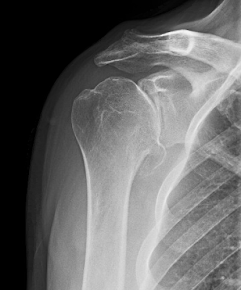
An active surfer/athlete presented with pain and stiffness of both shoulders and the x-rays shown below. Each of the axillary "truth" views shows posterior decentering of the humeral head on a biconcave glenoid.


After considering the options of an anatomic total shoulder, an anatomic total shoulder with a posteriorly augmented glenoid component, and a reverse total shoulder, the patient elected to proceed with a ream and run procedure on each shoulder, two years apart.

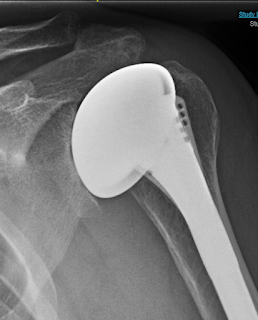
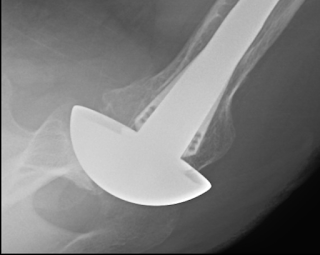
The four year post operative films for the right shoulder are shown below. Note the use of an anteriorly eccentric humeral head component to control posterior translation.

The two year postoperative films of the left shoulder are shown below. Note again the use of an anteriorly eccentric humeral head component. 


He is back to surfing, tennis, lifting weights and swimming 1,000 yards, activities he was unable to perform before his shoulder arthroplasties.

The active motion of both shoulders is shown below.


As expected, these shoulders had difficulty in regaining functional motion after their prolonged stiffness. In such cases, we use outpatient manipulation under anesthesia and complete muscle relaxation to supplement the patient's rehabilitation effort. In this case several manipulations were peformed on each shoulder. 


We asked him to comment on the use of manipulation in his case. He responded, "Regarding the MUA experience, with both shoulders the MUA benefits seemed to wear off within a couple of weeks until the ones I had done at the two year mark. I could tell each time within even a couple of days that I was tightening up again. But for some reason two years seems to be long enough that my body stops laying down so much scar tissue."


He adds, "one other thing I wanted to mention that has been extremely helpful. For the last few weeks once a day I spend about ten minutes with a baseball (lacrosse ball without seams would likely be better) and lay on my back and use body weight on the ball to work the sore part of the joint. It has made a big difference in soreness that would occur normally from lifting weights, playing tennis, swimming, which are all things I do on a fairly regular basis (each activity at least once a week)"


Comment: This is an exceptionally motivated young man, who has been completely dedicated to his rehabilitation program. His experience with manipulation as long as two years after surgery has been instructive. 


Follow on twitter: https://twitter.com/shoulderarth

Follow on facebook: https://www.facebook.com/frederick.matsen

Follow on LinkedIn: https://www.linkedin.com/in/rick-matsen-88b1a8133/


How you can support research in shoulder surgery Click on this link.

Here are some videos that are of shoulder interest
Shoulder arthritis - what you need to know (see this link)
Shoulder arthritis - x-ray appearance (see this link)
The smooth and move for irreparable cuff tears (see this link)
The total shoulder arthroplasty (see this link).
The ream and run technique is shown in this link.
The cuff tear arthropathy arthroplasty (see this link).
The reverse total shoulder arthroplasty (see this link).

Shoulder rehabilitation exercises (see this link).

This is a non-commercial site, the purpose of which is education, consistent with "Fair Use" as defined in Title 17 of the U.S. Code.          
Note that author has no financial relationships with any orthopaedic companies.

Sunday, July 25, 2021

Managing the stiff (frozen) shoulder

Effects of comorbidities on the outcomes of manipulation under anesthesia for primary stiff shoulder

These authors sought to assess how comorbidities influence the recovery speed and clinical outcomes after manipulation under anesthesia (MUA) in 281 primary stiff shoulders. They divided patients into the control (n . 203), diabetes mellitus (DM)(n . 32), hyperlipidemia (n . 26), and thyroid disorder (n . 20) groups. The mean HbA1c (normal range: 4.5%-5.6%) of the DM group was 7.3%.  Among the 32 diabetic patients, 24 (75%) had HbA1c ≥ 6.5%. 


MUA was considered if all four criteria were met:

(1) limited passive ROM compared with the opposite normal shoulder (passive glenohumeral motion is 20 or less of forward flexion with holding down the scapula by the surgeon, and movements are made mainly using the scapulothoracic motion); 

(2) pain and stiffness persisted for at least 3 months and did not respond to sufficient conservative treatment;

(3) stiff shoulder is in the frozen stage; and 

(4) normal shoulder x-rays.


MUA was performed as an outpatient procedure under interscalene regional anesthesia with the patient in the supine position. With one hand stabilizing the scapula, the range of glenohumeral movement was assessed and recorded. To avoid iatrogenic injuries such as humeral fracture, the surgeon performed manipulation by holding the patient’s arm between the shoulder and elbow with the other hand to form a short lever arm. The shoulder was manipulated sequentially through a range of forward flexion, abduction, external rotation, cross-body adduction, and internal rotation. The procedure was followed by immediate physical therapy.


A successful MUA was defined as achieving the ROM for the passive forward flexion and external rotation at the side within 15 degrees and internal rotation to the posterior within 3 spinal levels compared with the normal contralateral side.


Significant improvements in range of motion (ROM) and clinical scores at 3 months after MUA were observed in all groups. 


Significant differences in ROM among the 4 groups were also observed during follow-up. The DM group had significantly lower ROM values, even at 3 months after MUA, compared with the control group.  The ROM recovery speed after MUA was slowest in the DM group, followed by the thyroid disorder, hyperlipidemia, and control groups.


Most (90.6%) of the DM group experienced late recovery. The proportion of nonsuccessful MUA was higher in the DM and thyroid disorder groups than that in the control and hyperlipidemia groups.


One case of spiral humeral fracture occurred after MUA while rotating the arm externally during this study. No other complications occurred. 


During follow-up, there were no statistically significant differences among groups regarding the visual analog scale, University of California at Los Angeles shoulder, and Constant scores.


Comment: We have found manipulation under anesthesia to be useful for refractory shoulder stiffness in patients without glenohumeral arthritis or osteopenia. We use a short (5 minute) general anesthetic coupled with complete muscle paralysis achieved with succinylcholine.  This has been a safe and effective procedure for patients with refractory idiopathic frozen shoulder and for shoulders with refractory post operative stiffness.

In the photo below, one anesthesiologist (upper left) is providing oxygen ventilation while another (upper right) is administering the intravenous succinylcholine. To avoid the risk of humeral fracture (such as the one reported in this paper) or cuff injury, we manipulate in flexion, cross body adduction, and abduction, but not in rotation.


How you can support research in shoulder surgery Click on this link.

Here are some videos that are of shoulder interest
Shoulder arthritis - what you need to know (see this link).
How to x-ray the shoulder (see this link).
The total shoulder arthroplasty (see this link).
The ream and run technique is shown in this link.
The cuff tear arthropathy arthroplasty (see this link).
The reverse total shoulder arthroplasty (see this link).
Shoulder rehabilitation exercises (see this link).
Follow on twitter: Frederick Matsen (@shoulderarth)


Wednesday, April 10, 2019

Manipulation under anesthesia for a stiff shoulder


When a shoulder becomes stiff on its own (as in a frozen shoulder) or after a surgical procedure (such as a joint replacement) and when vigorous physical therapy has not yielded the desired results, we consider a manipulation of the joint under a brief intravenous anesthetic and with complete muscle relation from succinylcholine. In the photo above, one anesthesiologist (upper left) is providing oxygen ventilation while another (upper right) is administering the intravenous medication. When the shoulder is nicely relaxed, the surgeon gently moves the arm into full elevation and into the other motions of the shoulder to release scar tissue and capsular contracture.

=====
We have a new set of shoulder youtubes about the shoulder, check them out at this link.

Be sure to visit "Ream and Run - the state of the art" regarding this radically conservative approach to shoulder arthritis at this link and this link

Use the "Search" box to the right to find other topics of interest to you.

Friday, April 22, 2016

Avoiding and managing stiffness after a ream and run procedure or other shoulder arthroplasty

Here is some information we share with individuals having a ream and run procedure regarding avoiding and managing stiffness.

You have elected to have a ream and run procedure for your shoulder arthritis. This procedure offers the opportunity to perform major activities with your shoulder without fear of failure of a plastic socket (glenoid). The key to success after this procedure is for the patient to carry out the key stretching exercises five times a day and holding the stretch for a full two minutes until the shoulder has healed. The most important exercises are A, B, and C as shown on this link.

In spite of their best efforts, some patients have difficulty maintaining the range of motion we achieve at surgery. For this reason, it is very important that (1) the stretching exercises you were shown in the hospital are done with good relaxation five times per day, (2) that you use anti-inflammatory medications, such as two Aleve per day (unless you cannot tolerate them), and (3) that you let your surgeon know via email if you are having difficulty in achieving and maintaining the necessary range of motion. If there is any question, please have a family member or friend email your surgeon a photo taken from the side like that below, which shows the desired range of motion at six weeks after the ream and run surgery.


If the shoulder gets stiff after this surgery, which sometimes happens, we can often get the shoulder back on track with a manipulation under anesthesia. This manipulation does not require a surgical incision or an over night stay in the hospital. In this procedure we administer a brief intravenous general anesthetic and a muscle relaxer (succinylcholine ) and then move the shoulder through a full range of motion. This usually breaks up any adhesions that may have formed.

If the shoulder remains stiff, sometimes an open surgical release is considered. This is an open surgical procedure at which time the tight tissues are cut to help restore the shoulder motion. An overnight stay is usually needed after this procedure.

Please let your surgeon know if you have any questions at anytime.


==

Here are some videos that are of shoulder interest
Shoulder arthritis - what you need to know (see this link).
How to x-ray the shoulder (see this link).
The ream and run procedure (see this link).
The total shoulder arthroplasty (see this link).
The cuff tear arthropathy arthroplasty (see this link).
The reverse total shoulder arthroplasty (see this link).
The smooth and move procedure for irreparable rotator cuff tears (see this link).
Shoulder rehabilitation exercises (see this link).

Thursday, November 10, 2011

Ream and run and stiffness - prevention and treatment - manipulation and surgical release - chondrolysis

At the time of the ream and run procedure we assure that the shoulder has excellent range of passive motion: over 150 degrees. However, in some cases it is a challenge for the patient to maintain this range of motion. The key to maintaining the range of motion achieved at surgery is a commitment to five times per day short stretching exercise sessions . See also all of our other posts on stretching (use the "search the blog" function to the right). Maintaining the range may be especially difficult if the shoulder was very stiff prior to the manipulation or if the ream and run was performed for chondrolysis.

If it becomes difficult to maintain 150 degrees of flexion, we have found that a gentle manipulation under anesthesia (no surgical incision required) can get the shoulder back on track. This is ideally performed within the first 8 weeks after surgery, so careful attention to the progress in range of motion is important. In this procedure, the patient is put to sleep for five minutes during which muscle relaxation is achieved and the shoulder is gently moved through a full range of motion to break up any adhesions. Because nothing is cut in this procedure, the patient can resume exercises and activities immediately afterwards.

If stiffness is a problem later on, after healing is complete, we use a formal open release to re-establish the range of motion.


--

Use the "Search the Blog" box to the right to find other topics of interest to you.

You may be interested in some of our most visited web pages including: shoulder arthritis, total shoulder, ream and runreverse total shoulderCTA arthroplasty, and rotator cuff surgery.