Showing posts with label mechanics. Show all posts

Tuesday, March 7, 2023

Optimizing the mechanics of the reverse total shoulder

There is much discussion of the optimal positioning of the components in reverse total shoulder arthroplasty. The authors of Challenges for Optimization of Reverse Shoulder Arthroplasty Part II: Subacromial Space, Scapular Posture, Moment Arms and Muscle Tensioning provide an in-depth analysis of some of these factors.

Their key findings may be summarized as follows. 

(A) In hierachical order, the most important factors for optimizing abduction and adduction range of motion are 
(1) lateralizing the gleosphere center of rotation, 
(2) distalizing the glenosphere (e.g. by placing the baseplate low, by using a smaller baseplate and/or by using an inferiorly eccentric glenosphere), 
(3) inferiorly tilting the glenosphere and 
(4) increasing the neck-shaft angle.

The effects of offset and superior/inferior position are represented below where the green zone is the impingement-free range of adduction/abduction.


(B) Patients with severe kyphosis are at risk for reduced adduction, abduction, external rotation and extension. Higher retrotorsion, lower neck-shaft angle and a larger/inferior glenosphere may be considered.


(C) The abduction moment arm is maximized by a medial center of rotation and a lateralized tuberosity.


However, a longer lever arm changes the normal length-tension relationships of the muscle (Blix curve). To optimize fiber recruitment and the length of the contractile elements of the deltoid and residual rotator cuff, the authors recommed placing the tuberosity close to the normal anatomic position.


The authors conclusions are:
External rotation, extension and internal rotation are key challenges to the optimization of RSA function. They are substantially improved by the combination of glenoid-sided lateralization, inferior glenosphere overhang, and a decreased neck shaft angle as low as 135 degrees, as outlined in part I of this review. 

Lateralization, distalization and inferior glenosphere tilt have been proven to be the three most important factors in hierarchical order to increase glenohumeral ABD by increasing the subacromial space.

Thoracic kyphosis, scapular posture, and motion need to be evaluated, as they may influence planning, positioning, and outcomes of RSA.

Glenoid-sided lateralization (LGMH) and humeral lateralization (MGLH) have different effects on the moment arm but also muscle length for the force generation of RSA.

The total amount of lateralization has been recommended to be close to the anatomical lateralization of the humeral tuberosities; however, the optimal amount of glenoid and humeral contribution is unknown to date.

You can support cutting edge shoulder research that is leading to better care for patients with shoulder problems, click on this link.

Follow on twitter: https://twitter.com/shoulderarth
Follow on facebook: click on this link
Follow on facebook: https://www.facebook.com/frederick.matsen
Follow on LinkedIn: https://www.linkedin.com/in/rick-matsen-88b1a8133/

Here are some videos that are of shoulder interest
Shoulder arthritis - what you need to know (see this link).
How to x-ray the shoulder (see this link).
The ream and run procedure (see this link).
The total shoulder arthroplasty (see this link).
The cuff tear arthropathy arthroplasty (see this link).
The reverse total shoulder arthroplasty (see this link).
The smooth and move procedure for irreparable rotator cuff tears (see this link).
Shoulder rehabilitation exercises (see this link).

Thursday, February 4, 2016

Does acromioplasty adversely affect glenohumeral mechanics?

The effect of coracoacromial ligament excision and acromioplasty on the amount of rotator cuff force production necessary to restore intact glenohumeral biomechanics.

These authors noted that coracoacromial ligament (CAL) excision and acromioplasty increase superior and anterosuperior glenohumeral translation. In 9 cadaver shoulders they found that at 150 to 200 N of anterosuperior loading, CAL excision and acromioplasty increased the rotator cuff force required to maintain normal glenohumeral biomechanics by 25% to 30%.


Comment: We always like to recall the quote from the father of shoulder surgery:


In a series of our own experiments (including one in which loads were measured in vivo) we were able to show that superiorly directed loads applied to the humerus were proportionally resisted by loading of the acromion 


In another experiment we showed that acromioplasty was followed by 8 mm of superior translation and increased contact pressure (decreased contact area) with the residual acromion.


The combination of acromioplasty and cuff deficiency can lead to anterosuperior escape.

More on the importance of the coracoacromial arch can be seen on this link.

The bottom line is that the CA arch provides important superior stability to the shoulder.


===

Check out the new Shoulder Arthritis Book - click here.


Use the "Search" box to the right to find other topics of interest to you.

You may be interested in some of our most visited web pages including:shoulder arthritis, total shoulder, ream and run, reverse total shoulder, CTA arthroplasty, and rotator cuff surgery as well as the 'ream and run essentials'


Monday, June 29, 2015

Subacromial 'impingement' - it's the way the shoulder normally works!


Which shoulder motions cause subacromial impingement? Evaluating the vertical displacement and peak strain of the coracoacromial ligament by ultrasound speckle tracking imaging

These authors studied 16 normal male shoulders (average age 28.6 years). They measured the vertical displacement and peak strain of the coracoacromial ligament by a motion tracing program during these active motions: (1) forward flexion in the scapular plane, (2) horizontal abduction in the axial plane, (3) external rotation with the arm at 0° abduction (ER0), (4) internal rotation with the arm at 0° abduction (IR0), (5) internal rotation with the arm at 90° abduction (IR90), and (6) internal rotation at the back (IRB).

An experienced sonographer examined the shoulders using 2-dimensional speckle tracking echocardiography (2D STE). Dynamic ultrasonography with the motion tracking program was used to evaluate the vertical displacement and peak strain of the coracoacromial ligament during the active motions. The coracoacromial ligament was identified with the ultrasonographic transducer placed perpendicular to the skin between the coracoid process and the acromial tip. The coracoacromial ligament was traced throughout each shoulder motion. The vertical displacement of the coracoacromial ligament with various degrees of superior bulging away from the surface of the rotator cuff could be seen, and degree of vertical displacement was measured from the vertex of the coracoacromial ligament convexity to a line connecting the acromion and coracoid process. The longitudinal peak strain of the coracoacromial ligament was calculated by the horizontal fractional change. 

The mean vertical displacement of the coracoacromial ligament during forward flexion (2.2 mm), horizontal abduction (2.2 mm), and IR90 (2.4 mm) was significantly greater than that during the other motions (ER0, −0.7 mm; IR0, 0.5 mm; IRB, 1.0 mm; P < .003). The mean peak strain was significantly higher in forward flexion (6.88%), horizontal abduction (6.58%), and IR90 (4.88%) than with the other motions (ER0, 1.42%; IR0, 1.78%; IRB, 2.61%; P < .003).

The authors concluded that normal shoulders without any pathologic change could result in physiologic contact beneath the coracoacromial ligament. The coracoacromial ligament was vertically displaced during some shoulder motions in all subjects. These findings indicate that there is physiologic contact between the coracoacromial ligament and the rotator cuff in normal shoulders.

Comment: This is a very interesting and important study. It demonstrates that loading of the coracoacromial ligament by the subjacent rotator cuff occurs in normal movements of the normal shoulder. Nature's design is marvelous in that rather than having a rigid unyielding bony bridge between the coracoid and the acromion, the coracoacromial ligament provides a conforming 'spring' ligament between these two structures that can accommodate loading by the cuff and minor variations in the shape of the proximal humeral convexity.

 In previous studies, we have demonstrated the loading of the coracoacromial arch by the rotator cuff in vivo and in vitro. Superiorly directed forces are applied to the coracoacromial arch by the subjacent rotator cuff (for example when pushing down on the arms of a chair to stand).

Loss of the coracoacromial ligament by surgery to 'decompress' the rotator cuff can result in anteriorsuperior escape.

Contact between the cuff and the ligament, "impingement", is normal!

===

Use the "Search" box to the right to find other topics of interest to you.


You may be interested in some of our most visited web pages including:shoulder arthritis, total shoulder, ream and run, reverse total shoulder, CTA arthroplasty, and rotator cuff surgery as well as the 'ream and run essentials'

See from which cities our patients come.

See the countries from which our readers come on this post.


Monday, April 7, 2014

The mechanics of the shoulder

There has been renewed interest in some of our earlier work on shoulder mechanics.
For those interested in how the shoulder works, check out this page on shoulder workings.

===
Consultation for those who live a distance away from Seattle.

Check out the new Shoulder Arthritis Book - click here.

Click here to see the new Rotator Cuff Book

To see the topics covered in this Blog, click here

Use the "Search" box to the right to find other topics of interest to you.

You may be interested in some of our most visited web pages including:shoulder arthritis, total shoulder, ream and run, reverse total shoulder, CTA arthroplasty, and rotator cuff surgery as well as the 'ream and run essentials'


See the countries from which our readers come on this post.

To see other similar posts, click on the label of interest below.

Thursday, November 28, 2013

Reverse total shoulder - the effect of design


Biomechanical comparison of reverse total shoulder arthroplasty systems in soft tissue–constrained shoulders

As we've pointed out before, the design of a reverse total shoulder can influence its mechanics.

Our study in actual patients with cuff tear arthropathy was based on the recognition that reverse shoulder arthroplasty changes the center of rotation (COR) of the glenohumeral joint and in doing so affects the resting tension in the deltoid and residual cuff muscles, as well as their respective moment arms. We determined the position of the COR in relation to a scapular coordinate system on anteroposterior and axillary radiographs before and after reverse total shoulder arthroplasty for 68 shoulders (63 patients) receiving either a Grammont-style prosthesis (e.g. Delta or Tournier Aequalis) in contrast to an extended glenoid neck prosthesis (e.g. DJO or Encore). 

Preoperatively, the COR of the shoulders with cuff tear arthropathy was superiorly displaced a mean of 9 ± 7 mm from the normal shoulder position. This displacement creates slack in the deltoid which can lead to pseudo paralysis.  For all shoulders, the average postoperative COR was inferiorly displaced by 12 mm to a position 3 ± 3 mm below the normal position (P < .001) and medially displaced by 27 ± 4 mm from the normal position (P < .001) in the anteroposterior projection. The COR was medially displaced by 28 ± 4 mm with the Grammont-style prosthesis and by 19 ± 3 mm with the DJO prosthesis (P < .001). We concluded that the position of the COR relative to the scapula is significantly altered by reverse shoulder arthroplasty and is significantly different for 2 different implant designs in living patients.


The newly published study concerned seven pairs of shoulders that were tested on a biomechanical simulator. Native arms were tested, implanted with a Tornier Grammont-style or DJO Surgical Reverse Shoulder Prosthesis (RSP), and then retested. 

Both systems shifted the center of rotation medially and inferiorly relative to native. As in our in vivo study, medial shifts were greater in the Grammont-style implant (P < .037). In fact the data from the two studies are quite similar.


The authors suggest that these differences may play roles in limiting scapular notching, improving active external rotation by normalizing the residual rotator cuff length, and limiting excessive stress on the deltoid.


====
Consultation for those who live a distance away from Seattle.

Check out the new (under construction) Shoulder Arthritis Book - click here.
To see the topics covered in this Blog, click here

Use the "Search" box to the right to find other topics of interest to you.

You may be interested in some of our most visited web pages including:shoulder arthritis, total shoulder, ream and run, reverse total shoulder, CTA arthroplasty, and rotator cuff surgery as well as the 'ream and run essentials'


See from which cities our patients come.


See the countries from which our readers come on this post.

Monday, June 17, 2013

Reverse total shoulder: mechanical advantages of lateral offset


Activities of daily living with reverse prostheses: importance of scapular compensation for functional mobility of the shoulder.

These authors used a 3-dimensional model to reproduce the movement of the scapula and humerus, during 4 activities of daily living. They found that with the 36-mm glenosphere, contact between the humerus and glenoid occurred with the arm at the side and when reaching the back pocket (upper figure). Lateralizaton of the glenosphere minimized this unwanted contact and the need for scapular compensation (lower figure).

Glenopsphere lateralization has two other advantages: it provides enhanced stability by "East-West" soft tissue tensioning and it optimizes the function of the residual external rotators by putting them under tension.

===
Use the "Search" box to the right to find other topics of interest to you.

You may be interested in some of our most visited web pages including:shoulder arthritis, total shoulder, ream and run, reverse total shoulder, CTA arthroplasty, and rotator cuff surgery as well as the 'ream and run essentials'


See from which cities our patients come.


See the countries from which our readers come on this post.


Thursday, August 23, 2012

How the shoulder works

Doug Harryman produced a most educational two part video on the mechanics of the shoulder.
Enjoy them at these links: 

Part I
Part II

You can support cutting edge shoulder research that is leading to better care for patients with shoulder problems, click on this link.

Follow on twitter: https://twitter.com/shoulderarth
Follow on facebook: click on this link
Follow on facebook: https://www.facebook.com/frederick.matsen
Follow on LinkedIn: https://www.linkedin.com/in/rick-matsen-88b1a8133/

Here are some videos that are of shoulder interest
Shoulder arthritis - what you need to know (see this link).
How to x-ray the shoulder (see this link).
The ream and run procedure (see this link).
The total shoulder arthroplasty (see this link).
The cuff tear arthropathy arthroplasty (see this link).
The reverse total shoulder arthroplasty (see this link).
The smooth and move procedure for irreparable rotator cuff tears (see this link).
Shoulder rehabilitation exercises (see this link)

Thursday, August 25, 2011

Rotator Cuff 1 - Overview

The rotator cuff has two main functions in the shoulder: (1) it stabilizes the humeral head in the glenoid socket and (2) it works with the deltoid and other shoulder muscles to help provide the strength necessary for the shoulder to do its work.


In this video, one can see how the supraspinatus tendon, the most commonly injured tendon of the rotator cuff, normally passes smoothly below the coracoacromial arch as the arm is lifted from the side in this cadaver demonstration.


For a short cut to an overview of the cuff and the spectrum of rotator cuff disease, see
this page and the gallery on its right.

You may also like to see our recent
review of rotator cuff failure from the New England Journal of Medicine.

---


We'll take a step back and consider some of the principles of shoulder strength in depth.


When a muscle contracts, it approximates its effective origin and insertion with a force limited by its physiological cross sectional area. Muscles that have large cross sections, like the deltoid, can provide a larger maximal force than a muscle with a small cross section like the subclavius. The contractile elements within a muscle are connected to tendon fibers that connect to the bony origin and insertion. The tendon insertion is structured so that there is a smooth mechanical transition from flexible tendon to stiff bone.


This smooth transition enables the insertion to manage the repeated bending loads to which it is subject.


When the tissues providing this smooth transition degenerate they become stiff and weak so that the tendon insertion becomes increasingly vulnerable to failure.


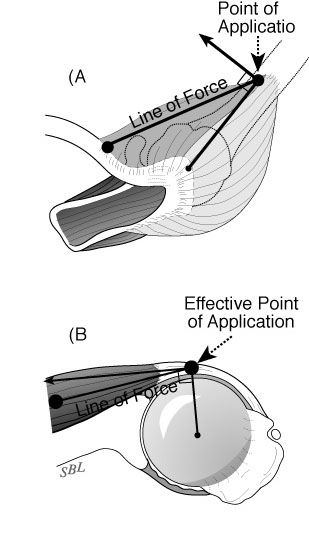
The strength of a muscle is noted in terms of the torque it can generate. We recall that torque results when a force is exerted at a distance from a fixed center of rotation. The magnitude of the torque is the product of the length of the line connecting the center of rotation to the effective attachment of the muscle (the lever arm) and the magnitude of the force perpendicular to this line.


The effective points of attachment depend on the position of the arm and are not necessarily the anatomic insertions .


The weight of a dumbbell that can be held with the arm out to the side is determined by the sum of the products of the forces and their respective lever arms divided by the lever arm of the weight to be lifted.


Throughout this discussion, the lever arms have been described as the distance between the point of action of the muscle force and the center of rotation. In order for torques to be realized, the humerus must rotate around a stable center. This is why we have placed such emphasis on the mechanisms for centering of the head in the section on Stability. Without this precise centering, the effectiveness of the muscle contractions would be lost.


Muscles are also characterized by their excursion – the change in length over which they can provide force. In order to be effective throughout a range of motion, the centimeters of excursion of a muscle must match the product of the muscle’s lever arm in centimeters and the range of motion in degrees divided by the number of degrees in a radian.


So, while longer lever arms result in more torque per unit muscle force, they also require greater muscle excursion.


Muscles provide the maximal amount of force when operating close to the middle of their excursion with a drop off in maximal force as the muscle length approaches maximal extension or maximal contraction.


Muscles that have been chronically detached, as in long standing cuff tears, tend to lose their excursion. Even if they are reattached, the length over which they can exert an effective force is often diminished.

A special feature of the shoulder is that the powerful thoracoscapular muscles can position the entire glenohumeral joint along with the deltoid and the rotator cuff through a range of approximately 40 degrees of adduction/abduction


and 40 degrees of protraction/retraction


This ’portability’ of the glenohumeral joint enables the scapulohumeral muscles to carry out most shoulder functions in the mid-range of their excursion where they are the strongest. It is of note that the humeroscapular position is essentially the same for the knockout punch, the bench press, the point of racquet contact with the ball in the tennis serve, and the moment of release for the baseball pitch, even though the scapulothoracic positions are quite different.

One of the relatively unexplored facets of active shoulder strength is the requirement for muscular balance. In the knee, the muscles generate torques about a relatively fixed axis: that of flexion-extension. If the quadriceps pull is a bit off-center, the knee still extends. In the shoulder, no such fixed axis exists. In a specified position, each muscle creates a unique set of rotational moments. Imagine a rope attached to a sphere. The motion resulting from pulling on the rope depends on the orientation of the sphere as well as the direction of pull on the rope. If some of the resulting motion were undesired, it would need to be cancelled out by attaching another rope and pulling on it to resist the unwanted motion. So, for example, the anterior deltoid exerts moments in forward elevation, internal rotation, and cross-body movement.


If elevation without cross body movement is desired, the posterior deltoid must negate the cross body moment of the anterior deltoid.


Similarly, if elevation without rotation is desired, the cross-body and internal rotation moments of this muscle must be resisted by other muscles (such as the posterior deltoid and infraspinatus). These balancing activities take place at an additional energy cost. However, if the infraspinatus function is lacking, it is difficult to flex the arm without internal rotation.

--

Here are some videos that are of shoulder interest
Shoulder arthritis - what you need to know (see this link).
How to x-ray the shoulder (see this link).
The ream and run procedure (see this link).
The total shoulder arthroplasty (see this link).
The cuff tear arthropathy arthroplasty (see this link).
The reverse total shoulder arthroplasty (see this link).
The smooth and move procedure for irreparable rotator cuff tears (see this link).
Shoulder rehabilitation exercises (see this link).