Showing posts with label supraspinatus. Show all posts

Friday, November 30, 2018

20 year outcome of repair of isolated supraspinatus tendon tears

Clinical and structural outcome twenty years after repair of isolated supraspinatus tendon tears

These authors evaluated the clinical and structural outcome 20 years after repair of isolated
supraspinatus tendon tears. The average age at surgery for these patients was 52 years. 137 patients were recalled for a clinical and imaging assessment. Six patients (4.3%) had died from unrelated causes, 52 (38.0%) were lost to follow-up, and 13 (9.5%) had undergone reoperations leaving 66 patients for clinical evaluation. Radiographs and magnetic resonance imaging were additionally performed for 45 patients.

The Constant Score (CS) improved from an average of 51.5  points preoperatively to 71 points. At followup, the average Simple Shoulder Test score was 9.5 out of 12.

Failure of the repair (Sugaya IV-V) was present in 19 of 45 patients (42 %),.

There was advanced fatty infiltration (Goutallier III-IV) of the supraspinatus in 12 (27%) and of the infraspinatus muscle in 16 (35%). 

Supraspinatus atrophy was present in 12 patients (28%), advanced arthritis in 6, and cuff tear arthropathy in 12 (30%). 

Clinical outcomes were significantly inferior for shoulders with fatty infiltration.


Comment: This is an important study in that it shows
(1)  that only 58% of repairs of isolated supraspinatus tears remain intact at 20 years and only  8.9% of the tendons were “normal” (Sugaya type I). i.e.  rotator cuff degeneration often progresses as patients age from 52 to 72 and
(2) patients with failed cuff repairs had good shoulder function, specifically a Simple Shoulder Test score of 8 out of 12 i.e. an intact supraspinatus is not essential to a functional shoulder.

===

We have a new set of shoulder youtubes about the shoulder, check them out at this link.

Be sure to visit "Ream and Run - the state of the art"  regarding this radically conservative approach to shoulder arthritis at this link and this link

Use the "Search" box to the right to find other topics of interest to you.


You may be interested in some of our most visited web pages   arthritis, total shoulder, ream and runreverse total shoulderCTA arthroplasty, and rotator cuff surgery as well as the 'ream and run essentials'

Saturday, September 2, 2017

Rotator cuff tears involving the supraspinatus - repair or not - outcomes and cost-effectiveness

Ten-Year Multicenter Clinical and MRI Evaluation of Isolated Supraspinatus Repairs

These authors reported the 10-year outcomes of isolated supraspinatus repairs in 288 of 511 patients who, in 2003, underwent repair of full-thickness isolated supraspinatus tears at a mean age of 56.5 ± 8.3 years; half were men.

The repair was open (anterosuperior approach) in 113 shoulders (39%) and arthroscopic in 175 shoulders (61%). Acromioplasty was performed in 273 shoulders (95%), while biceps tenodesis or tenotomy was performed in 92 (32%) and 58 shoulders (20%), respectively. All tendons were repaired using a single row of suture anchors (149 anchor screws, including 116 that were metallic and 33 that were resorbable), interference fit anchors (34, including 16 that were metallic and 18 that were resorbable), or transosseous repairs (83 shoulders, with material unspecified in 22 shoulders). All repairs were “watertight” at the end of the intervention.

Following surgery, the arm was supported in a sling with the arm at the side (n = 138) or at 20 degrees of abduction (n = 150) for a mean of 5.6 ± 1.0 weeks (median, 6 weeks; range, 1 to 8 weeks). All centers followed the same rehabilitation protocol, with passive-motion exercises initiated on the first postoperative day, and when possible, hydrotherapy after skin healing. Active shoulder motion was allowed after a mean of 8.2 ± 6.8 weeks (median, 6 weeks; range, 3 to 50 weeks). Patients were not allowed to perform any strengthening or strenuous work for 6 months after the surgery. Light sports and demanding activities were allowed after 6 months.

188 of the 511 could not be reached, and 35 were excluded because they had a reoperation (17 had a retear, 7 had conversion to an arthroplasty, and 11 had other causes).  210 patients were also evaluated using magnetic resonance imaging (MRI).

Thirty shoulders (10.4%) had complications, including stiffness (20 shoulders), infection (1 shoulder), and other complications (9 shoulders). 

The total Constant score improved from a mean of 51.8 ± 13.6 points (range, 19 to 87 points) preoperatively to 77.7 ± 12.1 points (range, 37 to 100 points) at 10 years. 
At the 10-year follow-up evaluation, the mean Subjective Shoulder Value (SSV) was 84.9 ± 14.8 (range, 20 to 100), and the mean Simple Shoulder Test (SST) was 10.1 ± 2.2 (range, 3 to 12). 

Of the 210 shoulders evaluated using MRI, the repair integrity was Sugaya type I (normal appearing) in 26 shoulders (12%), type II (normal thickness, high signal) in 85 (41%), type III (less than 50% normal thickness) in 59 (28%), type IV (small full thickness defect) in 27 (13%), and type V (medium or large defect) in 13 (6%).

The total Constant score at the final follow-up was significantly associated with tendon healing (p < 0.005) and was inversely associated with preoperative fatty infiltration (p < 0.001). Neither the surgical approach nor the preoperative retraction influenced the outcomes. 

The rate of retears was significantly higher (32%) for patients whowere >65 years old than in those who were 55 to 65 years old (20%) or <55 years old (15%).

Comment:
Recognizing that their paper did not have a control group, the authors contrasted their results with those of another recent study:
Treatment of Nontraumatic Rotator Cuff Tears: A Randomized Controlled Trial with Two Years of Clinical and Imaging Follow-up that reviewed 180  shoulders with symptomatic, nontraumatic, supraspinatus tears that were randomized into one of three cumulatively designed intervention groups: the physiotherapy-only group (denoted as Group 1), the acromioplasty and physiotherapy group (denoted as Group 2), and the rotator cuff repair, acromioplasty, and physiotherapy group (denoted as Group 3). That study found no significant differences (p = 0.38) in the mean change of Constant score: 18.4 points (95% confidence interval, 14.2 to 22.6 points) in Group 1, 20.5 points (95% confidence interval, 16.4 to 24.6 points) in Group 2, and 22.6 points (95% confidence interval, 18.4 to 26.8 points) in Group 3. There were no significant differences in visual analog scale for pain scores (p = 0.45) and patient satisfaction (p = 0.28) between the groups. At two years, the mean sagittal size of the tendon tear was significantly smaller (p < 0.01) in Group 3 (4.2 mm) compared with Groups 1 and 2 (11.0 mm). 

Rotator cuff repair and acromioplasty were significantly more expensive than physiotherapy only (p < 0.01).There was no significant difference in clinical outcome between the three interventions at the two-year follow-up. 

Conclusion: From these studies it seems clear that for many patients with supraspinatus tears, non-operative management can be a cost-effective management strategy, not only because the treatment costs less, but because it avoids the "patients were not allowed to perform any strengthening or strenuous work for 6 months after the surgery -light sports and demanding activities were allowed after 6 months" restriction that are part of a repair.

So, when considering the management of a rotator cuff tear that did not arise from a traumatic episode, there is surely time to try non-operative management to avoid the cost, risks, and downtime of surgery. It is of interest that an article attempting to model the societal and economic value of rotator cuff repair is often quoted without consideration of that simple fact.


Those authors point out rotator cuff tears are common in the United States, but the effect of cuff tears on earnings, missed workdays, and disability payments has not been well defined. As they point out in the introduction, long-term clinical studies of cost effectiveness 'do not exist'. This is a sad commentary on the state of clinical research in that hundreds of thousands of cuff repairs are performed each year, providing a huge opportunity for long term studies of the actual costs of cuff tears as well as the effectiveness of operative and non-operative management of different types of cuff tears in different types of patients using different techniques by different providers (see the 4Ps).

In the absence of real data, the authors' goal was to estimate the value of surgical treatment for full-thickness rotator cuff tears from a societal perspective using a Markov decision model of the lifetime direct and indirect costs (e.g. inability to work, lower wages, missed workdays, disability payments) associated with surgical and continued nonoperative treatment for symptomatic full-thickness rotator cuff tears. Patients with a symptomatic full-thickness rotator cuff tear 'underwent' either open or arthroscopic rotator cuff repair or continued to receive nonoperative treatment. After one year, all rotator cuff repairs resulted in either (1) healed rotator cuff repair (symptomatic and asymptomatic), (2) asymptomatic retear, (3) symptomatic retear, or (4) death; shoulders treated without surgery resulted in either (1) symptomatic tear, (2) asymptomatic tear, or (3) death.

The model indicated that surgical treatment results in an average improvement of 0.62 QALY. The model suggested that the age-weighted mean total societal savings from rotator cuff repair compared with nonoperative treatment was $13,771 over the lifetime of the patient. Savings ranged from + $77,662 for patients who are thirty to thirty-nine years old to - $11,997 for those who are seventy to seventy-nine years old. 

The model concluded that "rotator cuff repair is cost-effective for all populations" and "The estimated lifetime societal savings of the approximately 250,000 rotator cuff repairs performed in the U.S. each year was $3.44 billion." This is a staggering figure.

Because actual data were not available for many of the key elements in the model, values were based on Level V assumptions. As the authors point out 'evidence to support some of the model assumptions is limited.'These assumptions had a strong influence on the results. Here are some considerations of the assumptions used:

(1) It was assumed that all symptomatic full-thickness rotator cuff tears assigned to the repair group were repairable, whereas this does not seem to be the common experience
(2) The model recognizes that healed repairs can be symptomatic or asymptomatic, but does not assume any disability if the healed repair is symptomatic, whereas we have all seen patients who are unable to return to work after a symptomatic "successful" cuff repair.
(3) The long term retear rate after cuff repair was assumed to be 2%, whereas a recent post found retear rates after one year approximating 10%.
(4) Patient outcomes for all repairs were assumed to be the same as those of seventy-three patients who underwent surgery at a large orthopaedic surgery group; presumably those cases represented careful selection of patients, of reparable cuff tears, and excellent surgical technique by a well trained shoulder surgeon, whereas many patients with cuff tears are not prime surgical candidates, have irreparable cuff tears and may be cared for by surgeons who are not specialized in shoulder (see the 4Ps: problem, patient, procedure, physician).
(5) It was assumed that workers lost an average of twenty-eight additional days as a result of rotator cuff repair compared with those undergoing non-operative treatments, whereas recent data suggests that repairs should be protected from loading for up to six months after surgery. In that many cuff tears occur in those with physical laboring jobs, the 28 days seems like a short interval for return to work. Furthermore, it is not clear that cuff tears treated with non-operative management need to miss work at all.
(6) The model assumed complication rates of stiffness (2.5%) and of infection (0.1%) following rotator cuff repair, whereas some studies have reported a complication rate of 10.6% of which the most common was persistent stiffness.
(7) The model used an expensive approach to non-operative management costing $1802, whereas there is substantial evidence that an inexpensive home program provides an effective method for non-operative management.
(8) The model assumes that only 5% of asymptomatic retears following repair become symptomatic annually, whereas it assumes that 8.8% of asymptomatic tears managed non-operatively become symptomatic per year.


These and other assumptions led the model to conclude that "rotator cuff repair produces societal cost savings for patients under the age of sixty-one years and is cost-effective for all patients". However, it is easy to see that different assumptions might have led to a different answer. 

It may be worthwhile to reflect on whether this model addresses the right question. No one would doubt that a successful rotator cuff repair that returns a worker to work is a good thing for that person and for society. On the other hand non-operative management can be of value to many patients. The real question is 'how do we decide which rotator cuff tears in which patients will benefit from rotator cuff repair and the critical post-operative rehabilitation period that must follow?'. The model's conclusion that 'rotator cuff repair is cost-saving across all patients' does not change the fact that many cuff tears are not reparable and that many patients with cuff tears are not good candidates for cuff repair. 

In terms of guidance, the model leaves us with the quizzical statement "Although rotator cuff repair is cost-saving across all patients, nonoperative treatment is the preferred strategy for a large number of patients. "


===
The reader may also be interested in these posts:
Healing through joint replacement
Supporting progress in shoulder surgery
Consultation for those who live a distance away from Seattle.
Click here to see the new Shoulder Arthritis Book.
Click here to see the new Rotator Cuff Book
Information about shoulder exercises can be found at this link.
Use the "Search" box to the right to find other topics of interest to you.
You may be interested in some of our most visited web pages including:shoulder arthritis, total shoulder, ream and run, reverse total shoulder, CTA arthroplasty, and rotator cuff surgery as well as the 'ream and run essentials'See from which cities our patients come.

Sunday, June 14, 2015

Rotator cuff tears - which supraspinatus tears are most likely to propagate?


Effect of tear location on propagation of isolated supraspinatus tendon tears during increasing levels of cyclic loading.

These authors tested 23 fresh-frozen human cadaveric shoulders under increasing levels of cyclic loading. 1 cm tears were created in the anterior third (Group A, n=10) or the middle third (Group M, n=13) of the supraspinatus tendon. 

No significant differences were found between the anterior-third tear group (Group A) and the middle-third tear group (Group M) in maximum load (p=0.09) or tear area (p=0.6). However, Group A first reached a 100% increase in tear size at a significantly lower load than Group M (p=0.03). 

Strong negative correlations were detected between age and maximum load in Group A (τ=-0.82) and Group M (r=-0.63).

Comment: As pointed out by Clark and Harryman in 1992, the anterior part of the supraspinatus tendon is the strongest part of that tendon, just as the upper part of the subscapularis is the strongest part of that tendon. 

This cadaver model suggests that an incision in the anterior supraspinatus may be more likely to propagate than a tear of similar length in the middle of the tendon.

The effect of age on tendon strength was again noted and may help understand why older individuals are more likely to have cuff tears and why repairs of these tears are less likely to achieve durable integrity.

===

Use the "Search" box to the right to find other topics of interest to you.


You may be interested in some of our most visited web pages including:shoulder arthritis, total shoulder, ream and run, reverse total shoulder, CTA arthroplasty, and rotator cuff surgery as well as the 'ream and run essentials'


See from which cities our patients come.


See the countries from which our readers come on this post.

Wednesday, August 31, 2011

Rotator Cuff 6 - Clinical examination for a rotator cuff tear

Today, we'll consider how the physical examination of a shoulder can help discern if a rotator cuff problem may be present


Inspection can reveal atrophy, as well as incisions and scars indicating previous surgery and penetration. The physical examination may reveal subacromial roughness from hypertrophic bursa or from the superior edges of torn tendon rubbing against the coracoacromial arch that can be felt by a hand placed over the acromion as the shoulder is rotated.

Palpation can reveal gaps in the cuff tendon as shown in the figures below.


The range of motion examination can reveal restrictions due to contracture surrounding the area of injury or scarring in the humeroscapular motion interface. Limited range of motion is particularly common in the presence of partial thickness tears of the rotator cuff. The most common partial thickness tear is that of the supraspinatus tendon. In this situation it is characteristic to have loss of the motions that places this tendon under tension – internal rotation with the arm at the side


 internal rotation of the arm in 90 degrees of abduction


 and cross body movement

While, in the past, pain on these maneuvers has been attributed to ‘impingement,’ it is now recognized as being due to the pull on the partially torn tendon attachment which is analogous to the pain experienced on stretching the origin of the extensor carpal radialis brevis in tennis elbow.


Cuff strength is conveniently examined using manual tests of isometric torque. Isometric testing removes potential interference from pain on motion, from crepitance, or from stiffness. These tests examine the integrity of the supraspinatus

 the infraspinatus

and the subscapularis


Pain or weakness on these maneuvers constitutes an abnormal tendon sign for the specified tendon-muscle unit. These tests are relatively specific to each muscle, but are not specific to the cause of weakness; for example, a suprascapular nerve lesion or a cuff tear may each produce abnormal supraspinatus and infraspinatus tendon signs. 

Using these simple tests, the examiner can assess crepitance, loss of range of motion and pain or weakness on examination of specific tendons.


--
Here are some videos that are of shoulder interest
Shoulder arthritis - what you need to know (see this link).
How to x-ray the shoulder (see this link).
The ream and run procedure (see this link).
The total shoulder arthroplasty (see this link).
The cuff tear arthropathy arthroplasty (see this link).
The reverse total shoulder arthroplasty (see this link).
The smooth and move procedure for irreparable rotator cuff tears (see this link).
Shoulder rehabilitation exercises (see this link).

Thursday, August 25, 2011

Rotator Cuff 1 - Overview

The rotator cuff has two main functions in the shoulder: (1) it stabilizes the humeral head in the glenoid socket and (2) it works with the deltoid and other shoulder muscles to help provide the strength necessary for the shoulder to do its work.


In this video, one can see how the supraspinatus tendon, the most commonly injured tendon of the rotator cuff, normally passes smoothly below the coracoacromial arch as the arm is lifted from the side in this cadaver demonstration.


For a short cut to an overview of the cuff and the spectrum of rotator cuff disease, see
this page and the gallery on its right.

You may also like to see our recent
review of rotator cuff failure from the New England Journal of Medicine.

---


We'll take a step back and consider some of the principles of shoulder strength in depth.


When a muscle contracts, it approximates its effective origin and insertion with a force limited by its physiological cross sectional area. Muscles that have large cross sections, like the deltoid, can provide a larger maximal force than a muscle with a small cross section like the subclavius. The contractile elements within a muscle are connected to tendon fibers that connect to the bony origin and insertion. The tendon insertion is structured so that there is a smooth mechanical transition from flexible tendon to stiff bone.


This smooth transition enables the insertion to manage the repeated bending loads to which it is subject.


When the tissues providing this smooth transition degenerate they become stiff and weak so that the tendon insertion becomes increasingly vulnerable to failure.


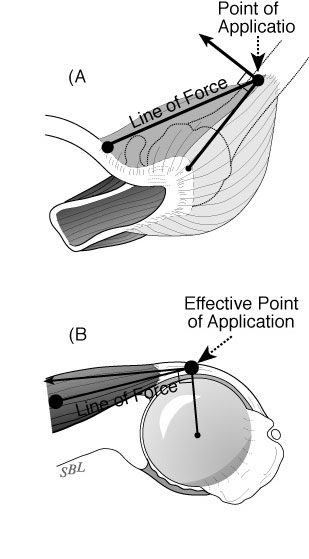
The strength of a muscle is noted in terms of the torque it can generate. We recall that torque results when a force is exerted at a distance from a fixed center of rotation. The magnitude of the torque is the product of the length of the line connecting the center of rotation to the effective attachment of the muscle (the lever arm) and the magnitude of the force perpendicular to this line.


The effective points of attachment depend on the position of the arm and are not necessarily the anatomic insertions .


The weight of a dumbbell that can be held with the arm out to the side is determined by the sum of the products of the forces and their respective lever arms divided by the lever arm of the weight to be lifted.


Throughout this discussion, the lever arms have been described as the distance between the point of action of the muscle force and the center of rotation. In order for torques to be realized, the humerus must rotate around a stable center. This is why we have placed such emphasis on the mechanisms for centering of the head in the section on Stability. Without this precise centering, the effectiveness of the muscle contractions would be lost.


Muscles are also characterized by their excursion – the change in length over which they can provide force. In order to be effective throughout a range of motion, the centimeters of excursion of a muscle must match the product of the muscle’s lever arm in centimeters and the range of motion in degrees divided by the number of degrees in a radian.


So, while longer lever arms result in more torque per unit muscle force, they also require greater muscle excursion.


Muscles provide the maximal amount of force when operating close to the middle of their excursion with a drop off in maximal force as the muscle length approaches maximal extension or maximal contraction.


Muscles that have been chronically detached, as in long standing cuff tears, tend to lose their excursion. Even if they are reattached, the length over which they can exert an effective force is often diminished.

A special feature of the shoulder is that the powerful thoracoscapular muscles can position the entire glenohumeral joint along with the deltoid and the rotator cuff through a range of approximately 40 degrees of adduction/abduction


and 40 degrees of protraction/retraction


This ’portability’ of the glenohumeral joint enables the scapulohumeral muscles to carry out most shoulder functions in the mid-range of their excursion where they are the strongest. It is of note that the humeroscapular position is essentially the same for the knockout punch, the bench press, the point of racquet contact with the ball in the tennis serve, and the moment of release for the baseball pitch, even though the scapulothoracic positions are quite different.

One of the relatively unexplored facets of active shoulder strength is the requirement for muscular balance. In the knee, the muscles generate torques about a relatively fixed axis: that of flexion-extension. If the quadriceps pull is a bit off-center, the knee still extends. In the shoulder, no such fixed axis exists. In a specified position, each muscle creates a unique set of rotational moments. Imagine a rope attached to a sphere. The motion resulting from pulling on the rope depends on the orientation of the sphere as well as the direction of pull on the rope. If some of the resulting motion were undesired, it would need to be cancelled out by attaching another rope and pulling on it to resist the unwanted motion. So, for example, the anterior deltoid exerts moments in forward elevation, internal rotation, and cross-body movement.


If elevation without cross body movement is desired, the posterior deltoid must negate the cross body moment of the anterior deltoid.


Similarly, if elevation without rotation is desired, the cross-body and internal rotation moments of this muscle must be resisted by other muscles (such as the posterior deltoid and infraspinatus). These balancing activities take place at an additional energy cost. However, if the infraspinatus function is lacking, it is difficult to flex the arm without internal rotation.

--

Here are some videos that are of shoulder interest
Shoulder arthritis - what you need to know (see this link).
How to x-ray the shoulder (see this link).
The ream and run procedure (see this link).
The total shoulder arthroplasty (see this link).
The cuff tear arthropathy arthroplasty (see this link).
The reverse total shoulder arthroplasty (see this link).
The smooth and move procedure for irreparable rotator cuff tears (see this link).
Shoulder rehabilitation exercises (see this link).