Showing posts with label Glenoid dysplasia. Show all posts

Friday, September 8, 2023

How should the retroverted glenoid be managed? Lessons from glenoid dysplasia.

 Thanks to Mihir Sheth, one of our current shoulder fellows, for helping with this post.


There is much current interest in the management of glenoid retroversion 


The dysplastic glenoid is a malformation characterized by substantial (>25 degrees) retroversion of the glenoid articular surface. The posterior glenoid labrum is typically hypertrophic (red arrow).
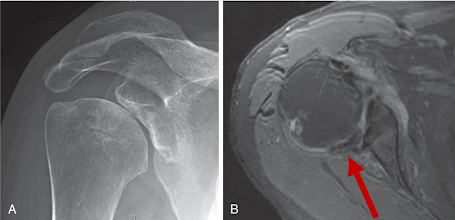
Publications on glenoid hypoplasia provide important lessons about glenoid retroversion.

Perhaps the most important recent publication, Early to midterm outcomes of anatomic shoulder arthroplasty performed on dysplastic glenoids evaluated the outcomes of anatomic total shoulder arthroplasties (TSA) with standard (nonaugmented) glenoid components for 29 retroverted dysplastic (type C) glenoids in comparison to a matched group of 29 TSAs for glenoids with non retroverted, minimally eroded glenoids (type A1) using the same surgical technique and implant by the same surgeon.

Type C morphology was defined as having a uniconcave glenoid with greater than 25° of retroversion and characteristic features, including hypoplasia of the posteroinferior glenoid or capular neck and reduced glenoid depth. 

There were no significant differences preoperatively among patients with type C and and type A1 glenoids with respect to sex, age, BMI, dominant side shoulder surgery, comorbidities, and length of followup. 

A single surgeon performed all the arthroplasties using a cemented standard (nonaugmented) all-polyethylene glenoid (pegged or keeled) with a press-fit humeral stem. No effort was made to correct glenoid version through reaming or posterior bone graft. No patients underwent posterior capsulorrhaphy

In the 29 patients with type C glenoids, there were 4 postoperative complications: 
aseptic glenoid loosening (2), isolated subscapularis failure (1), and superior migration of the humeral head (1). 1 patient required revision to reverse shoulder arthroplasty (RSA) and 1 patient for whom revision to RSA was recommended, giving an overall complication rate of 14% and revision rate of 7%. 

In the 29 matched cohort patients with type A1 glenoids, there were 10 postoperative complications resulting in a 17% complication rate and a 12% revision rate. All 7 revisions were to RSA for aseptic glenoid loosening at a mean of 7 years from index TSA .

Clinical outcomes and radiographic outcomes were not different between the two groups.


This study found that Walch type C dysplastic glenoids - defined by severe retroversion without posterior humeral head decenting- were effectively and safely managed by standard anatomic total shoulder arthroplasty components without attempting to "correct" glenoid retroversion by high side reaming, bone graft, augmented glenoid components, or reverse total shoulder arthroplasty. The results of TSA for patients with retroverted displastic glenoids were not inferior to those with the anatomically simpler type A1 glenoids that did not have pathologic retroversion.

Hypoplasia of the glenoid. A review of sixteen patients Patients with glenoid dysplasia having high degrees of retroversion can be asymptomatic. Those with symptoms can benefit from a non-operative,  patient-conducted rehabilitation program. A five years followup, most patients were able to return to work with resolution of symptoms. Progressive degenerative joint disease develops in some patients with the onset of refractory symptoms.

Shoulder arthroplasty for osteoarthritis secondary to glenoid dysplasia: an update Fourteen shoulders with advanced degenerative changes of the glenoid articular surface underwent total shoulder arthroplasty.  Prior to insertion of the glenoid component, eccentric reaming of the anterior aspect of the glenoid was used to in attempt to change the glenoid version. Five of the fourteen total shoulders were revised: three for glenoid component failure and two for infection. The authors concluded that in cases of glenoid dysplasia, surgery should be avoided "unless the symptoms are extreme".

Glenoid Dysplasia  Shoulders with glenoid dysplasia characteristically have over 25 degrees of glenoid retroversion. In many patients, there is an extended period of relative normalcy before the onset of symptoms. Interestingly, the humeral head typically remains centered in the socket inspire of the high degrees of retroversion.


Nonsurgical treatment is reasonably successful in younger patients, but premature degenerative changes frequently occur. Although favorable results can be obtained with the use of anatomic arthroplasty, continued subluxation and glenoid component failure can lead to unacceptable outcomes. 

Characterization of the dysplastic Walch type C glenoid

 The humeral is typically centered on a uniconcave glenoid articular surface (red line drawn perpendicular to the center of the glenoid arcticular surface). Because of the retroversion, most of the humeral head lies posterior to the plane of the glenoid (purple line).

A standard glenoid component can be inserted on the glenoid surface without changing glenoid version. 


While this may result in perforation of the cortical bone of the anterior glenoid neck, this does not compromise glenoid component fixation, especially if a component with a fluted central peg is used.


Anatomic shoulder arthroplasty in Walch type C glenoid deformity: mid- to long-term outcomes reviewed 26 of 30 patients having hypoplastic glenoid morphology and glenohumeral osteoarthritis having an anatomic total shoulder arthroplasty (aTSA) followed up at an average of 8.5 years after surgery. The humeral head was typically centered on a retroverted glenoid as shown below.


Seven different surgeons performed the aTSAs. There was a substantial variability in the surgical technique: an augmented component was used in 9 patients; a standard component was used in 17.  Of the 17 patients with non-augmented components, 9 underwent partial correction with asymmetrical reaming, 3 received a mini-inset glenoid component inserted without changing glenoid version, and 2 had an anteriorly offset humeral component. 

Patients were clinically improved and generally satisfied with the outcome. No statistically significant differences in any outcome measure were observed between patients with augmented glenoid components and those with non-augmented glenoid components. One revision to reverse shoulder arthroplasty was performed for instability at 7 years postoperatively after a traumatic dislocation. 

The changes in glenoid version from the use of partial correction or the use of augmented glenoid components was not stated, so the importance of modifying glenoid version is not known for these patients.

Comment: Taken together, these articles indicate that non-operative management is helpful in patients with glenoid dysplasia not having disabling arthritis. For those patients with disabling arthritis, total shoulder arthroplasty can be successful. At present, there is not good evidence supporting the need to "correct" glenoid retroversion in the shoulder with glenoid dysplasia (see Glenoid Version: Acceptors and Correctors). 

It is worthwhile considering whether the approach used by some of these authors to the retroverted dysplastic glenoid with a centered humeral head - no version correction, standard anatomic glenoid component - might also be applicable to the type B3 glenoid which is also retroverted with a centered humeral head.

It is also worthwhile considering whether the application of 3 dimensional CT based planning to shoulders with glenoid dysplasia may lead surgeons to use more complex implants than those standard components successfully used in some of these studies.

You can support cutting edge shoulder research that is leading to better care for patients with shoulder problems, click on this link.

Follow on twitter: https://twitter.com/shoulderarth
Follow on facebook: click on this link
Follow on facebook: https://www.facebook.com/frederick.matsen
Follow on LinkedIn: https://www.linkedin.com/in/rick-matsen-88b1a8133/

Here are some videos that are of shoulder interest
Shoulder arthritis - what you need to know (see this link).
How to x-ray the shoulder (see this link).
The ream and run procedure (see this link).
The total shoulder arthroplasty (see this link).
The cuff tear arthropathy arthroplasty (see this link).
The reverse total shoulder arthroplasty (see this link).
The smooth and move procedure for irreparable rotator cuff tears (see this link).
Shoulder rehabilitation exercises (see this link).


Thursday, January 28, 2021

Glenoid dysplasia

 A 50 year old lady presented with episodic feelings of instability in the left shoulder. Her radiographs show a dysplastic glenoid with superior and posterior decentering. 


An MRI showed that with the arm at the side, the humeral head was centered on the glenoid. This shows the effect of arm position on the degree of decentering. The posterior fibrous anlage of the glenoid is also seen on this image.


How should this shoulder be treated?

Interestingly enough this patient had no pain and essentially full active elevation as shown below. As a result, she will be followed with non-operative management.


To see our approach to total shoulder arthroplasty, see this link.
To support our research to improve outcomes for patients with shoulder problems, click here.
To subscribe to this blog, enter your email in the box to your right that looks like the below


===
How you can support research in shoulder surgery Click on this link.

We have a new set of shoulder youtubes about the shoulder, check them out at this link.

Be sure to visit "Ream and Run - the state of the art" regarding this radically conservative approach to shoulder arthritis at this link and this link

Use the "Search" box to the right to find other topics of interest to you.

You may be interested in some of our most visited web pages  arthritis, total shoulder, ream and runreverse total shoulderCTA arthroplasty, and rotator cuff surgery as well as the 'ream and run essentials'

Thursday, September 17, 2020

Total shoulder for type C glenoids: is it necessary to use augmented glenoids or to change glenoid version?

Early to midterm outcomes of anatomic shoulder arthroplasty performed on dysplastic glenoids

These authors evaluated the outcomes of total shoulder arthroplasty (TSA) for Walch type C dysplastic

glenoids with standard (non-augmented) glenoid components compared with TSA for glenoids with concentric wear and minimal erosion (Walch type A1). 


Type C morphology was defined as having a uniconcave glenoid with greater than 25 degrees of retroversion and characteristic features, including hypoplasia of the posteroinferior glenoid or capular neck and reduced glenoid depth, but without humeral head decentering on the face of the glenoid. See this link.


Twenty-nine patients met inclusion criteria of a preoperative Walch type C dysplastic glenoid, treatment with TSA using standard (non-augmented) glenoid components and a minimum of 2-years clinical follow-up.  Importantly, at the time of surgery no effort was made to correct glenoid version through reaming or posterior bone graft.


A matched cohort of 58 patients with a type A1 glenoid and minimum of 2-years clinical follow-up for anatomic shoulder arthroplasty served as the control group. Matching was based on age, gender, BMI, shoulder dominance, and surgery date.


The mean follow-up for this study was 4.5 years (SD 2.6; range, 2-10). 


Baseline measures were not significantly different between the Walch type C dysplastic group and the matched type A1 cohort. 


The Walch type C group had no significant differences in ASES score, ASES pain, or SANE score compared to the matched type A1 cohort. The average percent of maximum possible improvement was 75% for each group. 


In the patients with a type C glenoid, there were 4 postoperative complications in  29 patients including one patient that required revision to reverse shoulder arthroplasty (RSA) and one patient that revision to RSA was recommended, giving an overall complication rate of 14% and revision rate of 7%. The complications were aseptic glenoid loosening (2), isolated subscapularis failure (1), and superior migration of the humeral head (1).


In the matched cohort patients with a type A1 glenoid, there were 10 postoperative complications in 10 of 58 patients with 7 revisions to RSA, resulting in a 17% complication rate and a 12% revision rate. All 7 revisions were to RSA for aseptic glenoid loosening at a mean of 7 years from index TSA (range, 3 to 10 years). Three of these 7 patients required glenoid bone grafting at the time of revision. Additionally, 2 patients were found to have nerve palsies following surgery; one had a partial brachial plexopathy presenting as mild biceps and hand weakness that resolved at 2 months, and the other an axillary nerve palsy in which motion and strength returned at 6 months but sensation has not returned at 5 years.


There were no differences in the rate of radiographic lucencies or Lazarus scores.


These authors concluded that anatomic TSA using standard, non-augmented glenoid components reliably produced clinically significant improvements in pain and function and similar short to midterm outcomes in patients with Walch type C dysplastic glenoids compared to patients with type A1 glenoids.


Comment: This paper again demonstrates that changing glenoid version either through preparation of the glenoid bone or through the use of augmented glenoid components does not appear to be necessary, even in extreme cases of glenohumeral pathoanatomy.  To see a related article, click on this link:

Does Postoperative Glenoid Retroversion Affect the 2-Year Clinical and Radiographic Outcomes for Total Shoulder Arthroplasty?


Our time tested approach to total shoulder arthroplasty is shown in this link.


To subscribe to this blog, enter your email in the box to your right that looks like the below


===
How you can support research in shoulder surgery Click on this link.

We have a new set of shoulder youtubes about the shoulder, check them out at this link.

Be sure to visit "Ream and Run - the state of the art" regarding this radically conservative approach to shoulder arthritis at this link and this link

Use the "Search" box to the right to find other topics of interest to you.

You may be interested in some of our most visited web pages  arthritis, total shoulder, ream and runreverse total shoulderCTA arthroplasty, and rotator cuff surgery as well as the 'ream and run essentials'


Tuesday, November 28, 2017

The dysplastic shoulder - hemiarthroplasty without attempt to change glenoid version

We had the opportunity to care for a 60 year old patient with a painful dysplastic shoulder. At the time of presentation the patient could perform only 3 of the 12 functions of the Simple Shoulder Test. The preoperative films are shown here

While some surgeons may have considered a total shoulder with a posteriorly augmented glenoid component, a posterior bone graft or a reverse total shoulder, we offered her a hemiarthoplasty with soft tissue balancing. No CT scans were needed to plan this surgery. No attempt was made to change glenoid version.

Two years after surgery, her SST score has improved to 9 out of 12. Her two year x-rays (below) show an impaction grafted hemiarthroplasty centered on a remodeled bony glenoid.


This conservative approach has provided a robust reconstruction and preserved bone stock so that revision could be carried out should it become necessary. For now, she feels that her shoulder continues to improve with time.
===
The reader may also be interested in these posts:


Consultation for those who live a distance away from Seattle.

Click here to see the new Shoulder Arthritis Book.

Click here to see the new Rotator Cuff Book

Information about shoulder exercises can be found at this link.

Use the "Search" box to the right to find other topics of interest to you.

You may be interested in some of our most visited web pages including:shoulder arthritis, total shoulder, ream and runreverse total shoulderCTA arthroplasty, and rotator cuff surgery as well as the 'ream and run essentials'

See from which cities our patients come.

Monday, May 8, 2017

Glenoid dysplasia - less is more

A 40 year old patient presented with pain, stiffness and clunking after prior posterior labral repair for glenoid dysplasia.

His x-rays on presentation are shown here.


Six weeks ago he had a left shoulder hemiarthroplasty, at which time there was a total loss of articular cartilage over the humeral head and partial loss over the glenoid. There was a large posterior limbus. In spite of a detailed search over and under the limbus, the suture anchors were not visable or palpable.

The humerus was prepared to receive the definitive humeral component, which was the 56 18 12. A rotator interval plication was not required to provide posterior stability. A stable articulation was achieved.

Now, 6 weeks after surgery he has improved comfort and active elevation to 120 degrees. His x-rays are shown below.


Comment: This approach seemed appropriately conservative for a young active person in comparison to posterior bone grafting, a posteriorly augmented glenoid component or a reverse total shoulder. It is also conservative in that the amount of bone removal was minimal, leaving all other reconstructive options available in the future.

==
Consultation for those who live a distance away from Seattle.

Click here to see the new Shoulder Arthritis Book.

Click here to see the new Rotator Cuff Book

Information about shoulder exercises can be found at this link.

Use the "Search" box to the right to find other topics of interest to you.

You may be interested in some of our most visited web pages including:shoulder arthritis, total shoulder, ream and runreverse total shoulderCTA arthroplasty, and rotator cuff surgery as well as the 'ream and run essentials'

See from which cities our patients come.

See the countries from which our readers come on this post.

Tuesday, October 25, 2016

The challenge of glenoid dysplasia

A man in his mid 30's was seen in 2004 with pain in the left shoulder one year after an arthroscopic procedure for glenoid dysplasia, which he said did not improve his shoulder comfort or function.


No additional surgery was recommended. Twelve years later, he returned with increasing shoulder pain and these x-rays.


He represented four months later, age 50, with increasing pain and a clicking on all shoulder motions. His x-rays show progression of degenerative joint disease and a prominent suture anchor.


Comment: This case shows the complexity of glenoid dysplasia - a condition that does not have a great surgical solution.

===

Friday, September 9, 2016

Glenoid dysplasia with severe glenoid retroversion - use of a hemiarthroplasty

The symptomatic arthritic dysplastic shoulder presents a major surgical challenge.

While it may be tempting to use posteriorly augmented glenoid components, posterior bone grafting or a reverse total shoulder, we've found that the 'less is more' approach of using a hemiarthroplasty provides a conservative approach that leaves the door open for additional procedures later should they become necessary.

Here's a one year post operative axillary (truth) view on the 60 year old left shoulder shown above who now has substantially improved shoulder comfort and function.
======

Friday, July 1, 2016

Glenoid dysplasia - evaluation and management

As pointed out in our post earlier this month (see this link), glenoid dysplasia is a failure of normal development of the bony aspect of the glenoid side of the glenohumeral articulation. Here are some typical radiographs (Thanks for Dr Jason Hsu for this nice case example.)


Note that on the axillary view the humeral head is not decentered or subluxated relative to the glenoid articular surface (note that the term 'subluxation' is often misused in retroverted glenoids see this link).


An MRI scan shows that the posterior aspect of the glenoid socket is formed by soft tissue, rather than bone and cartilage. 

Glenoid dysplasia rarely becomes symptomatic early in life and may remain minimally symptomatic into adulthood.
Symptoms may result from stiffness, instability or arthritis.
Stiffness can usually be managed with range of motion exercises. 
Instability is less common than might be imagined. It can often be managed with strengthening the external rotators to help reduce the tendency for posterior decentering. Labral repairs, posterior glenoid osteotomy and posterior bone grafting are usually not helpful in managing posterior decentering. Work on flexibility and on external rotation range and tone, avoid bench press, pushups, focus on lat pulls and rowing as shown here: http://shoulderarthritis.blogspot.com/2012/12/shoulder-exercises.html.
Arthritis is initially managed with range of motion exercises, external rotator strengthening and non-steroidal anti-inflammatory medications. Surgical management is most effectively and safely accomplished with a hemiarthroplasty as shown here without attempting to change glenoid version and without attempting to resurface the glenoid. 


Note that the humeral head prosthesis is centered in the retroverted glenoid.


Dr Hsu comments on this case:

"The X-ray and the MRI are the same patient. The x-ray does not show a narrowed joint space, but that is deceiving because it actually was just a very hypertrophic inferior and posterior labrum (not cartilage) keeping the joint space open. The MRI is also deceiving because it is only one cut where there is cartilage on the humeral head.  I performed an arthroscopy first to assess the joint. If the cartilage looked okay, I planned to do a debridement and biceps procedure given the appearance of the biceps on MRI. If there was significant cartilage wear, I would convert to a hemiarthroplasty.

After putting the scope in and doing a bit of a debridement, the entire superior humeral head was devoid of cartilage, so we converted to hemiarthroplasty pretty quickly. I also debrided back a large stump of hypertrophic labrum that was forming a step-off on the glenoid face – I didn’t resect too much, just enough to make the surface smooth.

In this case, the patient was not posteriorly unstable at all – in fact, she was a bit tight in the back, so I did not need to do any additional procedures such as an eccentric head or a rotator interval plication."
==

Recently a Canadian colleague posed these questions about a case of  dysplasia:

"Thank you again for sharing your blog and personal experience with glenoid dysplasia. The patient I previously emailed you about (57 y.o. male - in the ppt. presentation) - he has had 2 previous arthroscopic debridements in the 1990's and more recently has tried non-op modified stretching/strengthening program + cortisone injection and continues to have severe pain (not instability) symptoms unfortunately - he has advanced arthritic changes.

He wants to move forward with surgery. I have discussed that all procedures seem unpredictable. I have consented him for a hemiarthroplasty. I know after discussing this case with you, this is your "go to operation" for this shoulder condition when patients fail non-op care. I have a couple quick questions as it pertains to the hemi procedure:

1. As with all shoulder procedures, there is a risk that the hemi procedure does not work for this patient and he continues to have persistent shoulder pain (likely from glenoid erosive changes) .... in your experience, what have you offered patients as a revision procedure if the hemi fails? This is obviously not an easy revision as there are limited options due to the glenoid deficiency and inability to implant a glenoid component. I don't want to go into the procedure thinking that it will fail, but at the same time, its nice to know of a revision option (haha)

2. Is there any role for a "stemless" HH replacement or even a "resurfacing" humeral cmpt to preserve humeral bone stock?

3. Is there any role to performing a small amount of glenoid reaming (ream and run) to stimulate a biological response (fibrocartilage)? --- this would not be performed to make any version correction but more to stimulate a biological response to decrease incidence of glenoid erosion. Based on the dysplastic nature of the glenoid, I would think reaming is not possible

4. any role for using an "inset glenoid"  --- perhaps this would be a revision option .... not sure how successful it would be for the primary procedure?

5. has a CT scan preoperatively helped you determine if a glenoid component can be implanted? or in your experience, most if not all truly dysplastic glenoids do not permit implantation of a standard glenoid? This is why I wonder about this "inlay" option (not a lot of glenoid bone stock is required) ---- new technology though which makes me concerned"

We responded: 
In specific answer to your five questions:
(1) We come to hemi for the well-informed well-motivated patient with dysplasia+substantial cartilage loss by process of exclusion: TSA and R and R are risky, RSA often complex and too much for the younger patient.
We tell them that this is our best option, but that the results are not guaranteed. We tell them there is no good revision option if this fails.
(2) We can see zero advantage of stemless or resurfacing in that loss of humeral bone stock is not an issue with a hemiarthroplasty with impaction grafting and that they take away the option of an anteriorly eccentric head which may be necessary in these cases.
(3) We would not ream – difficult and unlikely to help
(4) We love the inventor of the inset glenoid, but have not fallen in love with the prosthesis
(5) We do not get more useful information from a CT scan (more radiation more expense) than we get from a standardized axillary view (as shown above). These cases point out the fallacy of using the scapular plane to define subluxation (draw Friedman’s line to see why). Subluxation is defined as the posterior displacement of the humeral head in relation to the glenoid face. In your case, there is not a lot of posterior subluxation on your well-done axillary view! We’d not be thinking about a plastic glenoid for fear of failure


Here are some other relevant posts:
http://shoulderarthritis.blogspot.com/2014/03/the-role-of-eccentric-prosthetic.html
http://shoulderarthritis.blogspot.com/2014/04/glenoid-component-rertroversion-what-to.html
http://shoulderarthritis.blogspot.com/2015/05/total-shoulder-arthroplasty-glenoid.html
http://shoulderarthritis.blogspot.com/2014/11/is-glenoid-peg-perforation-problem.html
http://shoulderarthritis.blogspot.com/2014/02/glenoid-component-fixation-does.html


===