Showing posts with label InSpace. Show all posts

Friday, November 25, 2022

Does the evidence support the use of the InSpace balloon in the treatment of irreparable rotator cuff tears?

Rotator cuff tears are one of the most common conditions of the shoulder. While many patients can accommodate the progressive age-related deterioration of the cuff with no or minimal symptoms, others have disabling symptoms and loss of function. Surgical management of symptomatic rotator cuff tears is commonly performed. For those tears that are not durably reparable, surgical options include (1) subacromial smoothing with debridement of hypertrophic bursa and the non-functioning margins of the tendon, possible biceps surgery, and manipulation as necessary to address glenohumeral stiffness, (2) partial repair, (3) superior capsular reconstruction, (4) reverse total shoulder and (5) the recently introduced Stryker InSpace subacromial balloon spacer. The InSpace device is a saline-filled biodegradable balloon that is inserted surgically in the space between the humerus and the acromion. In theory this device helps maintain the gap between the acromion and the humerus, and reduces friction.
The balloon received Food and Drug Administration (FDA) clearance in the USA in July, 2021, with approximately 29,000 devices having been implanted outside the USA before this.


The question is, in patients with symptomatic, irreparable rotator cuff tears, does adding a subacromial balloon spacer to debridement alone improve shoulder pain and function above what is achieved with debridement alone?

While small published case series have suggested encouraging clinical results, others have reported poor results or cases of inflammation and pain. For this reason, the authors of Subacromial balloon spacer for irreparable rotator cuff tears of the shoulder (START:REACTS): a group-sequential, double-blind, multicentre randomised controlled trial conducted a novel, efficient, adaptive clinical trial to assess the clinical effectiveness of a subacromial spacer balloon for people with symptomatic irreparable tears of the rotator cuff. This article was summarized in In Symptomatic Irreparable Rotator Cuff Tears, Adding a Subacromial Balloon Spacer to Debridement Resulted in Worse Shoulder Pain and Function at 12 Months.

The study was conducted by surgeons in 24 hospitals in the United Kingdom and included 117 patients (mean age, 67 years; 57% men) who had irreparable rotator cuff tears with disabling symptoms (pain and loss of function) and unsuccessful nonoperative management, and in whom surgery was warranted. Patients with reparable cuff tears, arthritis, pseudoparalysis, and subscapularis deficiency were excluded.

Eligibility was confirmed intraoperatively before randomly assigning (1:1) participants to a treatment group using a remote computer system. Using concealed allocation, patients were randomized to balloon spacer plus debridement (n = 56) or debridement alone (n = 61). Patients in the balloon spacer group received the Stryker InSpace balloon inserted by subspecialty-trained shoulder surgeons after arthroscopic debridement of the subacromial space and biceps tenotomy. Participants and assessors were masked to group assignment. Masking was achieved by using identical 1.5-cm lateral portal incisions for both procedures, blinding the operation note, and a consistent rehabilitation program offered regardless of group allocation.

The study was designed to have 90% power providing a robust answer to the clinical question.

The primary outcome was shoulder-related pain and function as measured by the Oxford Shoulder Score at 12 months. Secondary outcomes included the Western Ontario Rotator Cuff Index, EuroQol-5 Dimensions-5 Levels (EQ-5D-5L), and adverse events at 12 months. 97% of patients completed follow-up for the primary outcome. The primary outcome was the Oxford Shoulder Score at 12 months.

Pre-trial simulations using data from early and late timepoints informed stopping boundaries for two interim analyses. The study was designed to be terminated either for convincing evidence of a lack of benefit (futility) or for strong clinical benefit (efficacy). This exposes fewer people to risk of harm in the trial itself, as well as preventing harm or high costs for people having the treatment in the wider community. Having both futility and efficacy stopping rules allow a study to report early if an intervention is ineffective. Recruitment to this study was stopped when the predefined boundary for futility was crossed.

As seen in the figure and table below, in patients with symptomatic irreparable rotator cuff tears, adding the InSpace balloon to debridement only resulted in worse shoulder pain and function. The mean Oxford Shoulder Score at 12 months was 34·3 (SD 11·1) in the debridement only group and 30·3 (10·9) in the debridement with device group (mean difference adjusted for adaptive design –4·2 [95% CI –8·2 to –0·26];p=0·037) favoring debridement alone.


The adverse events for the two groups are shown below.


The authors concluded that for patients with symptomatic irreparable rotator cuff tears, adding a subacromial balloon spacer to debridement resulted in worse shoulder pain and function at 12 months.

Another recent study, InSpace Implant Compared with Partial Repair for the Treatment of Full-Thickness Massive Rotator Cuff Tears A Multicenter, Single-Blinded, Randomized Controlled Trial concluded that the outcomes of the InSpace implant were not inferior to those of partial repair for the treatment of patients with irreparable, posterosuperior, massive rotator cuff tears and an intact subscapularis.


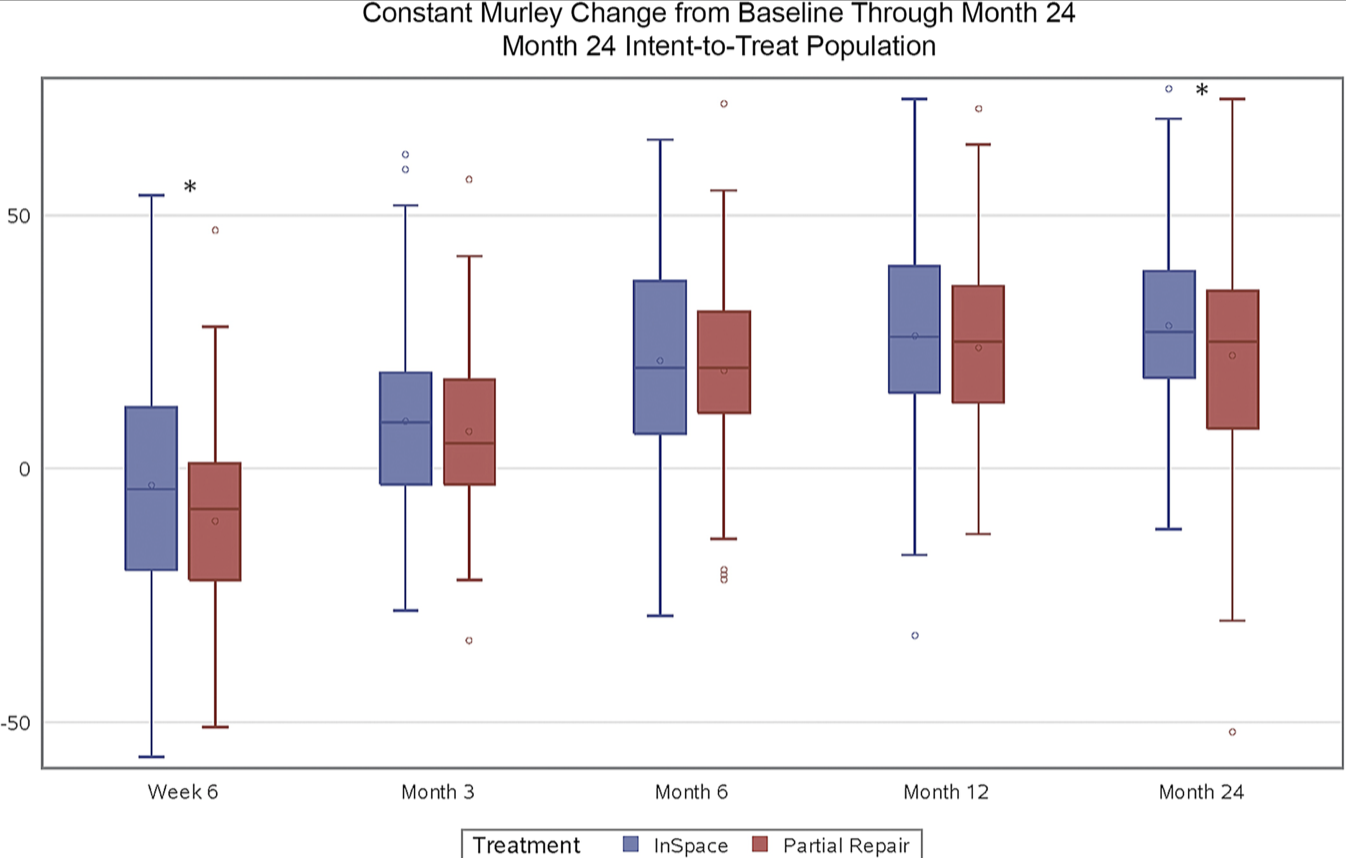
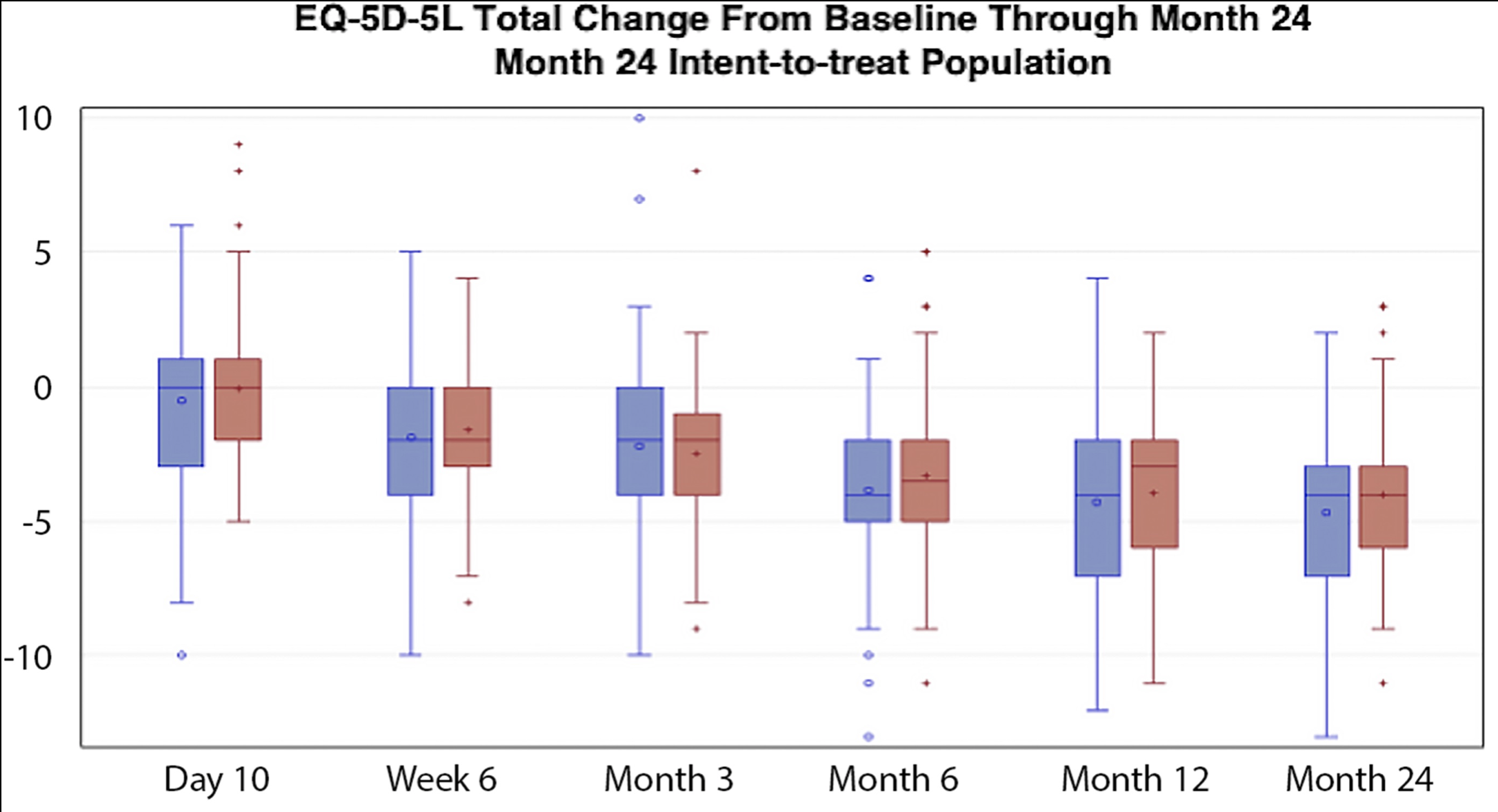


The authors of this second study described its limitations, including the fact that the evaluators of the physical examination were not blinded with respect to treatment groups.

Comment: These studies do not provide evidence of increased effectiveness of the InSpace balloon in comparison to debridement or partial cuff repair.

You can support cutting edge shoulder research that is leading to better care for patients with shoulder problems, click on this link.
To add this blog to your reading list in Google Chrome, click on the reading list icon


Follow on twitter: https://twitter.com/shoulderarth
Follow on facebook: click on this link
Follow on facebook: https://www.facebook.com/frederick.matsen
Follow on LinkedIn: https://www.linkedin.com/in/rick-matsen-88b1a8133/

Here are some videos that are of shoulder interest
Shoulder arthritis - what you need to know (see this link).
How to x-ray the shoulder (see this link).
The ream and run procedure (see this link).
The total shoulder arthroplasty (see this link).
The cuff tear arthropathy arthroplasty (see this link).
The reverse total shoulder arthroplasty (see this link).
The smooth and move procedure for irreparable rotator cuff tears (see this link).
Shoulder rehabilitation exercises (see this link).

Thursday, April 28, 2022

The InSpace balloon (Stryker, USA): is this innovation of value to patients with irreparable rotator cuff tears?

The InSpace Ballon Implant was introduced to the U.S. medical device market by Stryker in July 2021 for arthroscopic treatment of massive irreparable rotator cuff tears (see this link). The InSpace device had previously received ConformitĂ© EuropĂ©enne marking in 2010, and had been used in 29,000 procedures. The InSpace device is a saline-filled biodegradable balloon that is inserted surgically in the space between the humerus and the acromion. The cost of this device may vary, but locally it is about $7,000. This cost may or may not be covered by the patient's insurance.

The authors of the April 2022 Lancet publication,  Subacromial balloon spacer for irreparable rotator cuff tears of the shoulder (START:REACTS): a group-sequential, double-blind, multicentre randomised controlled trial, assessed the outcomes of this device with debridement in comparison to debridement alone.

They point out that "new surgical procedures can expose patients to harm and should be carefully evaluated before widespread use". They  aimed to determine the effectiveness of the InSpace balloon (Stryker, USA), an innovative surgical device that has been recommended as treatment for rotator cuff tears that cannot be repaired (see this link).


They conducted a double-blind, group-sequential, adaptive randomised controlled trial in 24 hospitals in the UK, comparing arthroscopic debridement of the subacromial space with biceps tenotomy (debridement only group) with the same procedure but including insertion of the InSpace balloon (debridement with device group). Participants had an irreparable rotator cuff tear, which had not resolved with conservative treatment, and they had symptoms warranting surgery. Eligibility was confirmed intraoperatively before randomly assigning (1:1) participants to a treatment group using a remote computer system. Masking was achieved by using identical incisions for both procedures, blinding the operation note, and a consistent rehabilitation programme was offered regardless of group allocation. Patients and assessors were blinded to group allocation, with intraoperative randomisation ensuring allocation concealment to ensure a low risk of bias.  The primary outcome was the Oxford Shoulder Score at 12 months.


They assessed allocated qualifying and consenting patients: 61 participants to the debridement only group and 56 to the debridement with InSpace Balloon group. 43% of participants were female, 57% were male. 


They obtained primary outcome data for 114 (97%) participants. The mean Oxford Shoulder Score at 12 months was 34·3 (SD 11·1) in the debridement only group and 30·3 (10·9) in the debridement with InSpace Balloon group (mean difference adjusted for adaptive design –4·2 [95% CI –8·2 to –0·26];p=0·037) favoring debridement alone over debridement with InSpace Balloon.


There was no difference in adverse events between the two groups. 


The authors found that the InSpace balloon is not an effective treatment, could be harmful, and is unlikely to be cost-effective. They concluded, "In an efficient, adaptive trial design, our results favoured the debridement only group. We do not recommend the InSpace balloon for the treatment of irreparable rotator cuff tears."

Comment: This is the first published randomised trial on the balloon and the first study to clearly demonstrate an absence of benefit for the device. The fact that the FDA has "cleared" this device for use (see this link) and that the United States Centers for Medicare & Medicaid Services (CMS) has established a new Healthcare Common Procedure Coding System (HCPCS) code C9781 for outpatient hospitals and ambulatory surgery centers to report the insertion of Stryker's InSpace balloon implant (see this link) would seem to attach some legitimacy to the use of this device.  However, as pointed out in a recent post (see this link), these actions do not assure the safety, efficacy or cost-effectiveness of new innovative devices. 

You can support cutting edge shoulder research that is leading to better care for patients with shoulder problems, click on this link.


Follow on twitter: https://twitter.com/shoulderarth

Follow on facebook: click on this link

Follow on facebook: https://www.facebook.com/frederick.matsen

Follow on LinkedIn: https://www.linkedin.com/in/rick-matsen-88b1a8133/

Here are some videos that are of shoulder interest
Shoulder arthritis - what you need to know (see this link).
How to x-ray the shoulder (see this link).
The ream and run procedure (see this link).
The total shoulder arthroplasty (see this link).
The cuff tear arthropathy arthroplasty (see this link).
The reverse total shoulder arthroplasty (see this link).
The smooth and move procedure for irreparable rotator cuff tears (see this link).
Shoulder rehabilitation exercises (see this link).