Showing posts with label MCID. Show all posts

Thursday, January 26, 2023

Shoulder arthroplasty outcomes - it's not academic, it's personal

Many articles written about measuring surgical outcomes fail to emphasize the greatest value of collecting followup data - the opportunity for self-improvement. As the inscription on the Temple of Apollo states: "physician, know thyself".


The phrase "the surgeon is the method" means that each surgeon's indications, technique and outcomes are particular to her or him. While it is of interest to know how patients fare at some famous center, it is more important for each of us to know the characteristics of the patients we treat and how they do with the treatments we provide for them. In order for us to "own our outcomes" we need to collect our results in a systematic way that minimizes selection bias. We need to follow each of our patients long enough to know if our treatment was successful and to ask "if not, why not" (Codman: A Study of Hospital Efficiency).

Yet it is surprising how few surgeons (whether in community or academic practice) have implemented a meaningful followup system that will help improve their practice. The best time to implement such a self-improvement system is now - for surgeons new to practice, start on day one before things get "too busy". It's a gift that will keep on giving.

To attain this goal, a practical method of following patient comfort and function is needed - one that is accessible for all patients treated (including those who cannot use computers or tablets, those who cannot return to the office for periodic followup, and those who have a limited command of the language). An inexpensive, validated method approach is provided by the Simple Shoulder Test, the SST: 12 simple "yes" or "no" questions that can answered with nothing more than a pencil and then mailed in to the surgeon's office. The SST is now being used in multiple languages, including Arabic, Argentinian, Chinese, Dutch, Italian, Japanese, Lithuanian, Persian, Polish, Portuguese, Spanish, and Turkish.

Patients can be encouraged to participate in long term followup with periodic completion of the SST by explaining, "I care about how my patients do over time after their treatment. When patients fill out this simple followup form, it lets me learn how well things are working out and what adjustments I may need to make in my approach to get the best possible results in the future. What I know today is based on past patients helping me in this effort".

The value of systematic followup is shown in the figure below that presents the results of 176 patients having the ream and run procedure for glenohumeral arthritis. The SST score is on the vertical axis and the years after surgery are shown on the horizontal axis. The solid line shows excellent average long-term outcomes (the dotted lines represent the standard deviations). End of story? No! The opportunities for practice improvement lie in the red box. The surgeon can learn by studying each of these cases: wrong indication? wrong patient? wrong implant? wrong technique? wrong rehabilitation? or subtle complication (e.g. delayed Cutibacterium infection)?


An important additional value of the SST is provided by its granularity, which presents data on the ability to perform specific functions before and after surgery in a form that is meaningful to surgeons and patients alike. This is in contrast to presenting the data as single number ASES, Codman, SAS, SANE, or PROMIS score or as the percent of patients that exceeded the minimal clinically important difference (MCID) - neither of which are likely to be as helpful to surgeons and to their patients as information on the improvement in the ability to perform specific shoulder functions.

The figure below shows the preoperative and minimum two year post-operative functions performable by patients with cuff tear arthropathy with retained active elevation having a CTA hemiathroplasty. These are the personal results from an individual surgeon presented in a form easily understood by the surgeon and patients alike.
An additional way of presenting a surgeon's outcome data is discussed by the authors of Quantifying Success After Anatomic Total Shoulder Arthroplasty: the Minimal Clinically Important Percentage of Maximal Possible Improvement. They point to the value of the percent maximal possible improvement (%MPI) as a way of communicating the improvement after shoulder arthroplasty. This concept was introduced in The Prognosis for Improvement in Comfort andFunction After the Ream-and-Run Arthroplastyfor Glenohumeral Arthritis and is defined as the amount of improvement divided by the maximum possible improvement:

%MPI = 100% X (post operative score - preoperative score/(maximum possible score - preoperative score).

For the SST the maximum possible score is 12.

Thus a patient with a preoperative SST score of 2 and a postoperative score of 10 would have achieved 100% X (10-2)/(12-2) or 80% maximum possible improvement.

They conducted a retrospective review of 1,593 primary anatomic total shoulders having a minimum of 2 year followup.

They found that the SST, ASES, UCLA had higher rates of patients achieving a %MPI > 30%, but lower rates of achieving the minimum clinically important difference (MCID). Conversely, the Constant and SAS scores had higher rates of patients achieving the MCID, but a lower rate of achieving %MPI > 30%.

They concluded that the %MPI offers a simple method to quickly assess improvements across patient outcome scores.

If a surgeon knows her or his average %MPI after anatomic shoulder arthroplasty (say 45%) is easy for the patient to understand this information: "in my experience patients with your findings before surgery regain about 45% of their normal comfort and function".

That is easier to understand than the more abstract concept of the MCID:"You have an X% chance of an improvement exceeding a calculated minimal clinically important difference (which may vary according to which procedure is performed as pointed out by the authors of The minimal clinically important differences of the Simple Shoulder Test are different for different arthroplasty types).

An issue with applying the MCID as a threshold for success is that it does not differentiate between different situations in which the improvement exceeded the MCID. For example an improvement after aTSA from 2 to 4 (a modest result) and an improvement from 9 to 11 (an excellent outcome) are not at all the same, even though both had an improvement in excess of the MCID of 1.6 for aTSA. It seems of greater value to use %MPI which is (4-2)/(12-2) or 20% for the first case and (11-9)/(12-9) or 67%.

Comment: Following patients to determine their outcome is the responsibility of each surgeon. As illustrated above, systematic followup can be both simple and powerful. The keys are (1) starting now, (2) using a outcome measure that is both practical and that does not systematically exclude patients because of inability to return to the office or inability to use computers or tablets, (3) analyzing and learning from the causes of failure to achieve the desired result, and (4) sharing the data with patients in a manner they can easily understand.

You can support cutting edge shoulder research that is leading to better care for patients with shoulder problems, click on this link.

Follow on twitter: https://twitter.com/shoulderarth

Follow on facebook: click on this link

Follow on facebook: https://www.facebook.com/frederick.matsen

Follow on LinkedIn: https://www.linkedin.com/in/rick-matsen-88b1a8133/

Here are some videos that are of shoulder interest
Shoulder arthritis - what you need to know (see this link).
How to x-ray the shoulder (see this link).
The ream and run procedure (see this link).
The total shoulder arthroplasty (see this link).
The cuff tear arthropathy arthroplasty (see this link).
The reverse total shoulder arthroplasty (see this link).
The smooth and move procedure for irreparable rotator cuff tears (see this link).
Shoulder rehabilitation exercises (see this link).






Monday, March 21, 2022

After shoulder arthroplasty, how much improvement is clinically significant?

The Minimal Clinically Important Differences of the Simple Shoulder Test Are Different for Different Arthroplasty Types

These authors point out that the benefit to the patient of an arthroplasty is determined from preoperative and postoperative patient self-reported measures of comfort and function.


The minimal clinically important difference (MCID) for patient reported outcomes, such as the Simple Shoulder Test (SST), is often used to document the amount of improvement that is of importance to the patient; however, the MCID may differ for  different types of shoulder arthroplasty. 


There are two ways the preoperative and postoperative measures of comfort and function can be used to evaluate the outcome of a procedure:

(1) the final value for comfort and function

(2) the amount change: postoperative value minus preoperative value

(3) the percent of maximum possible improvement (%MPI): the maximum possible improvement (MPI) is the difference between a perfect value and the preoperative value. the percent of maximum possible improvement (%MPI) is the amount of improvement (postoperative value minus preoperative value) divided by the the maximum possible improvement (MPI).


While it is most common to compare the amount of change to a value for the minimal clinically important difference, the issue is that it possible for a patient to improve by the MCID but still have a shoulder with severely limited comfort and function (for example, an improvement from a Simple Shoulder Test (SST) value of 1 to 4).

On the other hand, %MPI reflects how much of the possible improvement was realized. For the SST the perfect score is 11. An improvement in SST value from 1 to 4 would give a %MPI of only 28%: the improvement was only 3 whereas the possible improvement was 11:  (4-1)/(12-1).

The objective of this study was to report the MCID of the Simple Shoulder Test (SST) and the MCID of the percentage of maximal possible improvement (%MPI) for five different arthroplasty types: 368 patients undergoing anatomic total shoulder arthroplasty (aTSA), 330 patients undergoing ream-and-run arthroplasty (R&R), 80 patients undergoing reverse total shoulder arthroplasty (rTSA), 53 patients undergoing cuff tear arthropathy arthroplasty (CTAA), and 56 patients undergoing hemiarthroplasty (HA). 

Significant improvements in SST values were seen for all arthroplasty types. 

The MCID for SST change was 2.3 overall but ranged from 1.6 for aTSA to 3.7 for rTSA. 

The MCID for %MPI was 32% overall but ranged from 22% for aTSA to 42% for hemiarthroplasty. 

The pre and postoperative scores for the different procedures are shown below.


The proportion of patients meeting the MCIDs are shown below


Comment: This study indicates that the threshold for clinically significant improvement after arthroplasty are not the same for different arthroplasty types. Surgeons should apply the appropriate threshold to the type of arthroplasty being evaluated.

See this related article:

Substantial Inconsistency and Variability Exists Among Minimum Clinically Important Differences for Shoulder Arthroplasty Outcomes: A Systematic Review


You can support cutting edge shoulder research that is leading to better care for patients with shoulder problems, click on this link.


Follow on twitter: https://twitter.com/shoulderarth

Follow on facebook: click on this link

Follow on facebook: https://www.facebook.com/frederick.matsen

Follow on LinkedIn: https://www.linkedin.com/in/rick-matsen-88b1a8133/

Here are some videos that are of shoulder interest
Shoulder arthritis - what you need to know (see this link).
How to x-ray the shoulder (see this link).
The ream and run procedure (see this link).
The total shoulder arthroplasty (see this link).
The cuff tear arthropathy arthroplasty (see this link).
The reverse total shoulder arthroplasty (see this link).
The smooth and move procedure for irreparable rotator cuff tears (see this link).
Shoulder rehabilitation exercises (see this link).


Sunday, January 16, 2022

Can patients accurately remember their pre-arthroplasty shoulder pain - impact on MCID calculation?

 Patients recall worse preoperative pain after shoulder arthroplasty than originally reported: a study of recall accuracy using the American Shoulder and Elbow Surgeons score

The benefit of shoulder arthroplasty is measured by the preoperative to postoperative change in shoulder comfort and function as perceived by the patient. When preoperative scores are not obtained, it is tempting to try to "retrieve" the preoperative state of the shoulder from the patient's memory. 


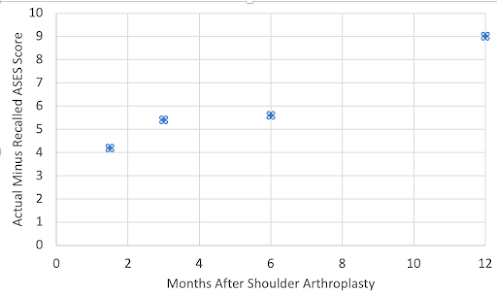
These authors investigated the accuracy of patient recall in determining the preoperative American Shoulder and Elbow Surgeons (ASES) score for patients having total shoulder arthroplasty (TSA). They compared actual ASES scores determined prior to surgery with ASES scores based on patient recall at  at 6 weeks, 3 months, 6 months, and 12 months after surgery.


They divided the ASES score into two subcomponents: functional ability and visual analog scale (VAS) for pain.


While recalled ASES function scores were comparable to corresponding preoperative scores across

all time points (analysis of variance, P = .21), recalled VAS pain was significantly higher at all time

points beyond 6 weeks after surgery.


As a result, the recalled preoperative total ASES score was worse than the measured preoperative score.


This indicates that the benefit of shoulder arthroplasty (preoperative to postoperative change) based on recall of the preoperative condition of the shoulder is likely to be exaggerated. Therefore, measurement of the benefit of shoulder arthroplasty needs to be based on the actual, rather than the recalled preoperative comfort and function of the shoulder.


Comment: The results of this study also create uncertainty about the commonly used "anchor method" for determining the minimal clinically important difference (MCID).  The "anchor"is often a questionnaire that asks patients to rate retrospectively the improvement in their shoulder after shoulder arthroplasty. For example, a 4-point anchor might ask patients to rate the change in pain after surgery as “worse,” “no different,” “improved,” or “much improved.” The MCID for the ASES score would be the difference in the average ASES scores of patients answering “worse” or “no change” and the average ASES scores of  patients who answered “improved.” Because this study found that patients inaccurately recalled their preoperative pain, their ability to rate the amount of change in pain may also be inaccurate. Specifically, if patients recall more pain than they actually had, some patients may rate their shoulder as "improved" whereas the actual change in pain was "unimproved". 


Follow on facebook: https://www.facebook.com/frederick.matsen

Follow on LinkedIn: https://www.linkedin.com/in/rick-matsen-88b1a8133/


How you can support research in shoulder surgery Click on this link.

Here are some videos that are of shoulder interest
Shoulder arthritis - what you need to know (see this link)
Shoulder arthritis - x-ray appearance (see this link)
The smooth and move for irreparable cuff tears (see this link)
The total shoulder arthroplasty (see this link).
The ream and run technique is shown in this link.
The cuff tear arthropathy arthroplasty (see this link).
The reverse total shoulder arthroplasty (see this link).

Sunday, December 19, 2021

How can we measure whether our patients have benefitted from treatment? Problems with the MCID; benefit of %MPI

The p value is commonly used to determine whether a change in a patient-reported measure of comfort and function (MCF) is statistically significant. By contrast the minimum clinically important difference (MCID) is a threshold value that can used to try to determine whether the change in a patient-reported measure of comfort and function (MCF) is clinically significant. 

See Minimum Clinically Important Difference - A Metric That Matters in the Age of Patient-Reported Outcomes


While the application of the MCID has gained wide popularity there are are some substantial problems with this metric.


1. There are different methods of calculating the MCID: 

The anchor based method, which is determined by asking a group of patients to indicate at the time of follow-up how their current health state compares to their baseline assessment. The problems here include (a) the MCID depends on patient recall of their baseline (risk of recall bias), (b) variable approaches for determining what is a "meaningful change, (c) the set of patients on which the MCID is determined may not be the same as the set of patients to which the calculated MCID is applied. 


The MCID can also be determined using the distribution method. Again there are varying approaches to this calculation: (a) evaluating the probability that a difference in scores occurred by chance, (b) using sample variation based on the effect size, the standardized response mean (the mean change divided by the standard deviation of score differences), or an internal responsiveness statistic, and (c) calculating the standard error of the mean. 


As a result, there is substantial variation in the values used for the MCID for each patient-reported measure of comfort and function. 


2. Regardless of how it is determined, the calculated value for an MCID depends on a host of variables, including the characteristics of the patients included in the calculation group (age, sex, co-morbidities, socioeconomic status, length of followup, etc (see this link)). It is also affected by the diagnoses being treated and by the type of treatment being investigated. Thus an MCID calculated for a reverse total shoulder for patients treated in Boston is likely to be different from an MCID calculated for anatomic total shoulder arthroplasty treated in Denver. A given value of the MCID may not be generalizable.


3. The use of MCID dichotomizes patients into those who do and those who do not improve by the threshold. For example if one applies an MCID of 15 to the ASES score, a patient that improved by 16 points would be considered a success and one that improved by 14 points would be a failure, even though the amount of improvement was essentially the same.


4. Improvements in the MCID along the continuum of scores are not the same: consider two patients that improved by an MCID of 16: (a) patient #1 that improved from an ASES score of 80 to 96 - a really good result and (b) patient #2 that improved from an ASES score of 10 to 26 - still has a bad shoulder.


We have found that the percent of maximal possible improvement (%MPI) (see this link) avoids many of the problems with the MCID (see MCID vs %MPI at this link). 


The %MPI is determined using the simple formula;


(post treatment score minus pre treatment score)

divided by

(maximum possible score minus preoperative score)


In comparison to the problems with the MCID, the %MPI has the following attributes:

1. There is no reliance on a calculated threshold value

2. The %MPI can be applied to any patient population without concern for its relevance

3. The results are not dichotomized into success or failure, but are expressed as a continuum that expresses the relative amount of improvement

4. It does not equate an improvement at the low end of the scare to the same amount of improvement at the high end of the scale.

5. The concept of percent maximum possible improvement is easier to explain to patients than the MCID (see this link).

6. It is relatively independent of which patient-reported measure of comfort and function is used (see this link); thus it enables comparison of outcomes among studies using different outcome measures.


So, considering two hypothetical patients: (a) patient #1 that improved from an ASES score of 80 to 96 - a really good result and (b) patient #2 that improved from an ASES score to 10 to 26 - still has a bad shoulder. Yet both improved by the ASES MCID of16.


However,

patient #1 had a %MPI of 80% 

    (96-80)/(100-80)


patient #2 had a %MPI of 17%

((26-10)/(100-10)


The results are quite different. Even though both patients exceeded the MCID of 15, patient #1 is likely to be more pleased with the outcome than patient #2.


As we consider how to assess the success of shoulder arthroplasty from the patient's standpoint, we should look at the real data, as presented in what we refer to as a Codman Graph. Take a look at each patient and decide whether the MCID or the %MPI best presents the outcome.


Of course, it is not an "either/or" situation. Authors can employ both the MCID and the %MPI. In fact, comparing and contrasting the two is of interest. Future studies should assess whether the MCID or the %MPI is more strongly associated with patient satisfaction.


Follow on facebook: https://www.facebook.com/frederick.matsen

Follow on LinkedIn: https://www.linkedin.com/in/rick-matsen-88b1a8133/


How you can support research in shoulder surgery Click on this link.

Here are some videos that are of shoulder interest
Shoulder arthritis - what you need to know (see this link)
Shoulder arthritis - x-ray appearance (see this link)
The smooth and move for irreparable cuff tears (see this link)
The total shoulder arthroplasty (see this link).
The ream and run technique is shown in this link.
The cuff tear arthropathy arthroplasty (see this link).
The reverse total shoulder arthroplasty (see this link).

Shoulder rehabilitation exercises (see this link).

This is a non-commercial site, the purpose of which is education, consistent with "Fair Use" as defined in Title 17 of the U.S. Code.          

Note that author has no financial relationships with any orthopaedic companies

Saturday, December 18, 2021

How surgeons can improve their surgical outcomes.

This post was prompted by a recent article, Strategies for Effective Implementation of Patient-Reported Outcome Measures in Arthroplasty Practice, that highlighted some of the challenges of using information technology to capture meaningful data on the comfort and function of patients before and sequentially after treatment. 

Now may be an opportune time to re-examine the purpose and practicality of documenting the patient's condition over time.

For us, the most important reason for recording patient-reported data is to learn for different groups of patients what is and what is not working in our hands. Only our patients can teach us if we're going about treatment in the most effective way. But in order to gather actionable intelligence, we must strive to "follow each of our patients long enough to learn if the treatment was successful and if not to ask "why not"?" (see A Study in Hospital Efficiency: As Demonstrated by the Case Report of First Five Years of Private Hospital). Whatever method is applied, the principal priority is to capture data on the highest possible percentages of patients being treated. Patients at increased risk for treatment failure - for example, those who are socially disadvantaged, less well educated, who are not fluent in English, who live in remote rural settings, who have co-morbidities - are subject to systematic exclusion if followup depends on hooking up with a computer or tablet or traveling to the office for an examination of range of motion.

By contrast the most user-friendly and inclusive approach is a short questionnaire that can be filled either in the office or at home (see this link). This approach eliminates the travel and technology hurdles that can create a non-response bias in the data.

For shoulder surgery, we've found that the 12 "yes" or "no" questions of the Simple Shoulder Test (SST - see this link) enable the capture the information from a high percentage of the patients at a year after surgery: in a recent comparison the 2 year non-response rate for the SST was 13% while the 1 year non-response rate for the PROMIS system was 33% (see this link).

The SST does not require scoring but rather enables the surgeon and the patients to identify the specific functions that were improved after treatment - e.g. the ability to sleep on the affected side, or the ability to reach over head - in contrast to a "score", the significance of which is more difficult to communicate. 

While the minimal clinically important difference (MCID) for the SST has been well studied (see this link), again this concept is harder to discuss with patients. Instead, we've found that the percent of maximal possible improvement (%MPI) is more straightforward: "our experience with shoulders like yours is that we can improve comfort and function X% of the way to normal" (see MCID vs %MPI at this link).

The bottom line is that by engaging our patients by emphasizing the importance of their providing us with longitudinal updates on their comfort and function, we can learn which treatments work best for which patients with which diagnoses and which do not.

Only our patients can teach us why those in the red rectangle did not get the outcome that they and we desired. For our learning, the individuals in the red rectangle have more to teach than the curves showing the mean ± standard deviation.


Follow on facebook: https://www.facebook.com/frederick.matsen

Follow on LinkedIn: https://www.linkedin.com/in/rick-matsen-88b1a8133/


How you can support research in shoulder surgery Click on this link.

Here are some videos that are of shoulder interest
Shoulder arthritis - what you need to know (see this link)
Shoulder arthritis - x-ray appearance (see this link)
The smooth and move for irreparable cuff tears (see this link)
The total shoulder arthroplasty (see this link).
The ream and run technique is shown in this link.
The cuff tear arthropathy arthroplasty (see this link).
The reverse total shoulder arthroplasty (see this link).

Shoulder rehabilitation exercises (see this link).

This is a non-commercial site, the purpose of which is education, consistent with "Fair Use" as defined in Title 17 of the U.S. Code.          

Note that author has no financial relationships with any orthopaedic companies


Tuesday, July 20, 2021

What predicts the value of shoulder joint replacement arthroplasty to the patient?

Development and Validation of a Predictive Model for Outcomes in Shoulder Arthroplasty: A Multicenter Analysis of over 2000 Patients


As the authors point out:

(1) Discussing the likely result of shoulder arthroplasty is an important part of the preoperative patient-surgeon conversation. 

(2) Setting a realistic expectations is important for achieving patient satisfaction. 

(3) Identifying risk factors for poorer outcomes may suggest approaches for addressing these factors before surgery.


They sought to develop a model to predict the 2-year American Shoulder and Elbow Surgeons (ASES) score in patients having shoulder arthroplasty using a set of preoperative patient factors and type of arthroplasty performed.


External validation was performed retrospectively by using 233 patients who had shoulder arthroplasty at a site that was not used to develop the model


Using their model, the mean difference between predicted and actual 2-year ASES score was 12.7 points. For 85% of patients the predicted ASES score was within published values for the minimal clinically important difference (MCID 13.5-21). Seven of the 26 variables included in this study—older age, higher preoperative ASES score, non-disability status, non-COPD status, alcohol use, anatomic rather than reverse total shoulder arthroplasty, and primary rather than revision shoulder arthroplasty—showed significant association with higher 2-year ASES scores.


Comment:

These authors used the 2-year ASES score as the measure of success of shoulder arthroplasty. 


A higher postoperative score was associated with a higher preoperative score – in other words the better a shoulder functioned before surgery, the better it functioned after arthroplasty. If the defining metric was the postoperative score, "better" outcomes could be achieved by selecting patients for arthroplasty that had higher preoperative ASES scores.


The value of a procedure to the patient is usually determined not by the postoperative score alone but rather by whether or not the preoperative score was improved by an amount equal to or exceeding the minimal clinically important difference (MCID).


In the hypothetical example below, a postoperative ASES score of 70 was achieved. However, because the preoperative ASES score was 60, the improvement did not exceed the MCID


 In this cohort of patients it would be of great interest to know which factors were associated with improvement in the ASES score by the MCID for the ASES score (13.5-21)


The type of surgery might be considered a “modifiable” factor. This model suggests that aTSA is associated with better outcomes than RSA. However, diagnosis was not considered among the variables in the model. Patients having anatomic arthroplasty (aTSA) typically have a different distribution of diagnoses than those having a reverse arthroplasty (RSA); thus, the difference in final ASES score may be more related to diagnosis rather than procedure.  As an example, for the patient with pseudoparalysis, an aTSA would not be expected to yield as good a result as an RSA.


The bottom line is that in assessing or predicting the benefit of a shoulder arthroplasty, it is important to understand the implications of different result metrics and to be sure that the most important patient and shoulder characteristics are included in the analysis. 


 How you can support research in shoulder surgery Click on this link.

Here are some videos that are of shoulder interest
Shoulder arthritis - what you need to know (see this link).
How to x-ray the shoulder (see this link).
The total shoulder arthroplasty (see this link).
The ream and run technique is shown in this link.
The cuff tear arthropathy arthroplasty (see this link).
The reverse total shoulder arthroplasty (see this link).
Shoulder rehabilitation exercises (see this link).

Follow on twitter: Frederick Matsen (@shoulderarth)


Saturday, July 3, 2021

Measuring and communicating the results of shoulder arthroplasty

 Minimal Clinically Important Difference, Substantial Clinical Benefit and Patient Acceptable Symptom State of PROMIS Upper Extremity following Total Shoulder Arthroplasty

These authors assessed the outcomes of 165 patients having shoulder arthroplasty using PROMIS Upper Extremity v2.0 (PROMIS UE). They determined the Minimal Clinically Important Difference (PROMIS MCID), Substantial Clinical Benefit (SCB), and Patient Acceptable Symptom State (PASS) of patient-reported outcome measures (PROM).


They calculated the anchor-based MCID for PROMIS UE was to be 8.05, the anchor-based SCB to be 10.0. The distribution-based MCID was calculated to be between 3.12 and 8.65. The PASS was calculated to be 37.2.


Comment: From this paper we can see that there are multiple ways to evaluate the outcome of shoulder arthroplasty. The primary value of a surgeon's documenting patient reported measures of comfort and function before and after surgery is to determine what procedures for which patients work best in his or her hands and to communicate this experience in terms that are understandable to patients. 


Patients may have difficult grasping the concepts of PROMIS UE, MCID, PASS, and SCB.


We've found that an easier way to communicate the benefit to the patient of a procedure is to report the percent of maximal possible improvement. Patients can easily understand what 100% shoulder comfort and function represents. They can also understand that in the experience of their surgeon, the proposed treatment has improved comfort and function by, for example, 80% of what was possible.


Consider the data from One and two-year clinical outcomes for a polyethylene glenoid with a fluted peg: one thousand two hundred seventy individual patients from eleven centers.


The improvement expressed as a percent of maximum possible improvement (%MPI) is easily determined: (post op score - pre op score)/(perfect score - pre op score). In the study above, both the SST and the ASES scores showed an 80% improvement of the maximal possible improvement.


While MCID is a common way of looking at the amount of improvement, it has a problem. Consider two patient having a shoulder arthroplasty, each with an improvement of 3 in the SST score (both exceeding the published value of 2.4 for the MCID).


However, their outcomes are not the same as is shown by the %MPI:


Smith only improved by 27% of the maximal possible improvement, whereas Jones improved by 75% of the maximal possible improvement (even though the amount of improvement in both cases exceeded the MCID).

Other important considerations in selecting a method for assessing outcomes are:

(1) it should facilitate ongoing participation by the maximum number of patients (minimizing the percent of patients lost to followup while enabling the capture of data 5, 10 or more years after the procedure). The requirement that patients return for measurements (e.g. with the Constant score) or access to a computer (e.g. with the PROMIS system) may pose barriers to the desired followup.

(2) it should pose a minimal burden on office staff in scoring and data entry.

(3) it should provide data on specific functions that patients can easily comprehend, rather than a numerical value that may not have meaning to patients.

For these reasons we use the Simple Shoulder Test (see this link).
(1) It is accessible and low tech - completable with pencil and paper from the patient's home without needing a computer connection or office visit
(2) It is simple to score (count the "yes" responses 0 to 12).
(3) It yields information patients can understand "does your shoulder allow you to sleep at night?"


How you can support research in shoulder surgery Click on this link.

Here are some videos that are of shoulder interest
Shoulder arthritis - what you need to know (see this link).
How to x-ray the shoulder (see this link).
The total shoulder arthroplasty (see this link).
The ream and run technique is shown in this link.
The cuff tear arthropathy arthroplasty (see this link).
The reverse total shoulder arthroplasty (see this link).
The smooth and move procedure for irreparable rotator cuff tears (see this link).
Shoulder rehabilitation exercises (see this link).

Follow on twitter: Frederick Matsen (@shoulderarth)

Monday, March 2, 2020

How do we know when patients are SIGNIFICANTLY better

A Primer on Clinically Important Outcome Values Going Beyond Relying on P Values Alone

These authors tackle in depth the question "how do we evaluate the effectiveness of treatment"?

Their bullet points are below:

➤ Clinically important outcome values allow physicians to provide patients with more realistic expectations regarding their treatment that are based on their specific demographics.
➤ Clinically important outcome values can vary for the same procedure or population depending on the method of calculation used, which raises the need for uniform ways to calculate and compare these values across populations and procedures.
➤ A shift in approach from focusing solely on significant outcomes, or p values, to considering both clinically important and significant outcomes will allow clinicians to provide more efficient care, in line with recent trends toward a value-based health-care system.

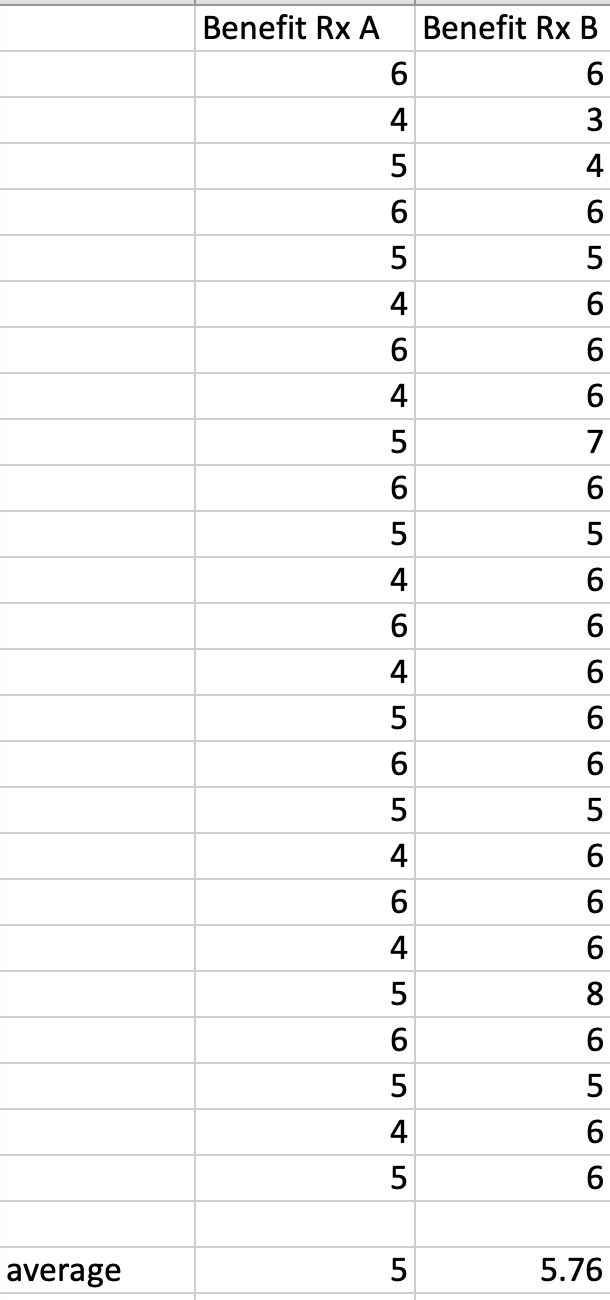
Comment: It is important to recognize that a study can show that one treatment is statistically significantly better than another without it being clinically significantly better. Consider a hypothetical study of a traditional treatment (A) and a novel treatment (B) with 25 patients each evaluated by the Simple Shoulder Test (SST). The increased benefit (difference between the pre and the post op SST) for the new treatment B is significantly better than the traditional treatment (p=0.003).


However the difference between the average outcomes is only 0.76, a value well below the published values for the minimal clinically important difference (MCID) for the Simple Shoulder Test (1.5 to 3.6). So the benefit of the new treatment is statistically significant, but not clinically significant.

This article points out that there are many different ways for measuring the clinical benefit and, furthermore, that the value of a measure such as the MCID may be different for different treatments or different populations of patients.

Another issue relates to studies showing significant "geometric" improvement with respect to the positioning of arthroplasty components, without evidence that there is associated clinical improvement.

=====
To see our new series of youtube videos on important shoulder surgeries and how they are done, click here.

Use the "Search" box to the right to find other topics of interest to you.


You may be interested in some of our most visited web pages  arthritis, total shoulder, ream and run, reverse total shoulder, CTA arthroplasty, and rotator cuff surgery as well as the 'ream and run essentials'

Wednesday, February 19, 2020

Rotator cuff repair - are the results getting better?

Minimal clinically important differences in the American Shoulder and Elbow Surgeons, Simple Shoulder Test, and visual analog scale pain scores after arthroscopic rotator cuff repair

These authors assessed the minimal clinically important differences (MCIDs) for arthroscopic rotator cuff repair in 202 patients having arthroscopic rotator cuff repair.

ASES, SST, and VAS pain scores were collected preoperatively and at 1 year postoperatively. The MCID was then calculated via a 4-question anchor–based method.

Eighty-nine patients rated their postoperative shoulder improvement as ‘‘good’’ and thus represented the changed group, whereas 10 and 3 patients rated their improvement postoperatively as ‘‘poor’’ and ‘‘no improvement,’’ respectively, representing the unchanged group (Table I). The remaining 100 patients rated their improvement as ‘‘excellent.’’

The MCID results for the ASES, SST, and VAS pain scores were 27.1, 4.3, and 2.4, respectively.

Age at time of surgery, sex, anteroposterior tear size, worker’s compensation status, and preoperative patient-reported metrics (ASES, SST, VAS) were not significantly associated with MCID values.


The article makes the interesting observation that the MCIDs for cuff repair are greater than those they found for non-operative treatment of cuff tears, suggesting that patients require more improvement in order to achieve a clinically important difference after surgery than after non-operative management.  They conclude, "Use of these higher values should be considered when evaluating improvements of individual patients after rotator cuff repair and to determine the comparative effectiveness of various rotator cuff repair techniques"

Comment:  These authors ask a very important question, "how much better do the results of a new technique of rotator cuff repair need to be for the the amount of improvement to be meaningful to the patient?" In other words, it is not enough to find a statistically significant difference between single row and double row, we also need to know whether there is a clinically important difference.

We should be asking the analogous question about proposed advances in shoulder arthroplasty (stemless humeral heads, short stemmed humeral components, patient specific instrumentation, etc).  It is interesting that for the traditional approaches to anatomic shoulder arthroplasties, the patient assessed outcomes (i.e. ASES or SST) are very close (i.e. within the MCID) to the maximum possible score. Thus, it may be difficult to demonstrate that new implants and technologies will be able to achieve a clinically significant improvement over what has been commonly in use.

=====
We have a new set of shoulder youtubes about the shoulder, check them out at this link.

Be sure to visit "Ream and Run - the state of the art" regarding this radically conservative approach to shoulder arthritis at this link and this link

Use the "Search" box to the right to find other topics of interest to you.


Wednesday, December 5, 2018

The international clinical success of a standard all-polyethylene glenoid component - what else is needed?

One and two-year clinical outcomes for a polyethylene glenoid with a fluted peg: one thousand two hundred seventy individual patients from eleven centers.

These authors note that each year more and more total shoulder systems are being cleared by the FDA under the 510(k) mechanism, which requires only that the new system be "substantially equivalent" to a prior legally marketed design.


They point out that clinical shoulder science lacks a benchmark against which the early clinical value of these new systems can be compared. They endeavored to derive such a benchmark from a multicenter study of patients receiving an established, internationally used design of glenoid component.

They obtained data from 11 centers on 1270 patients having total shoulder arthroplasty using an all-polyethylene non-augmented component with a fluted central peg.


They analyzed individual patient outcomes at 1 and 2 years after surgery. They compared the improvement for each patient to the minimal clinically important difference (MCID) and calculated each patient's improvement as a percent of maximal possible improvement (MPI).

The preoperative scores improved from SST 3 ± 2, ASES 37 ± 15, Constant score 36 ± 16, and Penn score 30 ± 19 to SST 10 ± 2, ASES 90 ± 12, Constant 76 ± 13, and Penn 80 ± 24 (p < 0.001 for each). A high percentage of patients improved by more than the MCID (SST 96%, ASES 98%, Constant 94%, Penn 93%) and obtained improvement of at least 30% of the MPI (SST 95%, ASES 98%, Constant 91%, Penn 87%).


Importantly, the clinical outcomes realized with this glenoid design were not worse for the 41% of shoulders with preoperative type B glenoids or for the 30% of shoulders with more than 15 degrees of glenoid retroversion.

Comment: This study demonstrates that individual patients from 11 international practices having total shoulder arthroplasty using a basic glenoid component design can obtain highly significant clinical outcomes, providing a benchmark against which the early outcomes of new designs can be compared to determine whether they provide increased clinical value.

An important finding in this analysis is that with this basic glenoid component design, type B glenoids and glenoids with more than 15° of retroversion did not have outcomes that were inferior to those with less severe glenoid pathoanatomy. While special glenoid components have been marketed for the type B retroverted glenoid, this study points out that the role for these special components has yet to be clarified.

The importance of the type of benchmark established in this article is highlighted by a recent email exchange we (Shoulder Arthritis Blog) had with a senior engineer (SE) at a prominent shoulder implant company:

SE: I have a question that I’m hoping you can help me with. In general, journal articles, and our FDA require a minimum of 2-year clinical follow up for reporting on performance of medical devices. What scientific evidence supports a minimum 2-year duration? Specifically, why is two years an appropriate time point for determining device fixation and longer-term stability? I welcome your thoughts.

SAB: Please see http://shoulderarthritis.blogspot.com/2018/11/total-shoulder-outcome-assessment-made.html

SE: Thank you. I will review these articles. At first glance they support what I’ve seen in a few other clinical reports. That is, the performance measurement scores tend to peak and plateau around twelve months and then don’t change statistically beyond that point.

SAB: I suggest that the big issue for companies is showing that their new device is any better than what is out there. What are your thoughts on that?

SE: You are correct. Companies are faced with proving evidence that their new device is “equivalent” to a commercially cleared device by FDA. Thus, trying to show substantial equivalency to a predicate device. The FDA has evolved to requesting two-year clinical data to support 510K submissions for some types of devices even if there is a cleared predicate. So my question is, why two years? What specific measurable characteristics are captured at two years that support expected outcomes for the duration of the implanted device? If we can identify these specific characteristics, then can we accurately predict the longer term out come if we are able to identify and measure these same characteristics at one year?

If osseointegration is shown to occur within six months of implantation, and an implanted device shows radiographic signs of osseointegration, and is free of any indications of radiographic loosening at one year, can we successfully predict that proper fixation and implant stability will continue longer term?

SAB: We think the answer to your questions is “YES”, but to us a more important question is, if the new device is equivalent to a prior device, why do we need it? It seems that companies need to show that their device yields better outcomes that what is current there before selling a new device.

SE: I don’t disagree at all with you. In fact, this past year I had both of my hips replaced due to osteoarthritis. I selected a surgeon that used hip devices that have been around for decades and not the latest technologies. What companies face is as younger surgeons come into practice, they want new technologies for their patients. If a company doesn’t continue to innovate, even incrementally, they get left behind.

SAB: We totally understand.We are aware, however, of the cost of bringing new technologies on line (R&D, FDA clearance, marketing, learning curves and unanticipated complications).

As a surgeon, these issues require that companies show that the new stuff provides better outcomes than the old stuff. As an example, is there any evidence that you know of supporting an incremental benefit in terms of patient outcomes from the use of PSI, Short Stems, Stemless, Augmented glenoids, Platform prostheses? If so, We’d love to see it!

SE: I think that answer might come to us in ten years or so

SAB: But it seems you're suggesting that in ten years we will no longer be using the implants for which we have a decade of followup. If we keep changing the implant how will we be able to tell patients about the long term results they are likely to achieve? How will we know if the costs of the "innovations" are offset by benefit to the patient?

=====
We have a new set of shoulder youtubes about the shoulder, check them out at this link.

Be sure to visit "Ream and Run - the state of the art" regarding this radically conservative approach to shoulder arthritis at this link and this link

Use the "Search" box to the right to find other topics of interest to you.


You may be interested in some of our most visited web pages arthritis, total shoulder, ream and run, reverse total shoulder, CTA arthroplasty, and rotator cuff surgery as well as the 'ream and run essentials'