Showing posts with label humeral head resurfacing. Show all posts

Wednesday, October 10, 2018

The stealth periprosthetic infection - Propionibacterium in a resurfacing - The red protocol in action.

We had the opportunity of seeing a 47 year old man from Florida with left shoulder discomfort and dysfunction after left shoulder resurfacing performed three years previously. He had done poorly after this procedure and come to us for consideration of revision surgery. 
On physical examination, he had notable stiffness with limited active forward elevation to only shoulder height. 
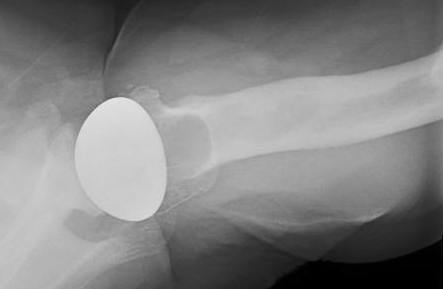
His x-rays show what appears to be an Arthrosurface implant in the proximal humerus. There is suggesting of lucency around the implant.


There was also a possible lytic lesion distal to the implant in the humeral canal. We obtained an MRI of the shoulder to evaluate for infection or an oncological process, but the MRI was unremarkable for either. 

We were suspicious of a stealth infection, so we performed a single stage revision to a ream and run using impaction allografting for fixation of the component. 

Cultures were obtained and the patient was placed on the red protocol (see this link).

His culture results were finalized at three weeks after surgery

IV Ceftriaxone was continued via PICC line for 6 weeks followed by 6 months of Doxycycline.

At 1 year after surgery his shoulder is comfortable and functional with the x-rays shown below.


Comment: This case demonstrates the importance of having a high index of suspicion for a stealth Propionibacterium infection in young male patients with pain and stiffness after an arthroplasty. It also shows the value of a primary prosthesis exchange and immediate vigorous antibiotic management.
=====
Use the "Search" box to the right to find other topics of interest to you.


You may be interested in some of our most visited web pages   arthritis, total shoulder, ream and runreverse total shoulderCTA arthroplasty, and rotator cuff surgery as well as the 'ream and run essentials'

Monday, April 2, 2018

Juvenile rheumatoid arthritis of the shoulder

Resurfacing hemiarthroplasty of the shoulder for patients with juvenile idiopathic arthritis

These authors report on 11 patients with juvenile idiopathic arthritis (JIA) having 14 uncemented resurfacing hemiarthroplasties (RHA). The mean age at surgery was 36.4 years. Mean clinical follow-up was 10.4 years (range, 5.8-13.9 years). A significant humeral head defect (up to 40% surface area) was found in 5 shoulders and filled with autograft from the distal clavicle or femoral head allograft.

At latest follow-up, no patient had required revision. The mean Oxford Shoulder Score and Constant-Murley Score improved significantly. Worse outcome was associated with an intraoperative finding of significant humeral head erosion.  There were no instances of radiographic implant loosening or proximal migration. Painless glenoid erosion was seen in 5 shoulders but was not associated with worse outcome.

Comment: There are many challenges in managing individuals with JRA, some of which include small size, multiple joint involvement (including elbow, hand, wrist, lower extremities, jaw and neck), and medical management (often including steroids and methotrexate). Each of these factors complicates the surgical approach to the severe degree of arthritis often encountered in their shoulders with head, glenoid and tuberosity destruction.


As illustrated in this article, standard stem humeral implants can be difficult to insert completely because of the small canal size

The tightness of the joint also makes anatomic positioning of a resurfacing implant difficult as shown below.


This is an important series of cases by an experienced surgeon with no patients lost to followup and a mean postoperative clinical follow-up of 10.4 years.
=====
Use the "Search" box to the right to find other topics of interest to you.


You may be interested in some of our most visited web pages including:shoulder arthritis, total shoulder, ream and runreverse total shoulderCTA arthroplasty, and rotator cuff surgery as well as the 'ream and run essentials'

Saturday, October 28, 2017

Painful resurfacing arthroplasty - working it up.

Several months ago we had the please of meeting a 47 yer old patient who came to us from Florida. His left shoulder history began with a motorcycle crash in 1991 in which he laid down his bike at a speed of 85 miles per hour. He recalls sustaining a shoulder dislocation which was managed nonoperatively. Following this he had one or 2 additional episodes of shoulder dislocation although he was able to return to day-to-day activities including heavy weightlifting. He recalls progressive pain and the sensation of "grinding" and ultimately had a left shoulder humeral head resurfacing with Arthrosurface OVO 58 x 54 humeral head in 2014. Prior to undergoing this procedure he was able to participate in the full range of motion of his left shoulder but had pain.

Following this procedure, he noted worsening in his range of motion and pain in the left shoulder. In particular his pain was located posteriorly at inferior to the shoulder joint as well as anterior at the level of the coracoid.  He participated in 2 years of physical therapy of his left shoulder including range of motion and stretching exercises with minimal improvement. In 2016 he had an arthroscopic lysis of adhesions, subacromial decompression, subacromial bursectomy, acromioplasty combined with manipulation under anesthesia. This unfortunately did not resolve his symptoms as he continued to have limitation range of motion and pain in his left shoulder.

He had received 2 injections of corticosteroid into his left shoulder in the past year, one 7 months prior and the other 3 months prior. These did not produce significant change or improvement in his symptomatology. He was taking 600 mg of ibuprofen nightly with limited relief. Often awakened at night.

At the time of his visit with us - 3 years after his resurfacing -  he had a very stiff painful shoulder and could perform only 3 of the 12 functions of the simple shoulder test. These were his x-rays.
His AP view showed some subtle endosteal bone resorption.

An MRI of his humeral shaft showed no abnormal bone marrow signal within the left humerus. There is no evidence of surrounding soft tissue edema. His blood tests were all normal.

He was revised to an impaction allografted ream and run arthroplasty after intraoperative cultures were obtained. His resurfacing implant was not loose and there were no gross intraoperative signs of infection. although histology showed >5 WBC/HPF.

He was placed on the red protocol (see this link) because of our suspicion for infection.

The results of his Propionibacterium specific cultures are shown below (see this link for an explanation of the Propionibacterium load in this shoulder)


He will have a 6 week course of IV Ceftriaxone followed by oral Augmentin for 6 months.

Recently he sent this email and photos
"It’s been 4 weeks after my surgery, shoulder feels good sometimes more sore than the other day but good. I started doing the one with me laying down on the floor on a mat to get more extension than on a bed. I’m on the antibiotics, everything is good."


Comment: This is a classic 'stealth' presentation of Propi. In our practice, we suspect Propionibacterium in all failed arthroplasties, especially in young male patients - even if they present, as in this case, years after the index procedure.

===
The reader may also be interested in these posts:


Information about shoulder exercises can be found at this link.

Use the "Search" box to the right to find other topics of interest to you.

Tuesday, August 8, 2017

Is humeral resurfacing a conservative treatment for primary arthritis?

Outcome and revision rate of uncemented glenohumeral resurfacing (C.A.P.) after 5–8 years

These authors report the mid-term results of an uncemented resurfacing shoulder prosthesis in patients with primary osteoarthritis having surgery from January 2007 to December 2009. No glenoid arthroplasty was used in these patients.

Forty-six patients (12 males) with a mean age of 72 years old (range 59–89) were included. At a mean 6.4-year follow-up (range 5–8), the Constant Score, visual analog pain scale and the Dutch Simple Shoulder Test scores improved significantly (p < 0.05) from baseline.

 Eleven patients (23%) had a revision operation.


They compared their revision rate to that in prior publications
Comment: We're often asked whether a resurfacing hemiarthroplasty is a conservative option for the management of glenohumeral arthritis. As demonstrated by this study, the issue with the resurfacing hemiarthroplasty appears to be the fact that it does not address the glenoid aspect of glenohumeral arthritis. These authors did not seem to have problems with fixation of the humeral component, but rather most of the problems related to glenoid erosion.
While it may seem simple to combine a resurfacing with a glenoid component, experience has shown that the retention of the humeral anatomic neck can interfere with good access to the glenoid, compromising the ability to perform a technically excellent prosthetic glenoid arthroplasty.
===
The reader may also be interested in these posts:


Information about shoulder exercises can be found at this link.

Use the "Search" box to the right to find other topics of interest to you.

You may be interested in some of our most visited web pages including:shoulder arthritis, total shoulder, ream and runreverse total shoulderCTA arthroplasty, and rotator cuff surgery as well as the 'ream and run essentials'


Friday, February 10, 2017

New shoulder arthroplasty components, new uncertainties

Comparative study of total shoulder arthroplasty versus total shoulder surface replacement for   osteoarthritis with minimum 2-year follow-up

These authors suggest that in comparison to standard total shoulder arthroplasty (TSA), total shoulder surface replacement (TSSR) may offer the advantage of preservation of bone stock and shorter surgical time, possibly at the expense of glenoid component positioning and increasing lateral glenohumeral offset.

They conducted a retrospective cohort study comparing 29 patients having a TSA using an anatomical humeral stem with 20 having TSSR with a humeral surface replacement.

This report excluded shoulders with type B2 glenoids, one of the most common arthritic pathoanatomies. It is unclear how patients were allocated to either the TSSR or TSA groups.

After 29 and 34 months of mean follow-up, the two groups showed similar outcome scores and radiographic outcomes. However, one intraoperative glenoid fracture occurred in the TSSR group.

Comments:  At breakfast today, we discussed the issues surrounding new technologies with the editor of a leading orthopedic journal, Seth Leopold. He pointed out that in addition to the added costs of research, development, marketing, consultants, and the learning curve, another added cost of a new technology is the uncertainty introduced by deviating from what we are used to doing.  Thus most shoulder surgeons are adept at the proper positioning of a stemmed humeral component. However, the use of resurfacing implants can introduce uncertainty in the positioning of the humeral articular surface as shown in the cases below.


Furthermore, most shoulder surgeons are adept at gaining good exposure to the glenoid so that a safe, well-seated and well-fixed prosthetic glenoid arthroplasty can be accomplished. 


However, without the standard resection of the entire humeral head, the ability to gain the necessary access to the glenoid becomes less certain as shown below.

A few additional points are worth recognizing. First, the great majority of complications of total shoulder arthroplasty relate to failure of the glenoid (and not problems with the humerus); thus an effort to preserve humeral bone should not make the glenoid arthroplasty less certain. Second, the results shown here are at two to three years, whereas glenoid arthrplasty problems typically do not show up until five to seven years after surgery. In their discussion, the authors point out that "Case series with longer follow-up have found 98% and 100% 5-year survival for TSA compared with 63% and 78% 10-year survival for TSSR."

In this study 1 of 20 patients with the most straightforward type A glenoids having a TSSA by surgeons experienced in the method sustained a glenoid fracture. 

In summary, unless the new technology is clearly superior to the accepted norm for which substantial outcome data are available, the incremental costs and uncertainties may be difficult to justify.

Sunday, November 6, 2016

Is resurfacing hemiarthroplasty a conservative procedure for young patients?

Outcome of Revision Shoulder Arthroplasty After Resurfacing Hemiarthroplasty in Patients with Glenohumeral Osteoarthritis.

These authors reviewed all patients with osteoarthritis reported to the Danish Shoulder Arthroplasty Registry from 2006 to 2013. There were 1,210 primary resurfacing hemiarthroplasties, of which 107 cases (9%) required a revision surgical procedure, defined as the removal or exchange of the humeral component or the addition of a glenoid component. The Western Ontario Osteoarthritis of the Shoulder (WOOS) index was used to evaluate outcome at 1 year.

The median WOOS of revision arthroplasty after failed resurfacing hemiarthroplasty was 62 points (interquartile range, 40 to 88 points). Of the 80 cases that had follow-up, 33 (41%) had an unacceptable outcome, defined as a WOOS of ≤50 points.

Of the 107 cases that required a revision surgical procedure, 11 arthroplasties (10%) required a further revision surgical procedure: to a stemmed hemiarthroplasty (n = 39), to an anatomic total shoulder arthroplasty (n = 31), or to a reverse shoulder arthroplasty (n = 30). In 7 cases, the revision arthroplasty design was unknown. 

The median WOOS of patients who underwent revision stemmed hemiarthroplasty (48 points) was significantly inferior (p = 0.002) to that of patients who underwent primary stemmed hemiarthroplasty (75 points); the median WOOS of patients who underwent revision anatomic total shoulder arthroplasty (74 points) was also significantly inferior (p = 0.007) to that of patients who underwent primary anatomic total shoulder arthroplasty (93 points). 

The authors conclude that the outcome of revision shoulder arthroplasty after failed resurfacing hemiarthroplasty was variable and, in many cases, disappointing. It is important that resurfacing hemiarthroplasty is used for the correct indications and with adequate technique and skill. When resurfacing hemiarthroplasty is used in the treatment of osteoarthritis, revision cannot be counted upon as a fallback.
The authors show a diminishing use of the resurfacing arthroplasty with time.

As well as limited survivorship of the resurfacing hemiarthroplasty in patients 55 years of age and younger.


Of interest is that the overall WOOS scores for primary resurfacing hemiarthroplasties is similar to that for primary stemmed arthroplasties. However the results of primary resurfacing in younger patients are worse. The best results were obtained with a primary anatomic total shoulder.


Comment: These results seem to suggest that hemiarthroplasty alone (whether resurfacing or stemmed) may be insufficient treatment for individuals with glenohumeral osteoarthritis, a condition that affects both the glenoid and humeral articular surfaces. 

What is lacking in this study is information on the mode of failure of these hemiarthroplasties. Also lacking is a comparison of the results of primary resurfacing hemiarthroplasty to primary stemmed arthroplasty. 

This study does provide evidence that salvage of a failed resurfacing hemiarthroplasty is often unsuccessful.

Information about shoulder exercises can be found at this link.

Use the "Search" box to the right to find other topics of interest to you.

You may be interested in some of our most visited web pages including:shoulder arthritis, total shoulder, ream and runreverse total shoulderCTA arthroplasty, and rotator cuff surgery as well as the 'ream and run essentials'

See from which cities our patients come.

See the countries from which our readers come on this post.


Monday, October 31, 2016

Is there an advantage of using a humeral surface replacement in total shoulder arthroplasty?

Comparative study of total shoulder arthroplasty versus total shoulder surface replacement for glenohumeral osteoarthritis with minimum 2-year follow-up.

These authors compared patients having a Tornier conventional total shoulder arthroplasty (TSA - cemented anatomical humeral stem)


performed with a complete resection of the humeral head


with those having a Tornier total shoulder with a surface replacement of the humeral head  (TSSR)

used with the goal of preserving a bit more of the humeral head


Both types of humeral component were paired with a cemented, curved, keeled, all-poly glenoid component.


They suggest that TSSR may offer advantage of preservation of bone stock and shorter surgical time, possibly at the expense of glenoid component positioning and increasing lateral glenohumeral offset. 

In the TSSA shoulders the authors state that extensive releases of the posterior and inferior capsule had to be performed to gain exposure of the glenoid.

After 29 and 34 months of mean follow-up, respectively, TSA (n = 29) and TSSR (n = 20) groups showed similar median adjusted Constant Scores (84% vs. 88%), Oxford Shoulder Scores (44 vs. 44), Disabilities of the Arm, Shoulder and Hand scores (22 vs. 15), and Dutch Simple Shoulder Test scores (10 vs. 11). 

One intraoperative glenoid fracture occurred in the TSSR group. They point out that with the resurfacing implant,the "surgeon is presented with challenges related to a more difficult exposure because less humeral bone is resected. Indeed, the glenoid fracture in our TSSR group was probably caused by a more forceful glenoid exposition."

Comment: It is unclear what criteria led to the use of a resurfacing vs a standard humeral  component in this series of cases.

In that most total shoulder failures are related to the glenoid component, it would seem that safely optimizing glenoid exposure is a high priority, outweighing the theoretical advantage of preserving a bit more of the humeral head.


Sunday, October 30, 2016

Resurfacing total shoulder arthroplasty - what are the advantages?

Radiological and functional 24-month outcomes of resurfacing versus stemmed anatomic total shoulder arthroplasty


These authors compared clinical and radiographic outcomes of patients undergoing resurfacing total shoulder arthroplasty (RES) (Promos® resurfacing prosthesis)


with those treated with a multi-pieced stemmed TSA (STA) (Promos® standard prosthesis),


 between 2006 and 2014. They age and sex matched 37 of 44 RES shoulders with 37 of 137 STA shoulders with two-year followup. Shoulders in both groups showed significant functional improvement and similar outcome scores, revision rates and radiographic scores at 24 months.

At 24 months post-surgery, 89 % RES and 95 % STA patients reported that they would undergo the same operation again.

Comment: While the 37 shoulders in each group were age and sex matched, the authors do not explain why the use of the standard stemmed prosthesis was over three times that of the resurfacing prosthesis during the period of study. The reader must wonder what the differences in surgeon, shoulder and patient characteristics might have been between the 137 and the 44. For example 35% of the shoulders in the RES group had type B glenoids while 54% of the STA shoulders had this glenoid pathology.


The average preoperative scores were not the same between the two groups, so that even though the postoperative scores were similar, the improvement in the scores were not the same as shown for the Constant score below.


Positioning the resurfacing humeral component is not always straightforward and the preservation of the humeral head may interfere with access to the glenoid leading to suboptimal positioning. In this example it appears that a superiorly placed humeral component contacts the upper edge of an inferiorly placed glenoid component.


One STA patient not included in the 2-year followup group required an exchange of the inclination set and humeral head due to spontaneous malrotation of the humeral head component after 14 months – users of this rather complex prosthesis design should keep this potential problem in mind.


While it is stated that the intent of a resurfacing design is to avoid intra- and post-operative stem-related complications, and preserve bone stock for future revisions, we find that these same goals can be achieved without impairing glenoid access by using an impaction grafted thin stemmed two-piece prosthesis inserted with impaction autografting.

===


Friday, August 21, 2015

Shoulder arthroplasty - survivorship - is this the right methodology?


Improved survival for anatomic total shoulder prostheses.

These authors studied 4,173 patients with shoulder replacements reported to the Norwegian Arthroplasty Register (2,447 hemiprostheses, 444 anatomic total prostheses, 454 resurfacing prostheses, and 828 reversed total prostheses) performed for osteoarthrtis, rheumatoid arthritis, acute fracture, and fracture sequelae.

Our summary of their data is shown below as the 5 and 10 year prosthesis revision rates.


They also found that patients over 70 years of age and female patients had lower prosthesis revision rates. The brand of prosthesis and type of fixation also had effects on revision rates. 

The reasons for revision are shown here:


Comment: These data cry out for a multivariate analysis. It is apparent that the type of prosthesis selected by the surgeons were not independent of other factors, such as diagnosis. Without this we cannot know which of the following factors were most important in the revision rate: type of procedure, diagnosis, age, sex, cementation, prosthesis brand or date of surgery. 

Also, as we've pointed out before, prosthesis revision is a peculiar type of endpoint - it depends on the patient's willingness to subject to another surgery when the first one failed. Some patients prefer to accept a poor functional outcome rather than rolling the dice again. This study did not include functional outcomes.

==

Check out the new Shoulder Arthritis Book - click here.


Use the "Search" box to the right to find other topics of interest to you.

You may be interested in some of our most visited web pages including:shoulder arthritis, total shoulder, ream and runreverse total shoulderCTA arthroplasty, and rotator cuff surgery as well as the 'ream and run essentials'


Tuesday, January 20, 2015

Resurfacing hemi and total shoulder arthroplasty in young patients


Surface replacement arthroplasty for glenohumeral arthropathy in patients aged younger than fifty years: results after a minimum ten-year follow-up

These authors present a case series of 54 cementless surface replacement arthroplasties (49 patients (25 men, 24 women)(average age 38.9 years (range, 22-50 years)) performed between 1990 and 2003. Of these, 38 patients (42 shoulders) were available for followup at a mean of 14.5 years (range, 10-25 years) after surgery.
17 were total shoulder replacements with metal back keeled glenoids, and 37 were humeral head resurfacing with microfracture of the glenoid.

It is of note that the diagnoses in this report from the UK were as follows:

avascular necrosis, 16
rheumatoid arthritis, 20
instability arthropathy, 7
primary osteoarthritis, 5
fracture sequelae, 3
postinfection arthritis, 2
psoriatic arthritis, 1

These are different from the usual indications for shoulder arthroplasty in the U.S., where primary osteoarthritis dominates, although the diagnostic spectrum is different in younger individuals even on this side of the pond.

17 cases had full thickness cuff tears or poor quality rotator cuffs.

The deltopectoral approach was used in 20 shoulders and the  anterosuperior (Neviaser-Mackenzie) approach in 34. The anterosuperior approach became the preferred approach in1993.

The mean relative Constant score increased from 11.5% to 71.8%, the results with humeral head resurfacing with microfracture of the glenoid (77.7%) were superior to those with total resurfacing arthroplasty that included a glenoid component (58.1%). 

The best results were observed for the AVN patients, with Constant score improving from 13%  to 85%. These were followed by the primary osteoarthritis group results and the rheumatoid arthritis group which had more modest results but high levels of satisfaction.

In 35 of 38 shoulders the humeral implants showed no lucencies. All of the humeral lucencies were observed in cases having a glenoid component. There were 9 glenoid implants of which 4 were loose.
15 had severe superior migration, 5 had moderate superior migration, and 2 had mild superior migration. 16 shoulders showed no superior migration.

Moderate to severe glenoid erosion was present in 12 of the shoulders at an average follow-up of more than 14.5 years. Glenoid erosion was correlated with superior migration of the humeral head and was more prevalent in patients with rheumatoid arthritis.

The mean time from the index arthroplasty to the revision surgery was 12 years
2 shoulders required early arthrodesis due to instability and deep infection. 

In addition, 10 of 54 shoulders required revision arthroplasty.
The indications for revision arthroplasty were rotator cuff failure in 4 shoulders (3 HSA and 1 TSA), glenoid loosening and humeral loosening in 4 TSA shoulders, glenoid erosion in 1 HSA
shoulder, and 1 traumatic periprosthetic fracture.

7 were revised to stemmed prosthesis: 1 for traumatic fracture and 1 for glenoid erosion 16 years after the index procedure.5 shoulders in 4 patients (4 rheumatoid arthritis, 1 avascular necrosis) were revised at 8 to 14 years after surgery for cuff failure and loosening. 

3 were revised to stemless reverse total shoulder arthroplasty due to rotator cuff failure at 23, 16, and 13 years after surgery.

Comment: This is an interesting and candid report by authors that include the designer of this system. Firstly, all shoulder surgeons recognize that the <50 year old patient needing an arthroplasty provides special challenges due to expectations, activities, and relatively uncommon diagnoses. Secondly, the patients in this series had a high preoperative incidence of rotator cuff issues, which place arthroplasty at increased risk of failure. Thirdly, the high rate of glenoid component loosening (often accompanied by humeral component loosening) and low clinical scores in the total shoulder group may be in part due to the technical challenge of glenoid arthroplasty when a substantial amount of the humeral head bone is retained as in these resurfacing arthroplasties - a feature that may compromise exposure.

Points of interest include the use of microfracture, the fact that 7 of the 10 revision arthroplasty were from resurfacing to stemmed prostheses, and the use of arthrodesis for two of the failures. 

All in all, this article provides an interesting contrast to our local practice and it will be of interest to see how all of us evolve in our management of the young, arthritic shoulder.

===


Use the "Search" box to the right to find other topics of interest to you.

You may be interested in some of our most visited web pages including:shoulder arthritis, total shoulder, ream and runreverse total shoulderCTA arthroplasty, and rotator cuff surgery as well as the 'ream and run essentials'


Monday, September 22, 2014

Resurfacing humeral arthroplasty can cause bone loss beneath the component

Stress-shielding induced bone remodelling in cementless shoulder resurfacing arthroplasty: A finite element analysis and in-vivo results

These authors explore the concern that cementless surface replacement arthroplasty may result in stress shielding and bone remodelling beneath the prosthesis. They studied bone remodelling using 3-dimensional finite element analysis (FEA) as well as evaluation of contact radiographs from human implant retrievals. 
FEA included one native humerus model with a normal and one with a reduced bone stock quality. The compressive strains were evaluated before and after virtual resurfacing prosthesis implantations.

They also studied the bone remodelling and stress-shielding pattern of 8 human cementless surface replacement arthroplasty retrievals.

FEA revealed for both bone stock models increased compressive strains at the stem and outer implant rim for both cementless surface replacement arthroplasty designs indicating an increased bone formation at those locations. Unloading of the bone was seen for both designs under the central implant shell indicating high bone resorption. Those effects appeared more pronounced for the reduced than for the normal bone stock model. 

These assumptions of the FEA were confirmed in the cementless surface replacement arthroplasty retrieval analysis which showed bone apposition at the outer implant rim and stems with highly reduced bone stock below the central implant shell. Overall, clear signs of stress shielding were observed for cementless surface replacement arthroplasty in the in-vitro FEA and human retrieval analysis. Especially beneath the central part of the cementless surface replacement arthroplasty the bone stock was highly resorbed. 

Comment: As pointed out in our post from two days ago, resurfacing humeral hemiarthroplasty has been proposed as a more conservative approach to managing shoulder arthritis, but it has the disadvantages of (1) non addressing the glenoid side of glenohumeral arthritis, (2) blocking access to the glenoid if a glenoid component is considered, and (3) making it difficult to detect if the humeral component is subsiding. This article adds 'stress shielding' and resulting loss of the supporting bone as a fourth concern.